
Congratulations! You successfully completed your Whole30 journey, a significant achievement that speaks volumes about your commitment to health and self-discovery. Now, as you stand at the threshold of life after Whole30, a crucial question arises: what comes next? Is it time to immediately revisit old favorites like a decadent block of cheese or a celebratory bottle of wine? We urge you to pause. The Whole30 reintroduction phase is not just a suggestion; it’s the most vital step in transforming your 30-day reset into sustainable, lifelong food freedom. This comprehensive guide will equip you with indispensable tips for a successful reintroduction and highlight common pitfalls to meticulously avoid along the way.

Protecting Your Whole30 Investment: Why Reintroduction Is Non-Negotiable
It’s tempting to simply declare victory, basking in the glow of feeling great after 30 days of clean eating, and revert to old habits. But let’s be candid for a moment: you’ve just dedicated an entire month to meticulously cleansing your body, rebalancing your system, and nurturing profound self-awareness regarding your dietary choices. To abruptly abandon this progress by immediately indulging in every previously restricted food – cheese, wine, grains, gluten, and more – would be a profound disservice to the incredible effort you’ve invested. This isn’t about restriction; it’s about empowerment. The 30 days of your Whole30 were foundational, but the reintroduction phase is where the true, lasting transformation takes root. It’s where you translate temporary elimination into permanent understanding and a personalized roadmap for your health. Take this phase seriously; it is the capstone of your Whole30 experience.
Should you ever feel the need to embark on another Whole30, remember to explore our free meal plans. They are meticulously designed, offering comprehensive recipes, convenient weekly shopping lists, and clear, step-by-step preparation and cooking instructions, all complemented by a wealth of valuable tips and tricks to guide you.
Understanding the Whole30 Reintroduction Phase: Your Path to Personalized Nutrition
So, what exactly does this “Whole30 reintroduction” entail? Simply put, it’s a meticulously structured post-elimination phase designed for you to slowly – and we emphasize, SLOWLY – reintegrate potentially problematic food groups back into your diet. The core purpose is systematic identification: by reintroducing foods one at a time, you can precisely pinpoint which specific ingredients or food categories provoke adverse reactions in your unique body. We are all bio-individuals, meaning our bodies respond differently to various foods. This process is your personal scientific experiment to uncover your distinct dietary needs and sensitivities.
The ultimate goal of Whole30 is never permanent food restriction. Instead, it’s a strategic elimination period, allowing your body to reset, so that when you begin to REINTRODUCE foods, you can acutely observe and truly feel how they affect your physical and mental well-being. This might sound straightforward, but it requires patience and keen observation. The primary reason for this slow, deliberate approach is that food reactions are not always immediate. Some sensitivities can take anywhere from a few hours to a full four days to manifest symptoms. If you rush through reintroduction, testing multiple foods in quick succession, it becomes virtually impossible to discern which specific food is responsible for any issues that arise, effectively muddying your results and hindering your progress toward true food freedom.
The Science of Slowness: Why a Gradual Reintroduction is Key
Imagine this scenario: On Day 31, immediately after finishing your Whole30, you reintroduce legumes. Things seem fine. The next day, you add non-gluten grains, and again, no obvious issues. Feeling confident, you decide to introduce dairy on Day 33. By the end of that day, you feel sluggish, bloated, or experience a headache. Now, the critical question: was it the dairy that caused your discomfort? Perhaps. However, it’s equally possible that you’re experiencing a delayed reaction to either the legumes or the non-gluten grains from the previous days. Without sufficient time between introductions, it’s incredibly challenging to isolate the true culprit, leaving you no closer to understanding your body’s specific triggers. This is precisely why a slow and methodical approach is paramount.
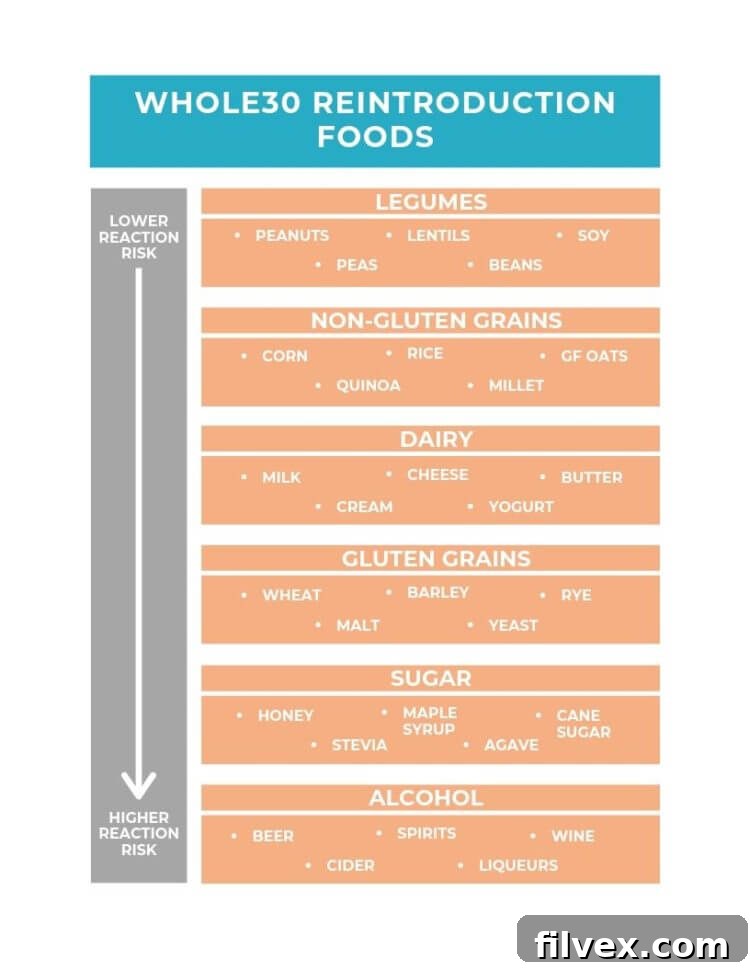
The official Whole30 program recommends a specific sequence for reintroducing food groups, carefully curated based on their potential inflammatory impact, moving from generally less inflammatory to more inflammatory foods. This strategic order helps minimize the risk of strong reactions early in the process, allowing you to gradually test your body’s resilience. Here’s the recommended order from the Whole30 experts:
- Legumes: Including beans, lentils, peanuts, and soy.
- Non-Gluten Grains: Such as rice, corn, oats, and quinoa.
- Dairy: Milk, cheese, yogurt, and other dairy products.
- Gluten-Containing Grains: Wheat, barley, rye, and other gluten-containing products.
Beyond the List: Thoughtful Reintroduction of Sugar and Alcohol
You might notice that sugar and alcohol aren’t explicitly listed in the core reintroduction categories. This is intentional, as they often require a different mindset and approach. Our philosophy on these items is rooted in mindful consumption and personal awareness, rather than a rigid testing protocol akin to food groups.
Mindful Reintroduction of Sugar
When it comes to sugar, our perspective is one of flexibility and balance. After successfully navigating the reintroduction of the primary food categories, you can begin to loosen your approach to sweeteners slightly. Our personal strategy involves using natural sweeteners like honey, maple syrup, or coconut sugar judiciously in homemade recipes from time to time. We might also occasionally indulge in a treat that incorporates these natural alternatives. Furthermore, when dining out, we don’t overly stress about minimal amounts of added sugar found in sauces or dressings, acknowledging that complete control is not always feasible. However, our overarching aim is to minimize refined sugar consumption to the greatest extent possible. We’ve found that both our energy levels and overall well-being significantly improve when refined sugars are kept to a minimum, guiding our ongoing choices.
Navigating Alcohol Post-Whole30
Alcohol is another area where personal discernment and moderation are key. Our advice is to consider reintroducing alcohol only if you genuinely desire a drink, and ideally, after you have completed the reintroduction of the primary food groups. When we do choose to consume alcohol, we prioritize quality and purity. We make an effort to select organic or biodynamic wines that are free from added sugars, sulfites, or unnecessary additives. Dry Farm Wines stands out as an excellent option for those seeking high-quality, clean wines.
For those who enjoy spirits, a simple approach is often best. For instance, Justin occasionally enjoys cocktails at home or in restaurants, opting for clear, hard alcohols like tequila or vodka mixed with sparkling water and a squeeze of lime. Personally, I am not a frequent drinker, so this aspect of reintroduction is straightforward for me. If I occasionally desire a drink, I enjoy it, knowing it’s an infrequent occurrence that aligns with my overall health goals.
Your Journey, Your Rules: The Freedom to Omit Certain Foods
One of the most empowering discoveries many people make at the culmination of a Whole30 is a profound understanding of how certain foods truly make them feel. You might find yourself feeling so exceptionally well that you have no desire to reintroduce a particular food group. For us, gluten falls squarely into this category. Both of us experience significant improvements in energy, digestion, and overall vitality when we completely avoid gluten. Consequently, our firm conviction is to maintain a gluten-free lifestyle as a non-negotiable minimum.
So, to answer your question unequivocally: NO, you absolutely do not have to reintroduce every single food item. If a specific food group or individual food holds no appeal for you, or if you already suspect it negatively impacts your well-being, you are perfectly empowered to continue avoiding it indefinitely. Whether you choose to remain gluten-free, dairy-free, or exclude any other food that doesn’t serve you, this is a core principle of lasting food freedom. The overarching objective of the Whole30 and its reintroduction phase is to meticulously tailor a sustainable lifestyle that embraces the foods you genuinely enjoy and that promote your health, while confidently shedding those that simply do not work for your unique body. Let’s delve into actionable strategies for achieving your most successful Whole30 reintroduction.
Essential Strategies for Your Best Whole30 Reintroduction Experience
To maximize the insights gained from this critical phase and build a truly personalized eating plan, consider these vital tips:
- Prioritize Testing the Foods You Truly Desire to Reintroduce: Begin your reintroduction journey slowly, always adhering to the recommended order of food groups (least likely to be inflammatory first). However, within those guidelines, fine-tune your approach by specifically testing the individual foods you genuinely wish to incorporate back into your diet. For instance, within the legume category, I might start by testing lentils and black beans, as these are foods I occasionally enjoy. I would also specifically test peanuts, as peanut butter is a welcome treat now and then. Crucially, test each specific food separately, ensuring ample time in between to accurately gauge any potential issues. This targeted approach ensures you gain actionable insights for the foods most relevant to your life.
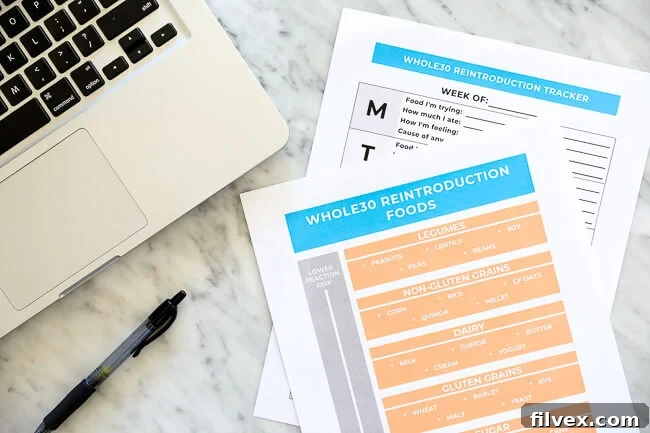
- Diligently Utilize a Comprehensive Tracker: The human memory is fallible, especially when trying to connect subtle symptoms to specific foods days later. We highly recommend using a dedicated tracking tool. We created this complimentary Whole30 Reintroduction Tracker precisely for this purpose. It allows you to meticulously record what you’ve tested, document how you feel each day, and note any symptoms that emerge. It was through meticulous journaling like this that I personally discovered certain dairy products consistently triggered my headaches. A tracker is your most valuable asset in this discovery phase.
- Embrace the “Slow and Steady Wins the Race” Philosophy: This is arguably the most crucial principle. We strongly advise waiting a full 3 to 4 days before introducing a new food group or specific food. This extended waiting period provides sufficient time for even delayed reactions to manifest clearly. Consistently take detailed notes each day – documenting physical symptoms, energy levels, mood shifts, and digestive function – so you can confidently attribute any reactions to the food you most recently tested.
- Revert to Whole30 Eating on Rest Days: During the 3-4 day assessment period between introducing new foods, it is absolutely vital to return to strict Whole30 compliant eating. This practice serves as your control group. By eliminating all other variables, you can be confident that any symptoms you experience are directly attributable to the specific food you are currently testing, allowing you to accurately determine if it’s compatible with your body or not.
- Develop a Strategic Reintroduction Plan: Don’t leave this critical phase to chance. Take the time to map out precisely which specific foods you intend to try and when. Pencil them into your calendar, creating a clear and actionable schedule. Once your plan is set, commit to it diligently. Seeing your reintroduction through to completion is the only way to achieve true, lasting food freedom. The ultimate objective is to confidently identify and integrate all the foods you enjoy that support your body’s optimal function. This level of personalized understanding and application is only possible if you dedicate the necessary time and effort to a structured reintroduction period.
- Remember, You Are Not Obligated to Reintroduce All Foods: As reiterated previously, this process is about personalization, not obligation. If you feel fantastic and have no intrinsic desire to reintroduce a particular food group or specific food – perhaps due to past negative experiences or simply a lack of interest – you are entirely free to continue your journey without reintroducing it. Your health and well-being are the ultimate priorities.
Steering Clear of Common Whole30 Reintroduction Mistakes
While the reintroduction phase offers immense potential for self-discovery, it’s also a period where common missteps can easily derail your progress. By being aware of these pitfalls, you can navigate your reintroduction more effectively:
- The “Celebration Binge” on Multiple Foods: A common and understandable mistake is the urge to “celebrate” the completion of Whole30 by indulging in a feast of all previously restricted foods. People, understandably excited, might go out and binge on a variety of treats, drinks, and processed items. This invariably leads to a “food hangover” – a cascade of uncomfortable symptoms like digestive distress, fatigue, headaches, and mood swings. This approach completely obscures any insights, as you’ll have no idea which specific food caused which symptom. Essentially, you’ll need to revert to strict Whole30 eating for at least a week to reset your system before you can attempt a proper, systematic reintroduction. In our experience, this setback is simply not worth the fleeting gratification.
- Neglecting to Reintroduce Foods You Genuinely Love: The goal of Whole30 is not to live a life of perpetual restriction, but to empower you with choices. If there’s a food you genuinely love and that brings you joy, do yourself the favor of attempting to reintroduce it. You might indeed discover that some beloved foods consistently cause issues and are best avoided for your overall well-being. However, you might also find that some foods you feared are perfectly acceptable in moderation. The only way to truly build YOUR perfect, enjoyable eating plan is to test the waters with these personal favorites. Don’t deprive yourself of potential happiness without giving it a proper, controlled test.
- Rushing the Reintroduction Process: As highlighted repeatedly, patience is your most valuable virtue during this phase. Failing to observe the recommended 3-4 day waiting period between introducing new foods is a critical error. Without this buffer, it becomes exceedingly difficult, if not impossible, to accurately correlate specific foods with specific symptoms, leaving you confused and undermining the entire purpose of reintroduction. Remember: slow and steady truly wins this race, providing clarity and confidence in your choices.
- Skipping the Crucial Step of Keeping Detailed Notes: In the midst of daily life, it’s remarkably easy to forget what you ate, when you ate it, and how you felt on a particular day. Without a system for recording your introductions and your body’s responses, you’ll struggle to identify patterns and make informed decisions. Don’t rely on memory alone. Utilize a dedicated tracker or journal. Here’s the Whole30 Reintroduction Tracker we’ve created to simplify this essential task.
Beyond the Basics: What If Top Allergens Aren’t Your Main Issue?
Congratulations if you’ve completed your Whole30 and a successful reintroduction of the standard food groups, yet still experience persistent symptoms or a general feeling of “off-ness.” This indicates that the common allergens might not be the primary culprits for your unique body. This is a common realization, and it’s a testament to your heightened body awareness. For me, potatoes are a notorious nemesis; despite several elimination and reintroduction attempts, they simply don’t agree with my system. If you find yourself in a similar position, here are some advanced troubleshooting tips:
- Consider Other Potential Culprits: The world of food sensitivities extends beyond the standard Whole30 reintroduction groups. Other common, yet often overlooked, triggers include:
- Nightshades: A family of plants including tomatoes, potatoes (sweet potatoes are not nightshades), eggplants, peppers (bell, chili, cayenne), and goji berries. Some individuals react to compounds in these foods.
- Eggs: While often considered Whole30 compliant, egg sensitivity is quite common.
- Nuts (Specific Varieties): While peanuts are legumes, other tree nuts (almonds, cashews, walnuts, etc.) can also be triggers for some, even if not a full allergy.
- High-FODMAP Foods: FODMAPs (Fermentable Oligo-, Di-, Mono-saccharides And Polyols) are types of carbohydrates that can cause digestive distress in sensitive individuals. Common high-FODMAP foods include certain fruits (apples, pears), vegetables (onion, garlic, mushrooms), legumes, and dairy.
- Onion and Garlic: These are foundational ingredients in many cuisines but are also high in FODMAPs and can be problematic for some.
- Harness Your Intuition Through Targeted Elimination: Your body often sends subtle signals. If you consistently suspect a particular food, even one outside the major allergen categories, trust your intuition. Approach it like a mini-Whole30: eliminate that specific food completely for a period (2 to 4 weeks is a good starting point), then systematically reintroduce it, observing your symptoms closely. I employed this strategy with eggs when I had an inkling they might be contributing to some underlying issues for me. After stopping them for a couple of weeks, reintroducing them clearly brought back undesirable symptoms. This process of “rinse and repeat” can be incredibly effective for identifying individual food triggers.
- Seek Professional Guidance: If you’ve diligently worked through the standard reintroduction, explored other common culprits, and still feel unable to pinpoint what’s not working for you, it’s time to bring in professional support. Consult with a qualified naturopath, functional medicine practitioner, or a registered dietitian specializing in food sensitivities. These professionals can offer advanced testing (such as IgG food sensitivity tests, gut microbiome analysis, or hydrogen breath tests) and provide personalized, expert guidance to help you uncover the root causes of your symptoms and formulate a truly effective, long-term eating plan. Investing in this professional help is a profound investment in your lasting health and well-being.
Your Journey to Lasting Food Freedom Begins Now
We sincerely hope that these detailed tips and insights into common mistakes will serve as an invaluable resource as you embark on your Whole30 reintroduction phase. Understand that this period is arguably the most powerful and transformative part of the entire Whole30 process, offering profound opportunities for self-discovery and the creation of a truly personalized eating plan. It is unequivocally worth the dedicated time and effort.
Keep your ultimate health goals firmly in mind, meticulously craft your reintroduction plan, and diligently track your progress. The clarity and confidence you gain from understanding your unique body will empower you with true food freedom for years to come. We encourage you to share your experiences; leave a comment below to let us know how your reintroduction journey unfolds, and don’t forget to tag us in your reintroduction posts on Instagram @realsimplegood. If you haven’t already, give us a follow – let’s stay connected and support each other on this incredible path to optimal health!
Like this Post?
SHARE IT NOW OR PIN IT FOR LATER!