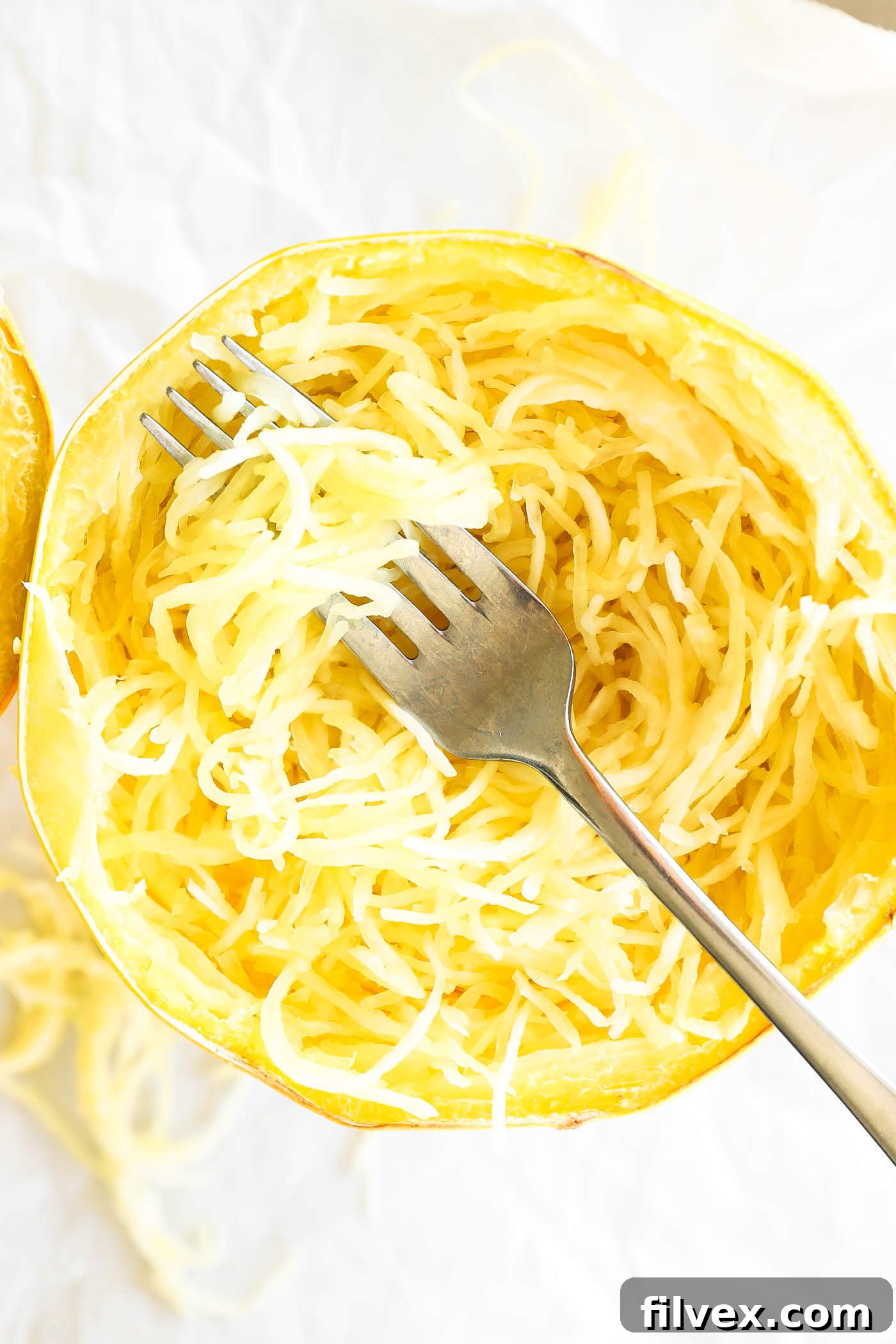
Mastering Spaghetti Squash: Your Guide to Perfect, Non-Mushy Noodles
Spaghetti squash has emerged as a beloved vegetable alternative for pasta, offering a wholesome, low-carb, and gluten-free option for countless dishes. But the secret to truly enjoying this versatile winter squash lies in knowing how to cook it right. Nobody wants a watery, mushy mess – you’re after those long, firm, spaghetti-like strands!
This comprehensive guide will equip you with all the knowledge to transform a humble spaghetti squash into delicious, tender, yet firm “noodles” every single time. We’ll cover everything from the crucial first cut to various cooking methods and essential tips for preventing sogginess.
Here’s what you’ll discover in this post:
- The Secret to Longer Strands: How to Cut Spaghetti Squash (It’s Not What You Think!)
- Multiple Cooking Methods: Oven-Baked, Instant Pot, and Air Fryer
- Achieving Perfect Doneness: No More Mushy or Watery Noodles!
- Expert Tips & Tricks to Guarantee Success
- The Nutritional Perks of Spaghetti Squash
- Inspiring Recipes to Create with Your Perfectly Cooked Squash
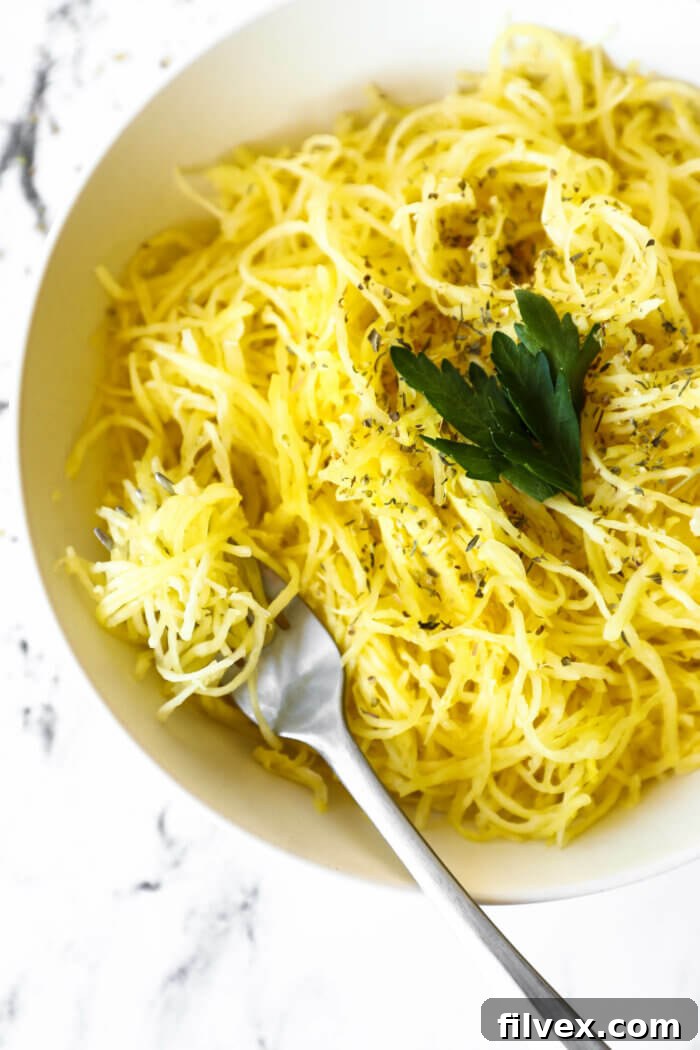
The Secret to Longer Strands: How to Cut Spaghetti Squash (It’s Not What You Think!)
The most common mistake people make when cooking spaghetti squash is how they cut it. While it might seem natural to slice it lengthwise (from stem to end), doing so actually cuts all the natural “strands” in half, resulting in shorter, less pasta-like noodles. For the longest, most impressive spaghetti-like strands, you should always cut spaghetti squash crosswise (around its equator, not from pole to pole). This might feel counterintuitive at first, but it makes all the difference.
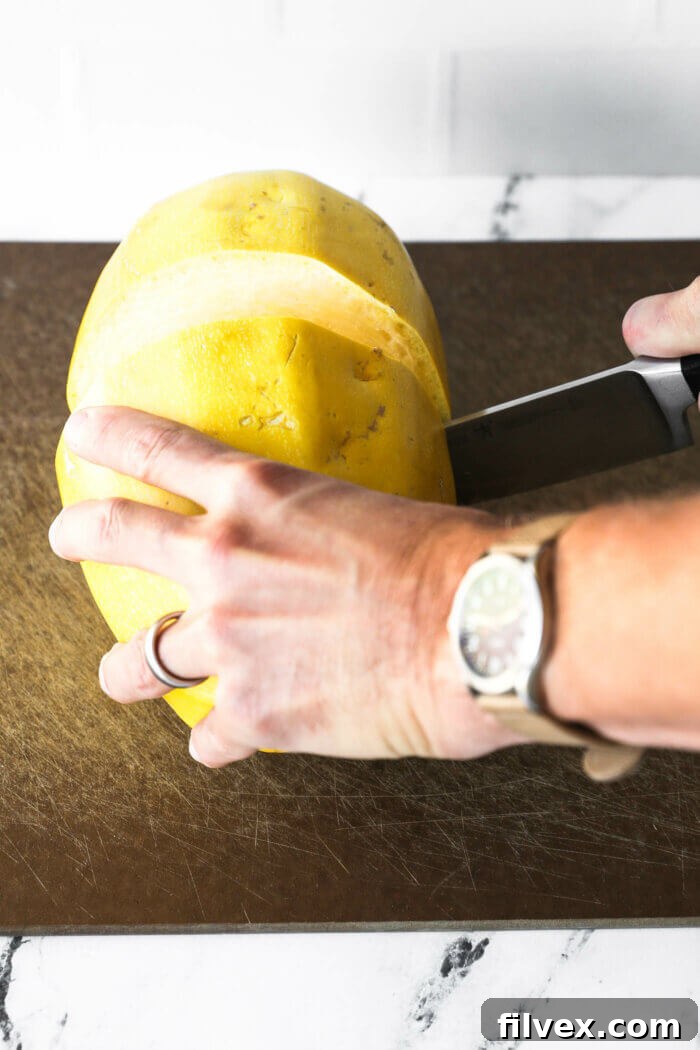
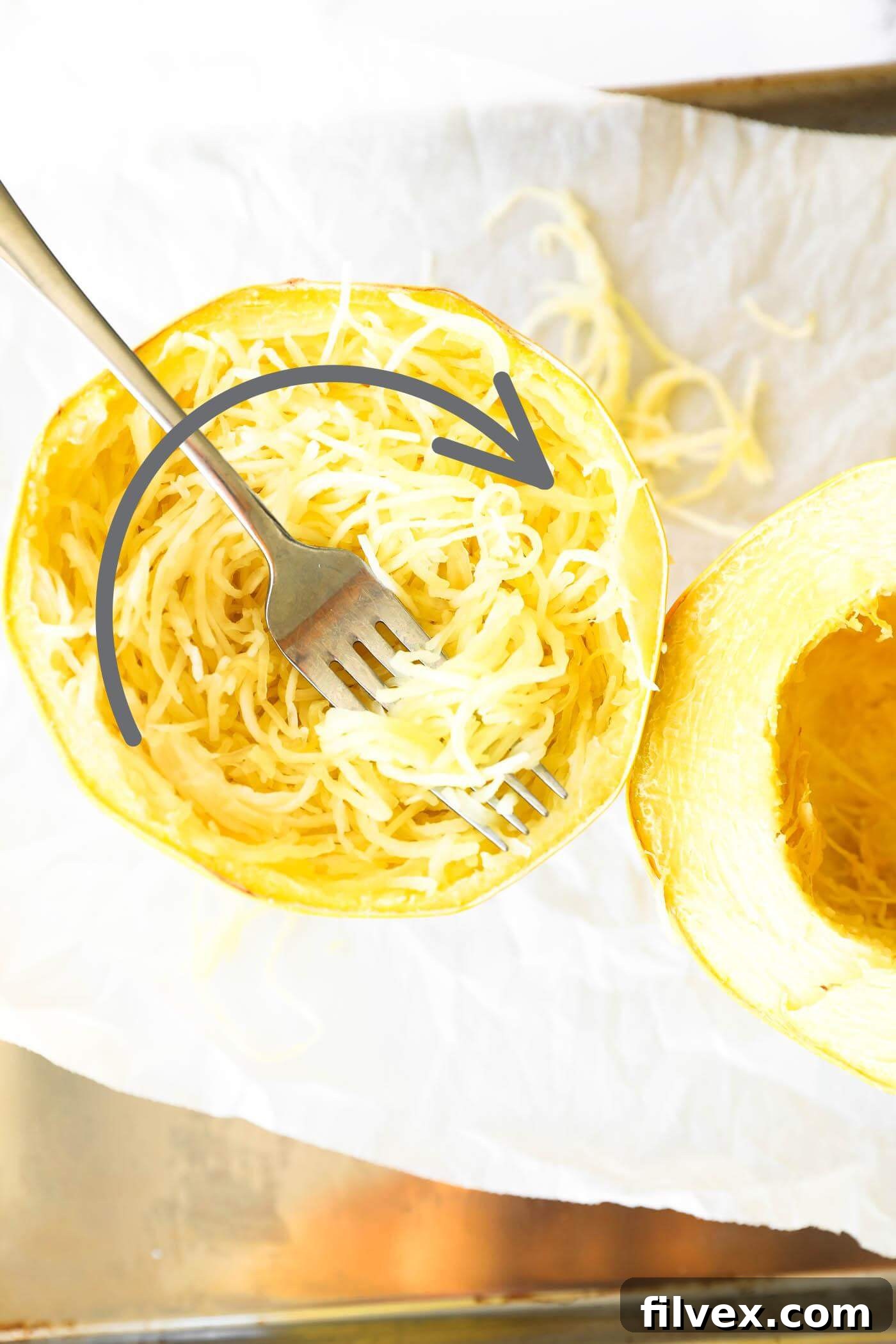
As illustrated in the images above, the spaghetti squash strands are oriented in a circular pattern, following the squash’s round shape. Therefore, a lengthwise cut severs these strands, yielding shorter segments. A crosswise cut, on the other hand, keeps the longest noodle strands intact, allowing you to scrape out beautiful, elongated “spaghetti.”
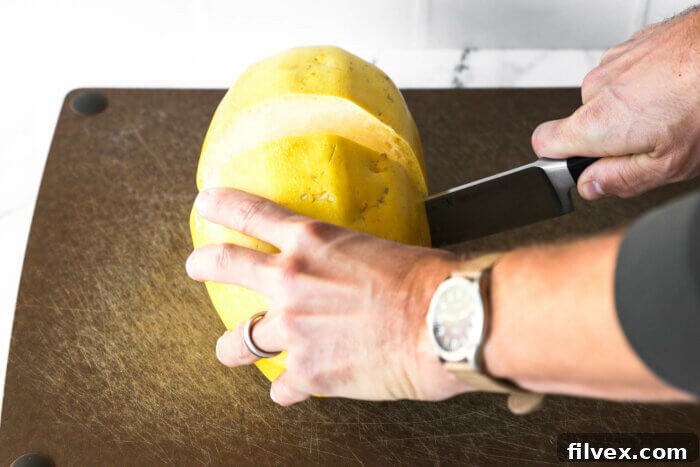
Cutting Tip for Safety and Ease: Spaghetti squash has a tough outer skin, so always exercise caution when cutting. Place the squash on a stable cutting board. Using the sharp tip of a sturdy chef’s knife, carefully pierce the skin in the center. Apply steady, downward pressure and slowly work your knife around the squash, rotating it until it splits into two equal halves. If you find it too hard to cut raw, you can microwave the whole squash for 3-5 minutes to soften the skin slightly before cutting.
Cooking Methods: Oven-Baked, Instant Pot, and Air Fryer
Once your spaghetti squash is perfectly cut, you have several excellent options for cooking it. Each method offers unique advantages, whether you prioritize a traditional roast, speed, or a slightly crisper texture.
Method 1: How to Make Oven-Baked Spaghetti Squash (Step-by-Step)
Oven baking is a classic method that brings out the squash’s natural sweetness and offers a slightly drier noodle, which helps prevent sogginess. Follow these simple steps for perfectly roasted spaghetti squash:
- Prepare Your Oven: First, line a baking sheet with parchment paper for easy cleanup and to prevent sticking. Preheat your oven to 400° Fahrenheit (200° Celsius).
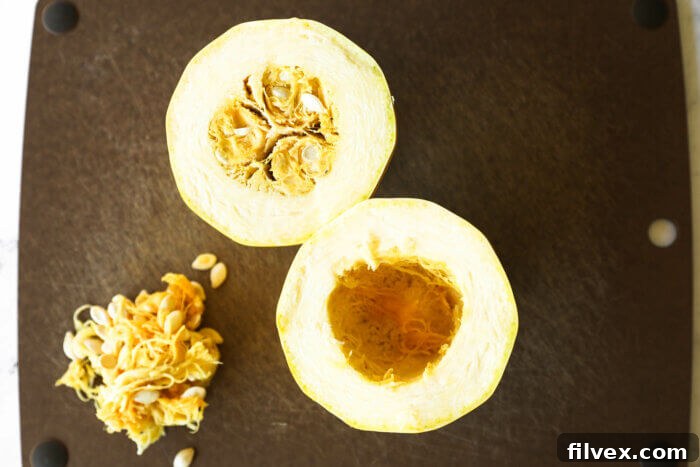
- Cut and Seed the Squash: Cut the spaghetti squash in half crosswise with a sharp knife, as demonstrated in the previous section. Then, using a sturdy spoon, scoop out all the seeds and fibrous pulp from the middle of both squash halves. Discard the seeds or save them to roast separately for a healthy snack!
- Seasoning (Optional but Recommended): For enhanced flavor, drizzle a small amount of olive oil over the cut sides of the squash. Season generously with salt and black pepper. You can also add other seasonings like garlic powder, onion powder, or a dash of paprika for extra depth.
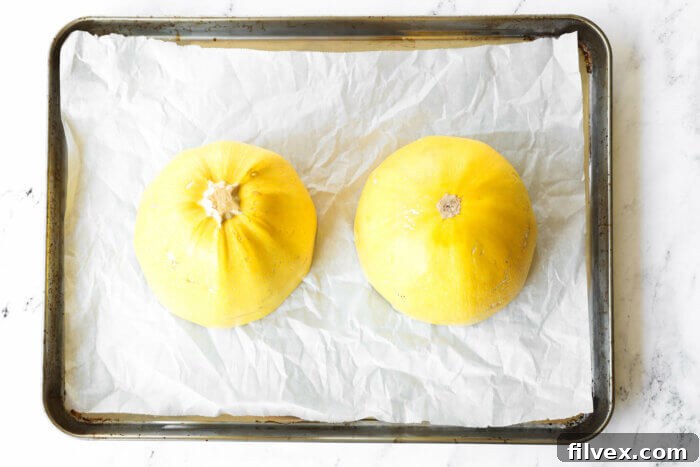
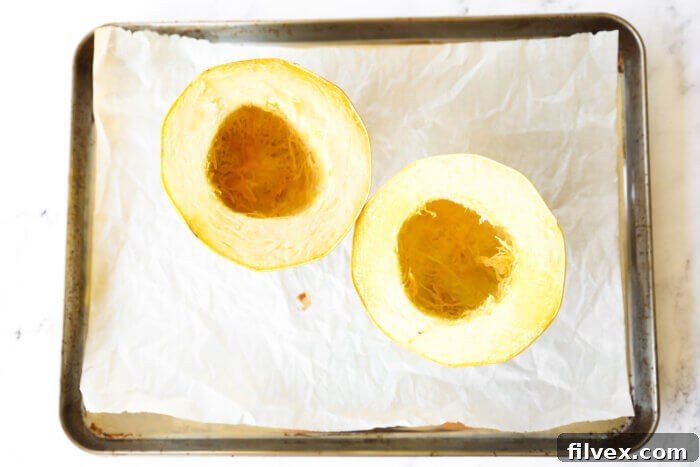
- Roast to Perfection: Place the squash halves cut-side down on the prepared baking sheet. This orientation helps to steam the flesh, ensuring even cooking, and allows excess moisture to evaporate, preventing watery noodles. Bake at 400°F for 25-35 minutes.
- Check for Doneness: The cooking time will vary depending on the size of your squash. An average-sized squash (around 2-3 pounds) typically takes about 30 minutes. The squash is ready when its skin can be easily pierced with a fork and the flesh feels tender, yet still firm. Avoid overcooking, as this is the primary cause of mushy squash.
- Cool and Scrape: Remove the squash from the oven and allow it to cool down enough so you can comfortably handle it, usually about 10-15 minutes. This cooling period is crucial as it allows the squash to firm up slightly and makes the scraping process easier.
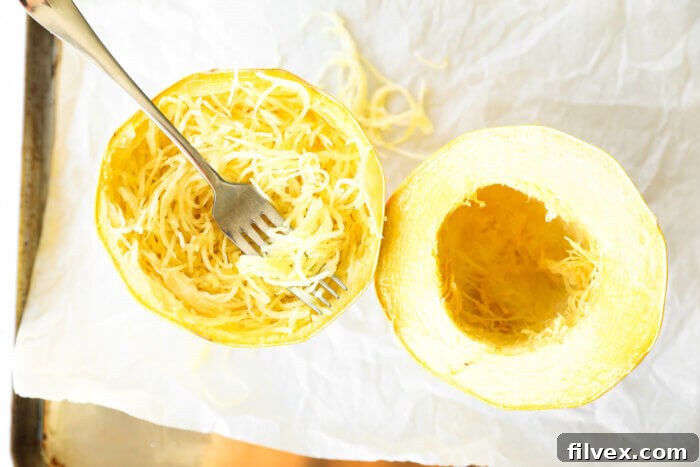
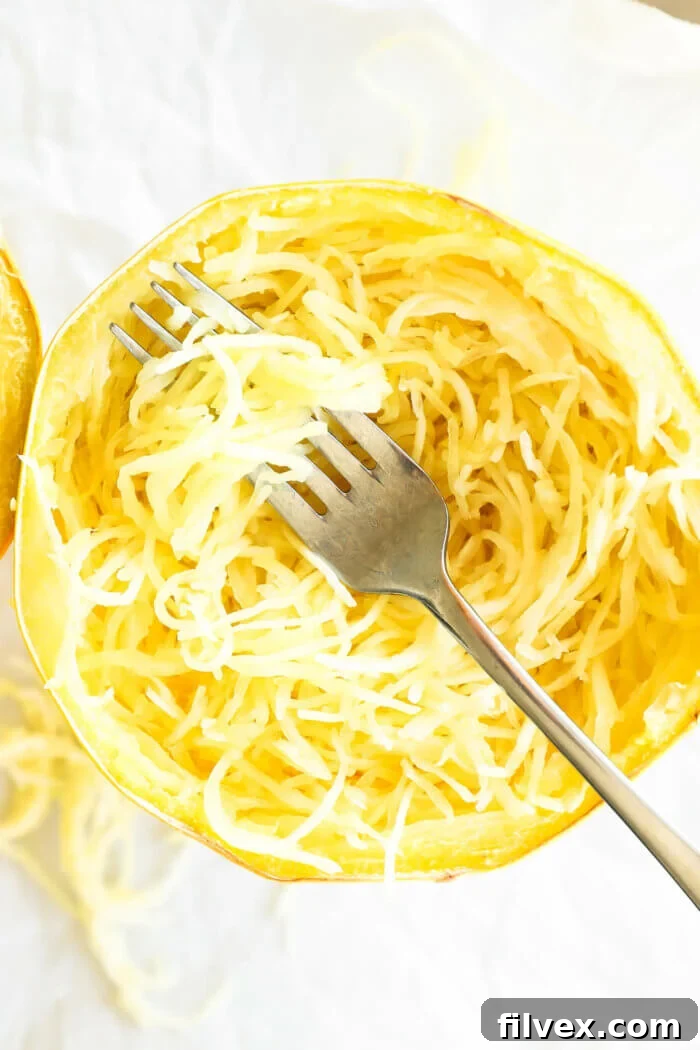
- Create the “Noodles”: Once cooled, use a fork to gently pull the cooked squash flesh away from the sides and scrape it out of the shell. You’ll observe it separating beautifully into long, distinct, spaghetti-like strands. Work your way around the entire interior of the squash until all the flesh is removed.
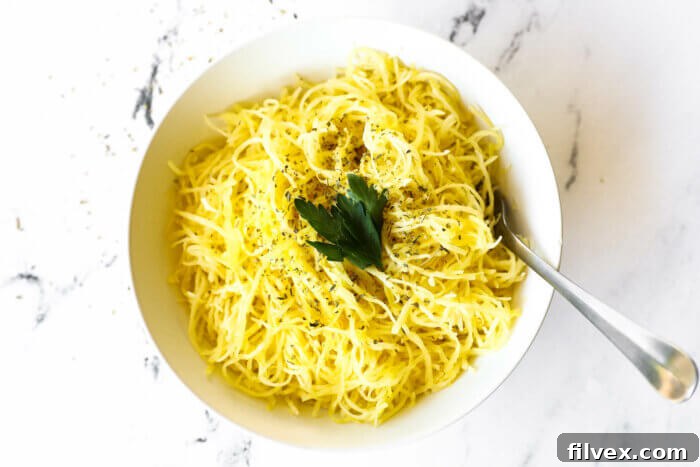
- Serve and Enjoy: Your perfectly roasted spaghetti squash noodles are now ready to be served! Toss them with your favorite sauce, a simple mix of olive oil, butter, and herbs, or incorporate them into any recipe that calls for spaghetti squash.
Method 2 & 3: How to Cook Spaghetti Squash in the Instant Pot or Air Fryer
For both of these alternative methods, begin by following the initial steps of cutting the squash crosswise and scooping out the seeds from the middle, just as you would for oven baking. These methods offer quick and convenient ways to cook spaghetti squash, perfect for busy weeknights.
Instant Pot Method:
The Instant Pot uses steam and pressure to cook spaghetti squash quickly. This method is incredibly fast, but can sometimes yield slightly more watery noodles, which can be managed with proper draining (see tips below).
- Prepare the Pot: Place the trivet (or a steamer rack) in the Instant Pot and add 1 cup of water to the bottom of the pot.
- Load the Squash: Carefully place the spaghetti squash halves onto the trivet, cut-side up or down (either works).
- Pressure Cook: Secure the lid on the Instant Pot and ensure the pressure valve is closed (set to sealing). Press the “Manual” button (or “Pressure Cook” button on newer models) and set the cooking time for 8 minutes at high pressure for an average-sized squash.
- Release Pressure: Once the cooking time is complete, carefully perform a quick release of the pressure manually by turning the valve to venting. Be cautious of the hot steam.
- Cool and Scrape: Allow the squash to cool for about 10 minutes, then scrape out the noodles with a fork as described in the oven-baked method.
Air Fryer Method:
The Air Fryer method is excellent for those who appreciate a slightly drier, more caramelized squash texture. It’s a quick and efficient way to cook smaller to medium-sized spaghetti squash halves.
- Preheat: Preheat your air fryer to 400° Fahrenheit (200° Celsius).
- Arrange in Basket: Place the spaghetti squash halves cut-side down in the air fryer basket. Ensure they are in a single layer and not overcrowded for best results. You may need to cook in batches if you have a large squash or a smaller air fryer.
- Air Fry: Cook for 20-25 minutes. The exact time will depend on your air fryer model and the size of the squash. Check for doneness by piercing the skin with a fork.
- Cool and Scrape: Once cooked, allow the squash to cool for about 10 minutes before scraping out the long, spaghetti-like strands with a fork.
NOTE: All spaghetti squash are different sizes. The cooking times noted above are general guidelines for “average-sized” squash (typically 2-3 pounds). Always adjust cooking times as needed for larger or smaller squash to ensure proper doneness without overcooking.
Regardless of the cooking method you choose, the final step remains the same: after allowing the cooked spaghetti squash to cool enough to handle (around 10 minutes), use a fork to gently pull the squash flesh from the sides. It will naturally separate and scrape out of the shell, forming those desired long, delicate, spaghetti-like noodles.
Tips For Avoiding Mushy, Watery Noodles
The biggest challenge with spaghetti squash is often preventing it from becoming a watery, flavorless mess. Follow these essential tips to ensure your noodles are always firm, flavorful, and perfectly textured:
- Do NOT Overcook Them! This is the absolute #1 reason for mushy, watery noodles. Spaghetti squash is unique; it doesn’t need to be fall-apart soft to be cooked through. The flesh should be tender but still offer a slight resistance when pierced with a fork. It will feel firm, not squishy, when properly cooked. Stick to the recommended cooking times and check often, especially if you have a smaller squash.
- Avoid Double Cooking: Many recipes might call for baking the squash to get the noodles, and then baking the noodles again within a casserole or another dish. While this is sometimes unavoidable, try to minimize the second cooking phase. When incorporating pre-cooked spaghetti squash into a warm dish, focus on simply warming the noodles through with the other ingredients, rather than cooking them for an extended period.
- Add Cooked Noodles at the Very End: If you’re combining your spaghetti squash noodles with a warm sauce, a stir-fry, or any other heated ingredients, incorporate them right at the end of the cooking process. A quick toss to coat and warm them up is usually sufficient, preserving their texture.
- Strain Excess Water: Even with careful cooking, some squash can release more water than others, especially when cooked in the Instant Pot or larger squash varieties. If you notice your noodles are a bit soft or watery after scraping, place them in a colander and let them sit for 10-15 minutes. You can even gently press them with a clean kitchen towel or paper towels to wick away additional moisture. This simple step can dramatically improve their texture.
- Consider Salting Before Roasting: For oven-baked squash, sprinkling salt on the cut sides before roasting can help draw out some moisture as it cooks, resulting in drier noodles.
- Ensure Even Heat: When oven baking, placing the squash cut-side down helps steam and cook it evenly while allowing moisture to escape. In an air fryer, don’t overcrowd the basket to allow for proper air circulation.
The Nutritional Perks of Spaghetti Squash
Beyond its incredible versatility as a pasta substitute, spaghetti squash is a powerhouse of nutrition. It’s a fantastic addition to any healthy diet, offering numerous benefits:
- Low in Calories and Carbohydrates: Compared to traditional pasta, spaghetti squash is significantly lower in both calories and carbs, making it an excellent choice for those managing weight or following low-carb diets like keto or paleo.
- Rich in Fiber: It’s a good source of dietary fiber, which aids in digestion, promotes a feeling of fullness, and helps regulate blood sugar levels.
- Packed with Vitamins and Minerals: Spaghetti squash contains essential nutrients such as Vitamin C, Vitamin B6, niacin, and potassium. These contribute to immune function, energy metabolism, and overall bodily health.
- Antioxidant Properties: Like many colorful vegetables, it contains antioxidants that help protect cells from damage caused by free radicals.
- Hydrating: With its high water content, spaghetti squash can contribute to your daily hydration needs.
Incorporating spaghetti squash into your meals is an easy and delicious way to boost your vegetable intake and enjoy healthier versions of your favorite comfort foods.
Delicious Recipes with Spaghetti Squash
Now that you’re an expert at cooking spaghetti squash to perfection, it’s time to put those lovely noodles to good use! Spaghetti squash is incredibly versatile and pairs well with a variety of flavors and sauces. Here are some fantastic recipe ideas to inspire your next meal:
- Creamy Garlic Spaghetti Squash Casserole
- Taco Stuffed Spaghetti Squash
- Spaghetti Squash Carbonara
- Shrimp and Broccoli Spaghetti Squash Alfredo
- Instant Pot Spaghetti and Meatballs (can adapt with squash noodles)
How to Cook Spaghetti Squash (That’s NOT Mushy or Watery!)
5 mins
25 mins
30 mins
Pin Recipe
Leave a Review
Ingredients
- 1 spaghetti squash
- olive oil, (optional)
- salt and pepper, (optional)
Instructions
-
Preheat oven to 400° Fahrenheit and line a baking sheet with parchment paper.
-
Place spaghetti squash on a cutting board so one end is on your right side and one end is on your left side (crosswise). Using a sharp knife, poke the knife tip through the skin of the center of the squash. Apply pressure to slide the knife into the flesh and slowly work your way around the squash until it is in two pieces.
-
Scoop the seeds out of the squash with a spoon and discard. Drizzle a little olive oil and salt and pepper on the cut sides of the squash (optional).
-
Place the squash cut side down on the baking sheet.
-
Place in the oven to roast for 25-35 minutes.
-
Carefully remove the squash from the oven and allow it to cool enough to handle, about 10 minutes.
-
Using a fork, gently pull the squash flesh from the sides and scrape it out of the shell. It will separate into long, spaghetti-like strands.
-
Enjoy these noodles tossed with a simple mix of oil/butter, herbs, and salt and pepper. Or, use them in any recipe calling for spaghetti squash (see blog post above for some recipe suggestions).
Last Step:
Please leave a star rating and comment to let us know how you liked this recipe! Your ratings and reviews help our business grow, thank you!
Notes
Main Course
Justin Winn
American
Did you make this recipe?
Tag @realsimplegood with hashtag #realsimplegood on Instagram. We love to see what you make!