
The buzz around intermittent fasting had grown too loud to ignore. For years, I’d dismissed the idea of skipping meals, especially breakfast, fearing the notorious “hangry monster” within. But a lingering question persisted: could I truly embrace a 30-day intermittent fasting challenge and emerge a more balanced, less ill-tempered individual? This is my story of breaking free from rigid meal routines and discovering surprising personal insights.

Confronting the Hangry Monster Within
Before diving into my intermittent fasting results and the detailed journey, it’s crucial to understand my baseline – my relationship with food and my eating habits. For as long as I could remember, certainly for all of my 38 years, breakfast was non-negotiable. The adage of “three square meals a day” wasn’t just a guideline; it was a deeply ingrained rule I adhered to without question. My rationale was simple: straying from my customary meal times inevitably transformed me into an irritable, short-tempered individual – a genuine “hangry monster.”
The predictable, dreaded progression of my hunger-induced mood swings would typically unfold like this:
- As mealtime approached: A persistent inner voice would demand, “When are we going to eat? Doesn’t anyone else realize how urgent this is?” My focus would narrow, fixated solely on the next meal.
- At the scheduled mealtime, sans food: A wave of intense hunger would wash over me, accompanied by an irrational annoyance with my surroundings. “I’m incredibly hungry, why is everyone around me so irritatingly slow or loud?”
- When mealtime had passed: The situation escalated. “I NEED FOOD NOW.” All pleasantries would vanish, replaced by curt, terse responses to anyone who dared to speak to me, regardless of their innocent intentions.
- With more time passing: My internal monologue would scream, “WHEN AM I GOING TO EAT?!” By this point, I would have fully transformed into a complete jerk, snapping at anyone unfortunate enough to cross my path.
- Even further delay: My emotional state would spiral completely out of control. “OK, I’M SCREWED.” I’d lose all semblance of composure, fully engulfed in raging hangry monster mode, a state characterized by extreme irritability and irrationality.
To an outside observer, my transformation into this creature of hunger-driven rage was likely quite apparent and, I’m sure, unpleasant to witness:

The pattern was deeply ingrained. Once I finally managed to consume some food after this dramatic progression, a profound calm would gradually settle over me. Halfway through the meal, I’d begin to reflect on my earlier “hangry” self, shaking my head at my own irrationality. This introspection would invariably lead to apologies for my terrible behavior. “Sorry, I was being an absolute jerk earlier,” was a common refrain, repeated far too often throughout my adult life.

Photo credit: Natalie Puls Photography
Embracing the Intermittent Fasting Challenge
Given my well-documented history with hunger-induced irritability, it’s easy to understand why I approached intermittent fasting with a healthy dose of apprehension. The thought of deliberately skipping meals, especially breakfast, felt like an open invitation for my hangry alter ego to dominate. However, armed with curiosity and a desire for change, I decided to give it a sincere try. After researching various intermittent fasting options, I opted for the 16/8 protocol, which seemed the most accessible starting point for a novice like myself.
Understanding the 16/8 Intermittent Fasting Protocol
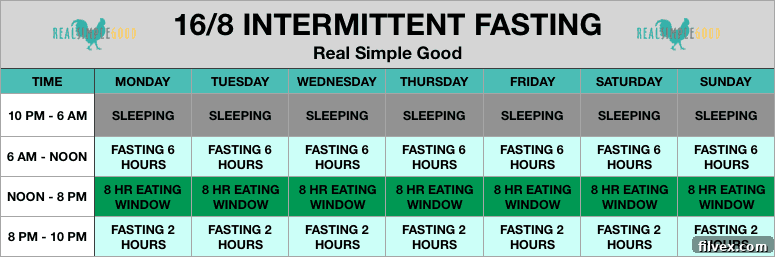
The appeal of the 16/8 intermittent fasting method lies in its elegant simplicity. The premise is straightforward: you consume all your daily food within an 8-hour eating window and fast for the remaining 16 hours. For me, this translated into consistently skipping breakfast. My eating window would typically be from 12 PM to 8 PM, or occasionally 11 AM to 7 PM, depending on my daily schedule. What made this protocol particularly appealing was that I didn’t have to fundamentally alter *what* I ate – a detail I’ll elaborate on later. The primary adjustment was simply restricting my food intake to that specific 8-hour period each day, allowing my body to experience an extended fasting state.
The Intermittent Fasting Experiment Begins
When I initially embarked on this journey, I certainly didn’t envision an extended period of intermittent fasting. My first goal was modest: just **one day**. It was purely an experiment, a venture into the unknown, heavily tinged with fear of unleashing my notorious inner “hangry monster.” Despite the trepidation, I took a deep breath and decided to give it a shot. Could I truly overcome decades of habit and physiological conditioning?

That’s me, wrestling with the intimidating prospect of skipping breakfast – “Uh, I’m not so sure about this,” my expression clearly conveying my inner doubts.
DAY 1: Facing the Fast
- Morning Struggle: As expected, hunger hit me hard around my usual breakfast time. The hours between 8 AM and 10 AM were particularly challenging, requiring significant mental fortitude to push through the cravings and habitual desire for food.
- Mid-Morning Headaches: A slight headache developed around 11 AM, likely a combination of initial adjustment and possibly caffeine withdrawal, but thankfully it subsided. I found myself obsessively counting down the seconds until noon, when I could finally break my fast.
- Battling the Beast: Fully aware of my past “hangry” tendencies, I tried to mentally prepare for the worst. There were definitely moments where I was short and snippy with Erica (my sincere apologies, love!). Thankfully, she anticipated this possibility and gave me space to manage my mood.
- Breaking the Fast: Noon arrived, and it was time to eat! After a satisfying lunch, I felt remarkably good and sustained, remaining full until my normal dinner time.
- Afternoon & Evening: I managed to avoid snacking in the afternoon and felt surprisingly fine. My usual 4:30 PM workout felt normal, with no noticeable dip in energy. Dinner was a standard meal, and I successfully resisted any post-dinner snacking.
By the end of Day 1, a sense of quiet accomplishment settled in. “Hey, that actually went pretty well,” I thought. The experiment was a success, at least for a single day. This unexpected positive outcome spurred me on: I decided to try it again tomorrow and see how things progressed!
Navigating the First Week of Intermittent Fasting
DAY 2: Adjusting to the New Rhythm
Having successfully completed one day, I approached Day 2 with a clearer understanding of what to expect. This slight familiarity made a significant difference. I didn’t experience the intense, ravenous hunger of the previous morning, nor did I feel the looming presence of the “hangry monster” as strongly. Instead, I felt more even-keel, a surprising sense of emotional stability. There was still a subtle “heady” sensation, a feeling that’s difficult to precisely articulate but less disruptive than the Day 1 headache. My two meals for lunch and dinner were normal and satisfying.
DAY 3: Finding My Stride
By Day 3, things genuinely began to smooth out. I woke up feeling remarkably good, a stark contrast to my pre-IF self. While hunger was still present, it was a manageable sensation, devoid of the emotional urgency it once held. I felt even-tempered and in complete control, able to navigate minor irritations like a rational human being rather than an exploding pressure cooker. My workouts continued to feel strong and effective. Plus, being a Friday, I even enjoyed a couple of celebratory cocktails with dinner, without any negative impact on my fasting routine the next day.
DAY 4: Weekend Warrior – Conquering Social Triggers
Saturday brought a shift in routine, often a major trigger for my previous irritability. Typically, after having drinks the night before, I’d be extra hungry in the morning. This still held true to an extent, but now I possessed a new ability to simply acknowledge the hunger and move past it. Erica and I attended a late afternoon birthday party, which pushed our dinner back significantly – historically a prime scenario for me to turn into a grumbling mess. Erica, ever observant, repeatedly asked if we needed to leave so I could eat. Despite being hungry, the “hangry monster” remained dormant! This was a profound moment of realization, signaling that something genuinely positive was unfolding.
DAY 5: The Ultimate Stress Test
This day presented the ultimate challenge, a situation that would have undoubtedly pushed me over the edge in the past. We decided to test drive a new truck and ended up buying it. Anyone who has purchased a vehicle knows the drill: test drive, detailed discussions about options and pricing, an hour of back-and-forth negotiation, and finally, endless paperwork. A morning filled with high stress and delayed gratification, right? This entire process stretched until almost 1:30 PM, and I hadn’t eaten a single thing! Erica and I were both ready to eat when we finally got home, but the miraculous part was that I didn’t lose my cool or snap at anyone. It was truly astonishing.
DAY 6: A Minor Setback, A Major Insight
Back to the regular Monday routine, I found myself irritable with Erica in the morning. I suspected the busy, slightly disruptive weekend had caught up with me. However, the crucial difference now was my enhanced ability to recognize this irritability for what it was and consciously pull back, preventing a full-blown “hangry” episode. This experience served as a valuable reminder that intermittent fasting isn’t always smooth sailing, and other factors can influence mood. It also highlighted my growing self-awareness.
DAY 7: One Week Down, A New Normal Emerges
One full week of intermittent fasting was now in the books! It truly felt like a new normal had settled in. Overall, I felt good, energetic, and mentally clearer. Adjusting to this new routine had its moments of difficulty, but the consistent, even-keel feeling I now experienced throughout the day was such a profound positive that I had no desire to stop. The question shifted from “Can I do this for a day?” to “Maybe I’ll just try and do it for 30 days and see how I feel?” The initial fear had been replaced by a genuine sense of optimism and curiosity.
The Remainder of the Month: Deepening the Intermittent Fasting Experience
WEEK 2: Adapting and Thriving
By the second week, the elusive “heady” feeling that had lingered at the beginning of Week 1 had completely vanished. My body was adapting remarkably well to the new eating schedule. My workouts felt good, though not yet exceptional, and I noticed a slight lethargy around my usual afternoon workout time. This prompted an adjustment: on Friday, I decided to try my first “fasted workout” around 10 AM. To my surprise, it felt fantastic! My energy levels seemed perfectly fine, and there was a distinct advantage to exercising without the feeling of a full stomach.
WEEK 3: Enhanced Focus and Well-being
By Week 3, the positive effects of intermittent fasting were undeniable. I found myself enthusiastically sharing my experience with friends and family, genuinely impressed by how good I felt. I began to ponder how long I would continue this new lifestyle. A particularly enjoyable aspect was the absence of the typical “overly full” or “stuffed” feeling, even immediately after meals. I felt strong and effective in my workouts, and perhaps even more significantly, my productivity and mental focus in the mornings reached new heights. My temperament remained consistently stable, free from the erratic “hangry” spikes that had plagued me for years.
WEEK 4: The New Normal Solidifies
Rounding out the full 30 days, I felt stronger and more confident than ever. Not eating until noon had transformed from a daunting challenge into a comfortable “new normal.” This “experiment” had profoundly impacted my overall well-being in ways I never anticipated. I was consistently eating two satisfying, substantial meals per day, with minimal or no snacking in between. I experienced less bloating, sustained and stable energy levels throughout the day, and most importantly, the dreaded “hangry monster” rarely, if ever, made an appearance.
Key Takeaways from My Intermittent Fasting Journey
- Quick Results and Benefits: You don’t need to commit to a lengthy period to experience the positive effects of intermittent fasting. Even just a few days can provide a noticeable difference in energy, mood, and hunger regulation, offering immediate encouragement.
- Personalized Scheduling: Flexibility is key. While skipping breakfast worked best for my schedule and preferences, intermittent fasting is highly adaptable. Your ideal 8-hour eating window might be from 9 AM to 5 PM, or any other period that seamlessly integrates into your lifestyle. Experiment to find what truly suits you.
- Prioritize Whole Foods: Intermittent fasting isn’t an excuse to eat unhealthily during your eating window. I found myself instinctively wanting to make my meals count, focusing on nutrient-dense, real foods to fuel my body and prevent deficiencies. Quality over quantity, even within an 8-hour window.
- Freedom from Bloating: One of the most pleasant, unexpected benefits was no longer feeling constantly bloated. In my pre-IF life, I would often wake up and eat immediately, sometimes even when not truly hungry. This frequently left me feeling overly full and uncomfortable throughout the day. Now, I feel satisfied after meals but without the heavy, bloated sensation.
- Reclaiming Time: Intermittent fasting cleared up a surprising amount of time in my daily routine. Eliminating one meal to plan, shop for, and cook translates into a valuable chunk of extra time each day. This newfound efficiency can be redirected towards productivity, hobbies, or simply enjoying a more relaxed morning.
My Comprehensive Intermittent Fasting Results
Overall, my 30-day intermittent fasting experiment yielded overwhelmingly positive results and a deeply transformative experience. While I haven’t committed to doing it forever, and its future form in my life might evolve, this trial taught me invaluable lessons about myself and my body. Primarily, I learned that I don’t have to be a complete slave to food and rigid meal times. The relentless mental clock that dictated when I “had” to eat has been reset. It’s incredibly liberating to have more leeway and flexibility in my day, allowing for life’s unpredictable moments to unfold without me collapsing into an irritable, irrational mess. Fundamentally, I feel better knowing I can comfortably go without eating for extended periods and maintain my composure and well-being.
Beyond the direct impact on my eating habits, this journey provided a deeper understanding of how other factors, particularly sleep, profoundly affect my mood. I’ve become acutely aware that irritability can be triggered by a lack of sleep just as powerfully as it used to be by a lack of food. This insight was completely absent before my fasting experiment. Now, I possess a heightened awareness and understanding of any mood swings that occur. This newfound self-awareness has empowered me to investigate the “why” behind my irritability or emotional fluctuations, leading to a much better understanding of myself and enabling me to make conscious adjustments to become a happier, more balanced individual overall.

Photo credit: Natalie Puls Photography
Valuable Intermittent Fasting Resources
If my experience has piqued your interest in learning more about intermittent fasting and how it might integrate into your own life, I highly recommend exploring the following resources. I found them to be exceptionally helpful in guiding my journey and understanding the science behind this eating pattern:
- Beginner’s Guide to Intermittent Fasting – Nerd Fitness
- Intermittent Fasting for Beginners – Diet Doctor
- The Beginner’s Guide to Intermittent Fasting – James Clear
- Intermittent Fasting Q&A – Diet Doctor
- Intermittent Fasting: Surprising Update – Harvard Medical School
A Final Reflection on Intermittent Fasting
This article details my initial, transformative experiment with intermittent fasting. I successfully maintained the 16/8 protocol for approximately five consecutive weeks before a 10-day hunting trip temporarily interrupted my routine. During that trip, I did not fast, reverted to eating three meals a day, was highly active, and deviated somewhat from my usual diet. However, upon returning home, I seamlessly transitioned back to my 16/8 intermittent fasting schedule without any issues. This effortless switch-back, after a period of non-fasting, highlighted a crucial learning: I had already gone through the initial adjustment phase and now possessed a much better understanding of what “true” hunger felt like, distinct from habitual or emotional cravings.
Today, I continue to skip breakfast most mornings, adhering to the 16/8 protocol, but I also allow myself the flexibility to eat it on occasion. This adaptability is perhaps the greatest long-term benefit. I can effortlessly switch back and forth between fasting and non-fasting days, feeling consistently good and in tune with my body’s needs. Intermittent fasting has become a flexible tool in my life, rather than a rigid restriction.
LIKE THIS POST? SHARE IT NOW OR PIN IT FOR LATER!