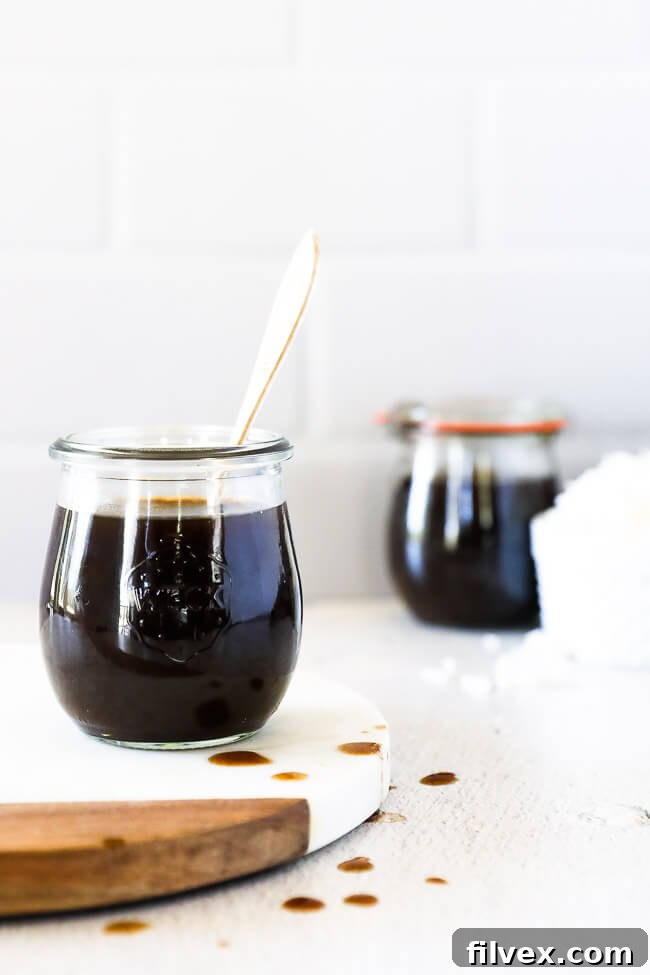
Craft Your Own Coconut Aminos: The Ultimate DIY Substitute for a Healthy Kitchen
This recipe is a game-changer! I struggled to find coconut aminos in my local stores, but now I can easily whip up a batch at home. The flavor is fantastic and perfectly mimics the real thing. No more endless searching – thank you for this incredible recipe!
Mary
Read more reviews >>
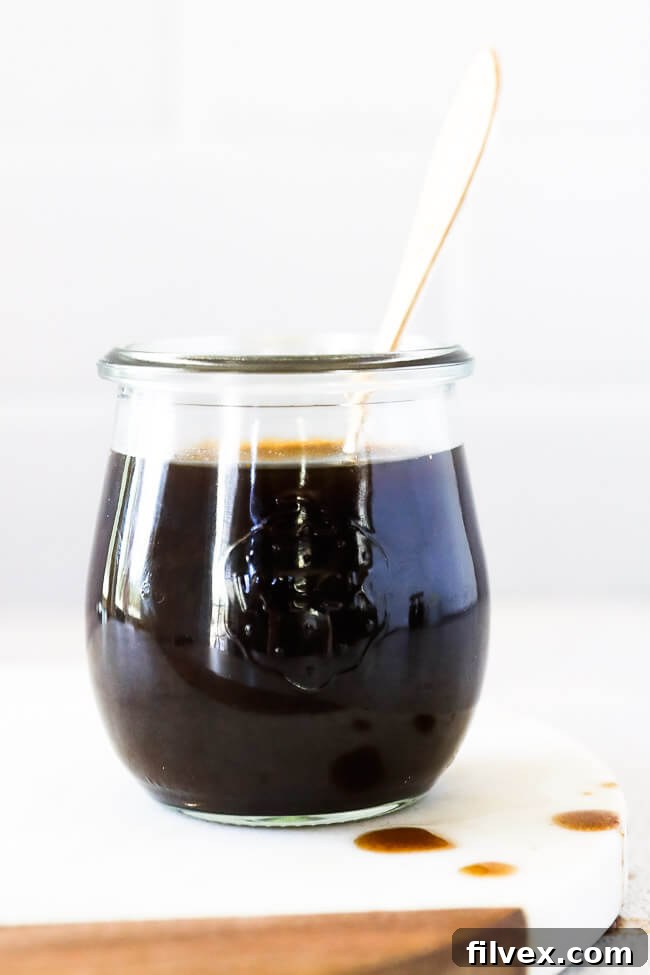
In today’s health-conscious world, many people are seeking healthier alternatives to traditional condiments. Coconut aminos have emerged as a popular choice, particularly for those avoiding soy or gluten, or following specific dietary protocols like Whole30 and Paleo. However, finding quality coconut aminos can sometimes be a challenge, both in terms of availability and cost. What if we told you that you could create a fantastic homemade coconut aminos substitute using simple pantry staples?
This comprehensive guide will walk you through the process of making your own delicious DIY coconut aminos substitute. We’ll cover everything from what coconut aminos are, why you might want to make them at home, a detailed breakdown of the ingredients, and simple step-by-step instructions. Get ready to elevate your cooking with a savory, umami-rich sauce that’s incredibly easy to prepare and budget-friendly. Embrace the power of homemade ingredients and transform your meals with this versatile and flavorful alternative.
Unleash Umami: Crafting Homemade Coconut Aminos with Ease
Creating your own coconut aminos substitute is surprisingly simple, requiring minimal effort and common kitchen ingredients. The magic happens when these ingredients simmer together, reducing and thickening into a rich, flavorful sauce. In just about 10 minutes of active cooking, you’ll have a versatile condiment ready to enhance a myriad of dishes, from stir-fries to marinades and salad dressings. This recipe is designed to replicate the distinctive savory and slightly sweet profile of store-bought coconut aminos, ensuring you never have to compromise on flavor, even when dietary needs or ingredient availability are a concern.
Forget the hassle of searching for specialty ingredients or paying premium prices. With this DIY approach, you gain complete control over what goes into your food, allowing for adjustments to suit your personal taste preferences or specific dietary restrictions. Plus, the satisfaction of making such a versatile and essential ingredient from scratch is truly unmatched. This recipe empowers you to keep your pantry stocked with a healthy, delicious, and customizable soy sauce alternative, perfect for any occasion.
Demystifying Coconut Aminos: Understanding This Popular Soy Sauce Alternative
If you’re eager to jump straight into the culinary action, feel free to click here to skip directly to the recipe. But for those who appreciate understanding the “why” behind their food choices, let’s explore what coconut aminos truly are and why they’ve become such a beloved condiment in healthy eating circles.
At its core, coconut aminos is a flavorful liquid condiment made from the fermented sap of coconut palm trees and blended with sea salt. This natural fermentation process contributes to its unique depth of flavor and nutritional profile. It has gained immense popularity as a healthy and inclusive alternative to traditional soy sauce, particularly for those with specific dietary sensitivities or preferences. Unlike many other condiments, coconut aminos boasts a clean and simple ingredient list, making it a favorite in health-conscious kitchens worldwide. Its natural origin and minimal processing appeal to those seeking wholesome food choices.
Beyond its simple origins, coconut aminos offers several compelling benefits that make it a staple for many, establishing itself as more than just a substitute:
- Naturally Gluten-Free: A safe and delicious option for individuals with celiac disease or gluten sensitivity, allowing them to enjoy savory Asian-inspired flavors without worry. This opens up a world of culinary possibilities.
- Soy-Free: An excellent choice for anyone avoiding soy due to allergies, sensitivities, or personal dietary preferences. This is a primary reason for its widespread adoption as a soy sauce alternative and a key differentiator from other similar-sounding products.
- Vegan: Entirely plant-based and suitable for vegan and vegetarian diets, providing a robust flavor profile without any animal products or by-products.
- Lower Sodium: Typically contains significantly less sodium than traditional soy sauce, making it a heart-healthier option for managing blood pressure and overall sodium intake without sacrificing taste.
- Rich in Amino Acids: As the name suggests, it contains a variety of amino acids, the building blocks of protein, offering a small but beneficial nutritional boost to your meals.
- Umami Powerhouse: It delivers a deep, savory “umami” taste that can enhance virtually any dish, adding complexity, richness, and that coveted fifth basic taste sensation to your cooking.
Understanding these characteristics helps explain why coconut aminos has become such a valued ingredient for discerning cooks and healthy eaters alike, offering a versatile and beneficial addition to any kitchen.
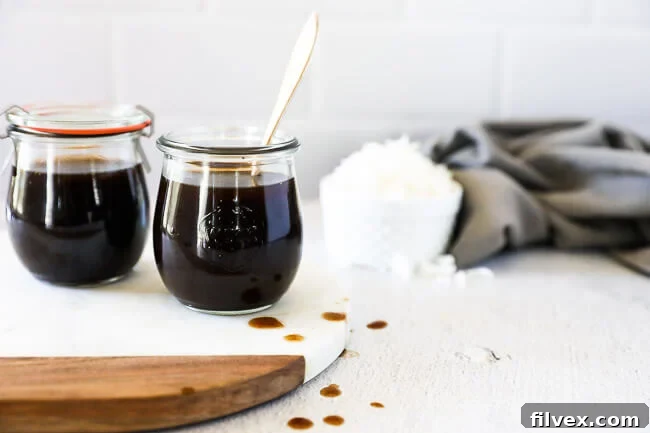
The Perfect Soy Sauce Alternative: Flavor and Function
Coconut aminos are widely recognized and utilized as a direct substitute or alternative for soy sauce. If you’re consciously avoiding soy for reasons ranging from allergies to dietary choices, coconut aminos present an ideal solution, allowing you to enjoy familiar flavors without compromising your health goals. Its versatility means it can be seamlessly incorporated into stir-fries, marinades, dipping sauces, and even dressings, offering a similar savory depth without the soy. It’s an indispensable ingredient for Asian-inspired dishes, bringing authentic flavors to your gluten-free and soy-free recipes.
While it shares a similar culinary role, coconut aminos has a distinct flavor profile that sets it apart from traditional soy sauce. These nuanced differences are often appreciated by those who prefer a less aggressive, more balanced taste:
- Considerably Less Salty: You’ll immediately notice it’s significantly less intense in saltiness compared to conventional soy sauce. This characteristic makes it a relief for many palates and a beneficial choice for those actively managing their sodium intake. It allows for more generous use without overpowering other ingredients.
- Subtly Sweet Undertones: There’s a delicate, underlying sweetness that naturally derives from the coconut sap used in its production. This natural sweetness adds a beautiful layer of complexity and perfectly balances the savory notes, contributing to a well-rounded flavor profile unique to coconut aminos.
- Rich Umami Flavor: Despite being entirely soy-free, coconut aminos masterfully delivers that satisfying, deep, and savory umami punch that is so essential in countless Asian cuisines. This makes it an exceptional choice for adding profound depth and richness to a wide variety of dishes, ensuring a gourmet taste every time.
These unique characteristics make coconut aminos not merely a substitute, but a uniquely flavorful and beneficial condiment in its own right, capable of standing alone as a delicious sauce or enhancing a multitude of other ingredients.
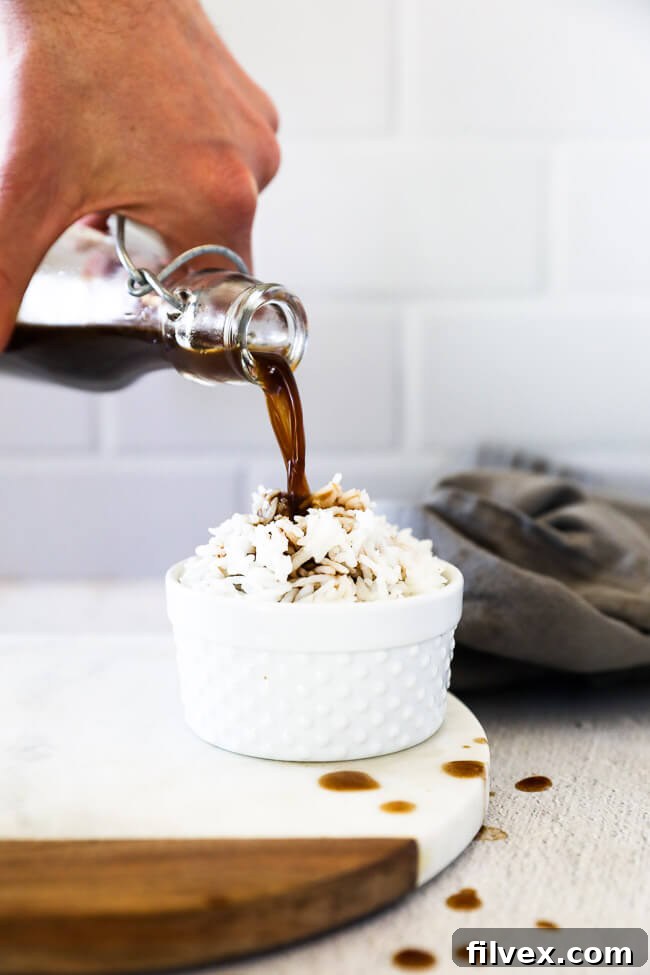
Coconut Aminos vs. Liquid Aminos: An Important Distinction
It’s crucial not to confuse coconut aminos with “liquid aminos,” as their names, though similar, belie significant differences in their origin and suitability for certain diets. Despite both having “aminos” in their name, they are not interchangeable, especially if you are strictly avoiding soy. Understanding this distinction is vital for making informed dietary choices.
Liquid aminos, such as popular brands like Bragg Liquid Aminos, are a liquid protein concentrate typically derived from the hydrolysis of soybeans. This makes them very similar in composition to traditional soy sauce, often being touted as a “healthier” or “less processed” version. However, the key takeaway here is that they *contain soy*, which is a major allergen for many and a restricted ingredient on diets like Whole30 and Paleo.
Therefore, if your primary reason for seeking out coconut aminos is to avoid soy, liquid aminos are absolutely *not* a recommended alternative. Furthermore, liquid aminos are generally much saltier and possess a stronger flavor profile than coconut aminos, often requiring a lighter hand in application to avoid over-salting your dishes. Always check the ingredient label carefully to ensure you’re picking the right product for your specific dietary needs and preferences. Don’t be fooled by similar naming conventions; the source ingredient makes all the difference.
Coconut Aminos and Whole30: A Perfect Pairing for Clean Eating
Our journey with coconut aminos truly began when we embraced the Whole30 lifestyle, and frankly, we haven’t looked back since. This incredible condiment became an indispensable ingredient in our kitchen, especially for crafting vibrant, Asian-inspired meals and a diverse range of homemade sauces and marinades. It effortlessly infuses dishes with a remarkable depth of flavor, transforming ordinary ingredients into culinary delights while adhering to strict dietary guidelines. You’ll find coconut aminos featured prominently in many of our Whole30 compliant recipes, a testament to its versatility and flavor-boosting capabilities without compromising on clean eating.
When it comes to our DIY coconut aminos recipe, rest assured that it is entirely Whole30 compliant, provided you make one simple adjustment: omit the optional maple syrup. Don’t worry, you won’t miss the sweetness! The carefully balanced blend of other ingredients, particularly the balsamic vinegar, still provides a subtle hint of sweetness alongside the essential salty and umami flavors you crave. This ensures your homemade substitute fits perfectly within the strict guidelines of the Whole30 program, allowing you to enjoy rich, savory meals without any guilt or compromise. It’s a testament to how flavorful and satisfying Whole30 cooking can be with the right ingredients.
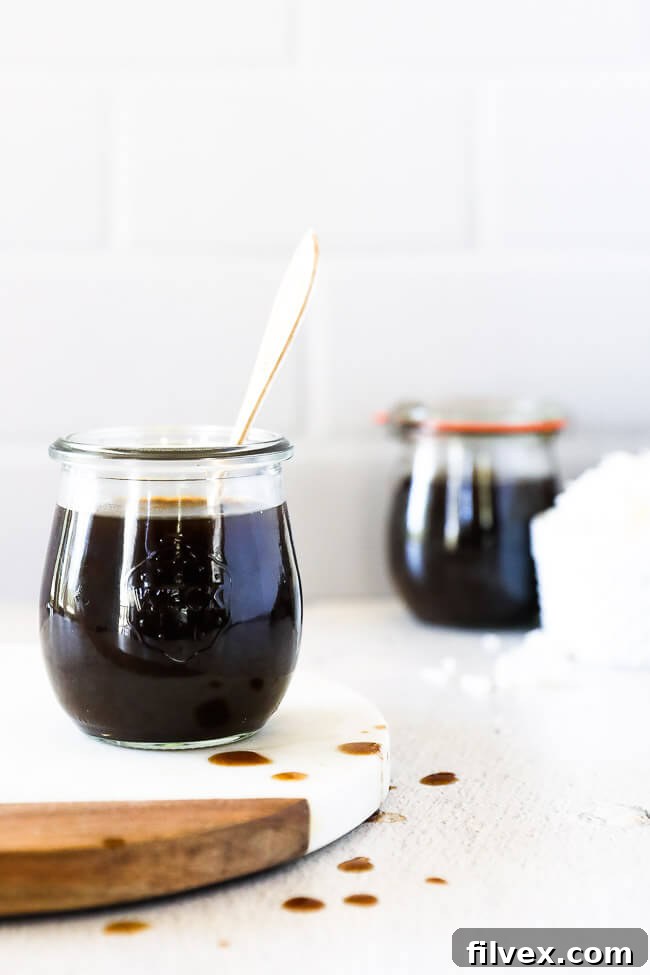
Why Choose DIY: The Compelling Benefits of Making Your Own Coconut Aminos Substitute
While store-bought coconut aminos are a fantastic product and a convenient pantry staple for many, there are several compelling reasons why taking the DIY route to create your own substitute can be a superior choice for many home cooks and health enthusiasts:
- Significant Cost Savings: High-quality coconut aminos can be quite expensive, especially if you use it frequently in your cooking. Making your own from readily available, often cheaper, pantry ingredients significantly cuts down on grocery bills. This allows you to enjoy this versatile condiment as often as you like without breaking the bank or feeling constrained by its price point.
- Enhanced Accessibility and Availability: Depending on your geographical location or the specific grocery stores near you, coconut aminos might be difficult to find or inconsistently stocked. Specialty health food stores often carry it, but not everyone has easy access to such retailers. While online purchasing is always an option, shipping costs and extended delivery times can add to the inconvenience. Crafting it at home completely eliminates this frustrating search and ensures you always have a supply.
- Eliminate Brand Confusion: The market for soy sauce alternatives can be confusing, especially with the similar-sounding “liquid aminos” on shelves, which often contain soy. Making your own substitute removes any ambiguity about what you’re consuming, ensuring it truly meets your soy-free, gluten-free, or other specific dietary needs. You maintain complete control over every single ingredient that goes into your sauce.
- Tailored Dietary Customization: If you have additional allergies or sensitivities beyond soy (e.g., to coconut, though less common for aminos), or if you simply prefer to fine-tune the exact flavor profile, making your own gives you unparalleled flexibility. You can adjust the saltiness, sweetness, umami notes, or even add a hint of spice to perfectly match your palate and culinary creations.
- Guaranteed Freshness and Ingredient Control: Knowing precisely when and how your condiment was made ensures ultimate freshness and quality. You can select the highest quality ingredients and avoid any artificial preservatives, stabilizers, or unwanted additives that might occasionally be present in some commercial versions. This level of control contributes to a healthier, more natural product.
Embracing the DIY approach for your coconut aminos substitute means taking charge of your pantry, empowering yourself with a delicious, healthy, and incredibly versatile homemade staple that aligns perfectly with your lifestyle and culinary aspirations.
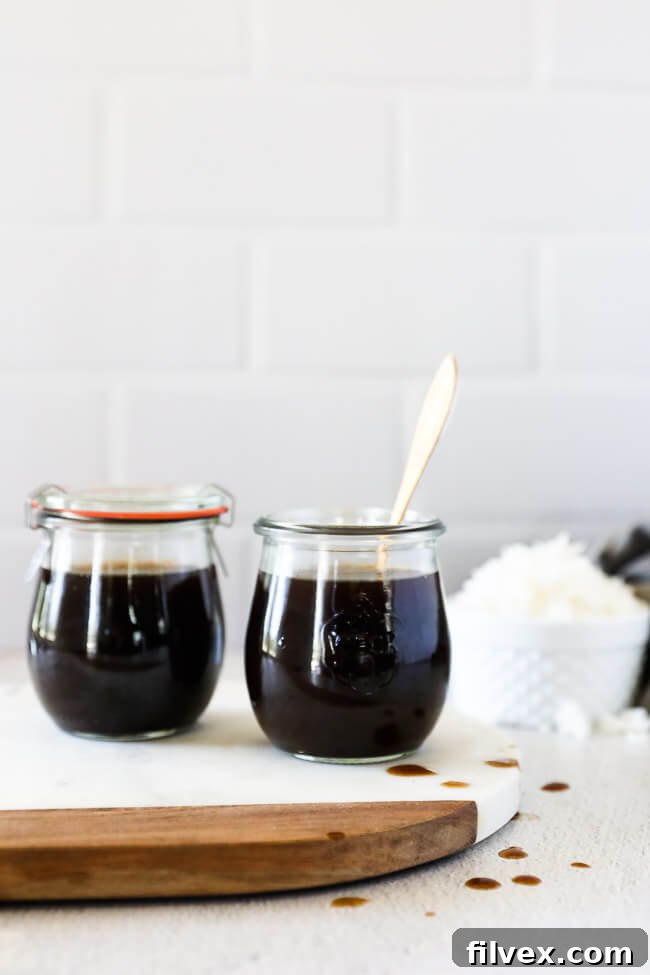
We sincerely hope you cherish this recipe as much as we do!
Your feedback is invaluable to us. Please take a moment to leave a quick star rating and review below; we meticulously read every comment and genuinely appreciate your thoughts and experiences. Furthermore, we invite you to explore the rest of our easy sauce recipes to discover more favorites that will undoubtedly enhance your culinary repertoire!

DIY Coconut Aminos Substitute
Prep Time: 5 mins
Cook Time: 15 mins
Total Time: 20 mins
Yields: Approximately 2 cups
Rating: 4.46 out of 5 stars (based on 55 ratings)
Craft your own budget-friendly and delicious coconut aminos substitute at home with just 5 simple ingredients and a few minutes of prep. A perfect soy-free, gluten-free, and Whole30 compliant alternative!
Pin Recipe
Leave a Review
Ingredients
This recipe yields approximately 2 cups. Ingredients can be easily scaled by manually halving, doubling, or tripling these amounts as desired.
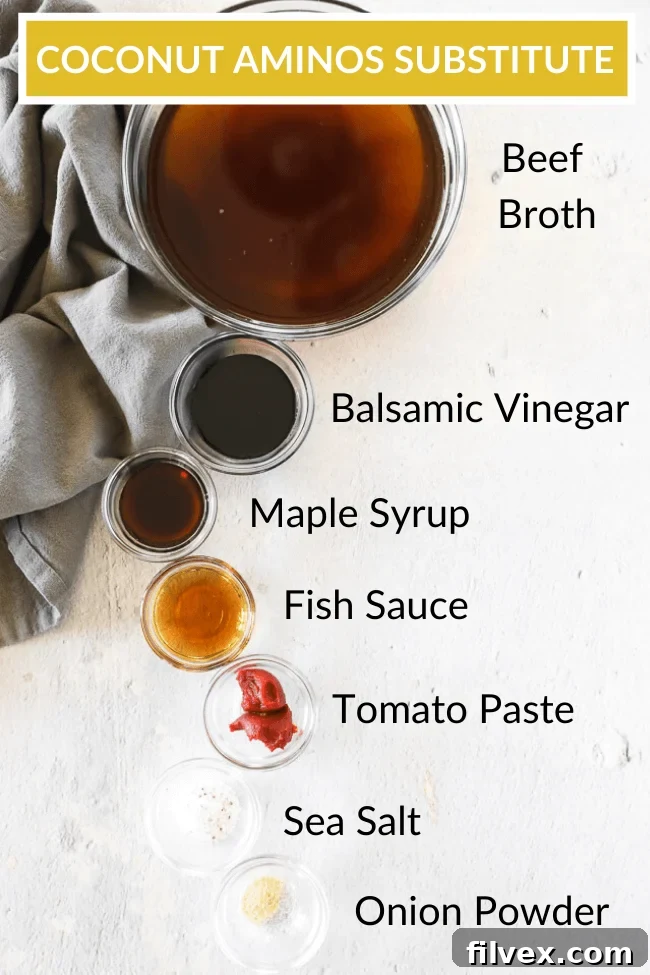
- 2 cups beef broth (For best freshness and extended shelf life, see recipe notes below)
- 2 tbsp balsamic vinegar
- 1 tbsp fish sauce
- 2 tsp tomato paste
- 2 tsp maple syrup (Optional; omit for strict Whole30 compliance)
- 1/8 tsp onion powder
- 1/4 tsp sea salt (Approximate; adjust to taste at the end of cooking)
Instructions
- Combine all ingredients, except for the sea salt, in a small saucepan. Whisk thoroughly to ensure all components are well mixed and no clumps remain.
- Place the saucepan over high heat and bring the mixture to a rapid boil. Once boiling vigorously, reduce the heat to low and allow the sauce to gently simmer for 10 minutes. During this simmering period, the sauce will naturally reduce in volume and thicken into a concentrated, flavorful liquid.
- Remove the saucepan from the heat and let the homemade coconut aminos cool completely to room temperature. This step is crucial for flavor development and safe storage.
- Once cooled, taste the sauce. If desired, gradually add sea salt, starting with 1/4 teaspoon. Mix well after each addition and taste again, adjusting until the perfect salty balance is achieved for your preference. Remember, you can always add more salt, but you can’t take it out.
- Transfer the cooled substitute into a clean jar with an airtight lid or another suitable airtight container. Store it in the refrigerator for up to two weeks. Refer to the detailed recipe notes below for tips on maximizing freshness and shelf life. Use this homemade substitute as a direct 1:1 replacement for store-bought coconut aminos in any recipe.
Your Feedback Matters!
Please take a moment to leave a star rating and comment to let us know how much you enjoyed this recipe! Your ratings and reviews are incredibly helpful and appreciated as they support our work and business growth, helping other home cooks discover this fantastic alternative.
Recipe Notes & Expert Tips
- Optimizing Shelf Life: This DIY coconut aminos substitute is best consumed within 2 weeks. Its precise shelf life is largely dependent on the freshness of the beef broth used. To ensure the longest possible duration, always use the freshest broth available, and ensure all containers are sterilized and airtight.
- Adjusting Batch Size: The recipe as provided yields approximately 2 cups of sauce. It can easily be halved for a smaller batch if you don’t need much, or doubled (or even tripled) if you wish to prepare a larger quantity for extended use or meal prepping. Simply adjust all ingredient amounts proportionally.
- Strict Whole30 Compliance: To ensure this recipe remains fully Whole30 compliant, it is essential to completely omit the optional maple syrup. The natural sweetness contributed by the balsamic vinegar will provide a subtle balance to the savory notes, without any added sugars.
- Customizing Flavor: Do not hesitate to adjust the saltiness and sweetness to align with your personal preference. Some cooks prefer a bolder umami punch, while others might desire a touch more sweetness. Taste the sauce after cooling and tweak as needed until it’s perfect for you.
- Broth Alternatives: While beef broth provides a robust, deep umami flavor that closely mimics traditional aminos, you can certainly experiment with other broths. Vegetable broth can be used for a vegan version (though the flavor will be different), or chicken broth for a milder profile. Be aware that the final flavor profile will vary slightly with different broths.
- Proper Storage: Always transfer the cooled coconut aminos substitute into a clean, sterilized, and airtight container. Store it diligently in the refrigerator to maintain its freshness and prevent spoilage.
Estimated Nutrition Information (per cup of sauce)
Calories: 39 kcal
Carbohydrates: 4g
Protein: 4g
Fat: 1g
Saturated Fat: 1g
Sodium: 1941mg
Fiber: 1g
Nutrition facts are estimated values, primarily provided for those following Ketogenic or low-carb diets, and do not include the optional maple syrup for this recipe. For our full nutrition information disclosure, please refer here. To accurately calculate the amounts per tablespoon, divide the values provided above by 16.
Course: Sauce
Cuisine: Asian
Author: Justin Winn
Did you make this delicious recipe? We’d absolutely love to see your culinary creations! Tag @realsimplegood with the hashtag #realsimplegood on Instagram. Share your masterpieces with our community!