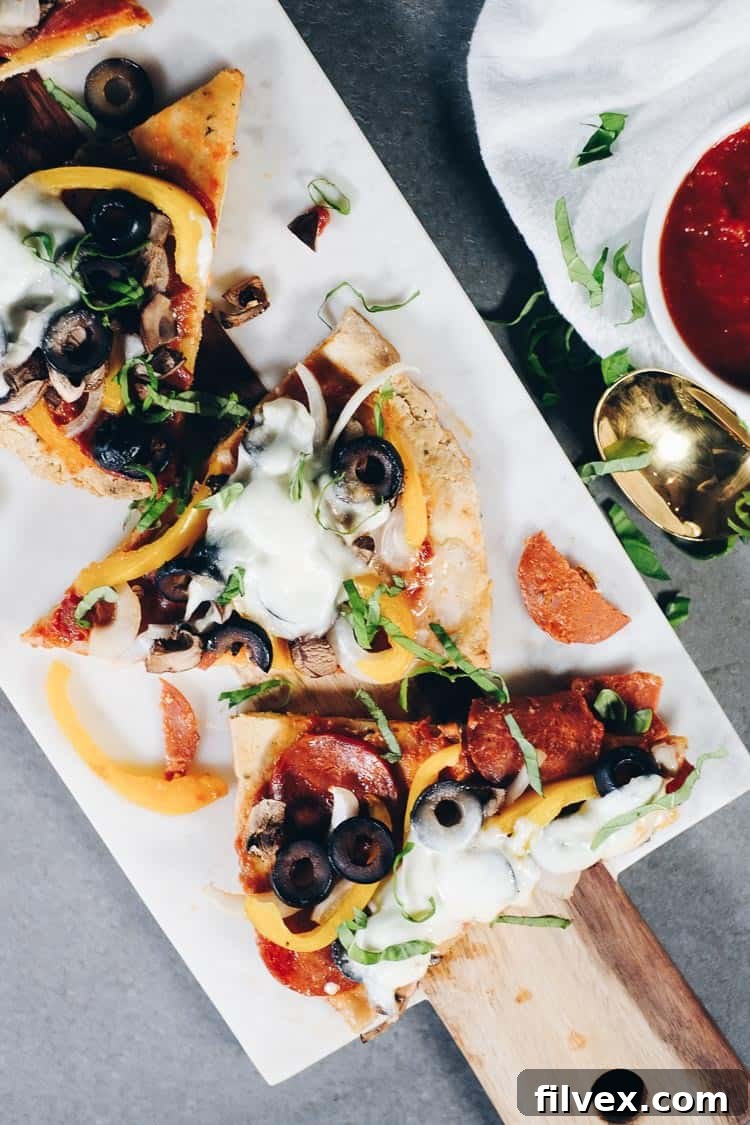
Are you following a Paleo lifestyle but secretly longing for that classic, comforting taste of pizza? You’re not alone! Many dedicated Paleo enthusiasts eventually find themselves missing the cheesy, saucy goodness of a traditional pizza night. The good news is, you don’t have to compromise your dietary principles to enjoy this beloved dish. After countless requests from our meal plan subscribers, we embarked on a mission to create the ultimate Paleo pizza recipe – one that’s not only incredibly delicious but also straightforward to prepare and effortlessly customizable. We’re thrilled to share our perfected recipe with you, promising a pizza experience that will satisfy your cravings without derailing your health goals.
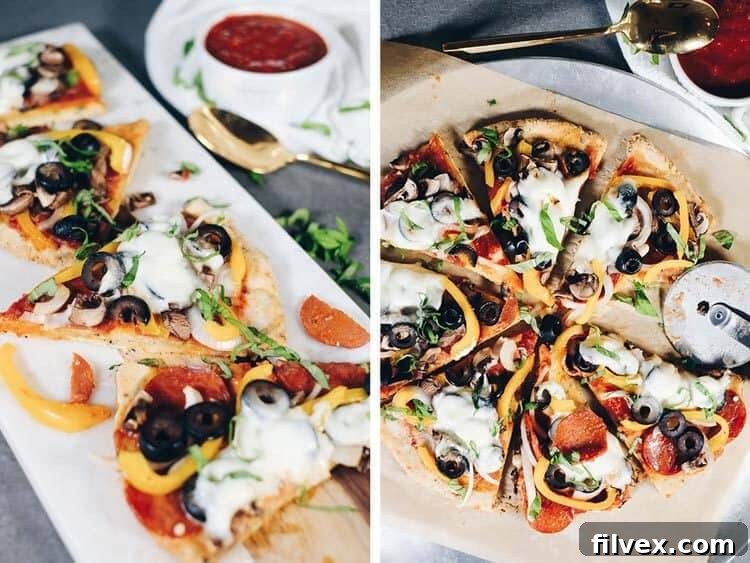
Crafting the Perfect Paleo Pizza Crust: Gluten-Free & Grain-Free Excellence
After many dedicated Sunday evenings spent in the kitchen, experimenting with various flours and tweaking proportions, we can confidently say that this is the absolute BEST Paleo pizza crust we’ve ever encountered! The foundation of any great pizza lies in its crust, and for Paleo diets, achieving the right texture and flavor can be a challenge. Our recipe uses a carefully balanced blend of blanched almond flour and tapioca flour, combined with savory seasonings, fresh eggs, and your choice of grass-fed butter, ghee, or coconut oil. This combination isn’t just simple to mix; it’s a game-changer for anyone seeking a truly satisfying grain-free pizza experience.
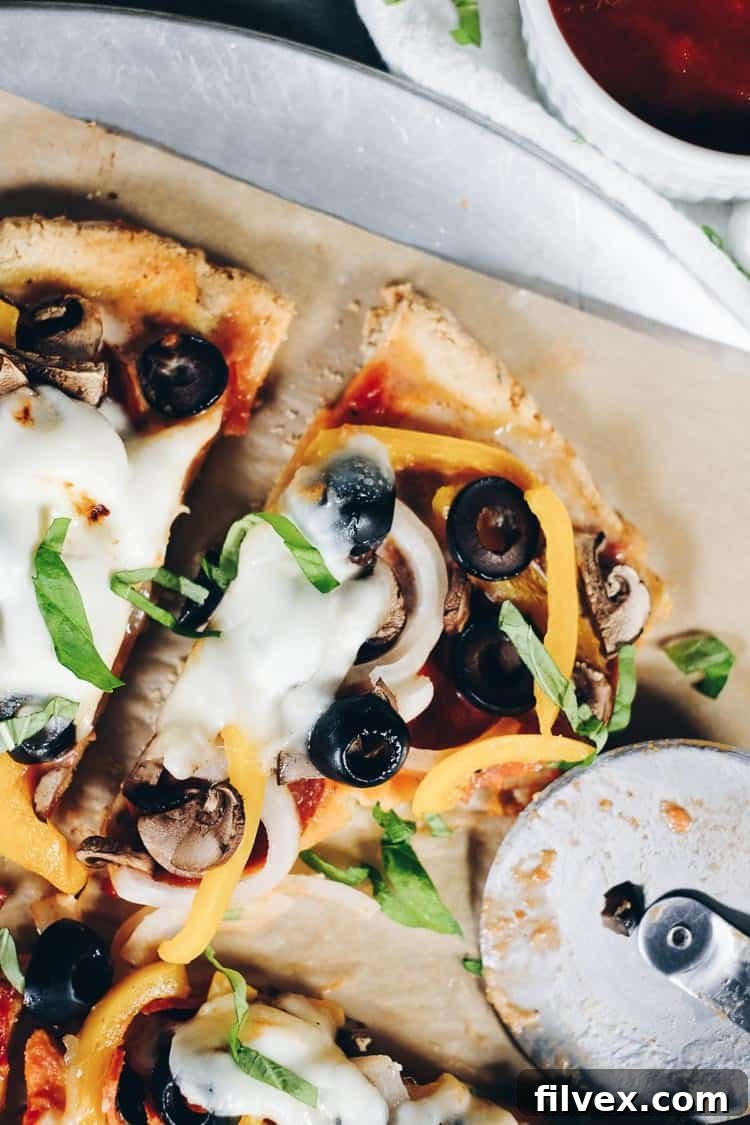
Blanched almond flour contributes a rich, nutty flavor and a tender crumb, providing a wonderful base that’s naturally gluten-free and packed with healthy fats. Tapioca flour, derived from the cassava root, plays a crucial role in giving the crust its desirable chewiness and binding properties, ensuring it holds together beautifully. This prevents the all-too-common frustration of a crumbly or soggy Paleo crust. The resulting texture is a harmonious blend: a little buttery and subtly flaky, yet remarkably solid and sturdy enough to pick up a slice without the toppings tumbling off. If you’ve navigated the world of Paleo pizza before, you’ll understand just how monumental this achievement is. Say goodbye to flimsy, disappointing crusts and hello to a firm, flavorful foundation that truly stands up to your favorite toppings. This crust transforms a mere “diet-friendly” meal into a genuinely enjoyable pizza night.
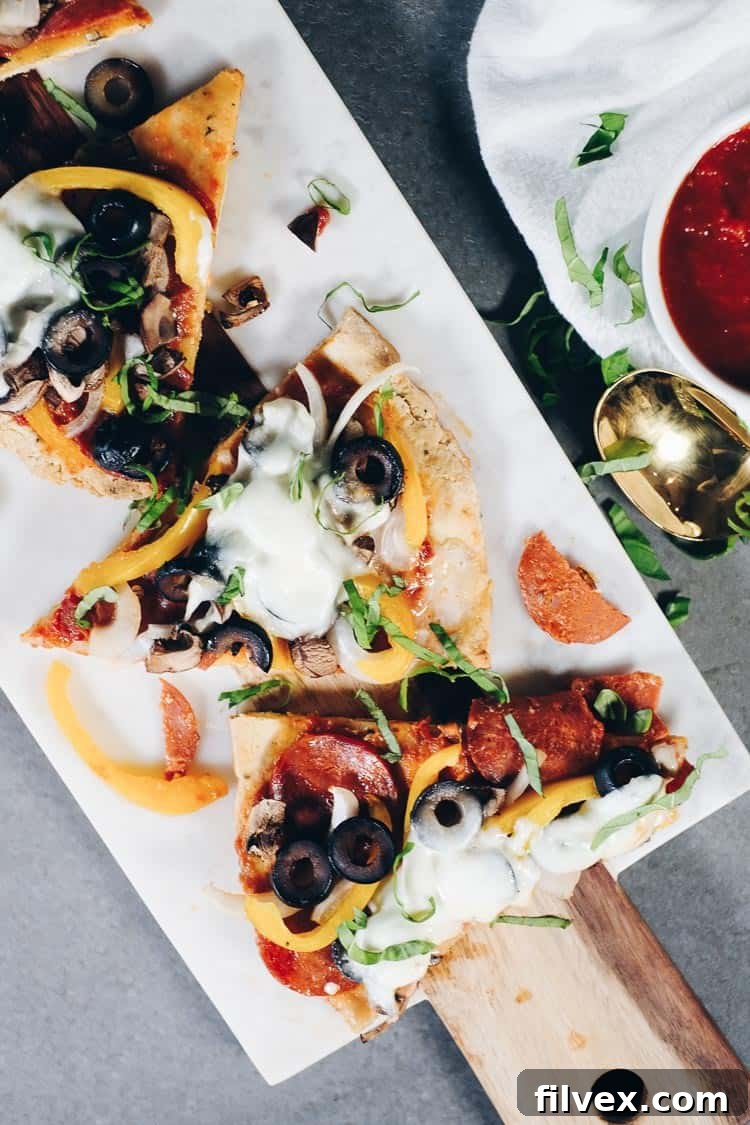
Unleashing Your Creativity: Endless Paleo Pizza Topping Possibilities
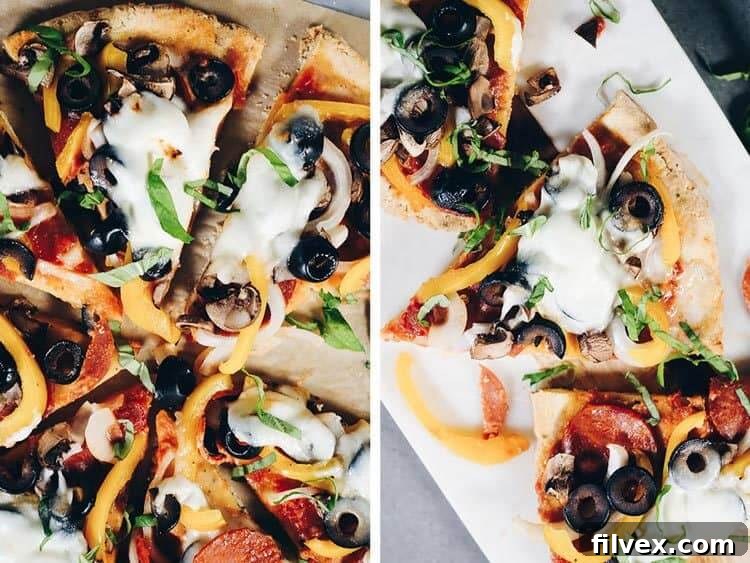
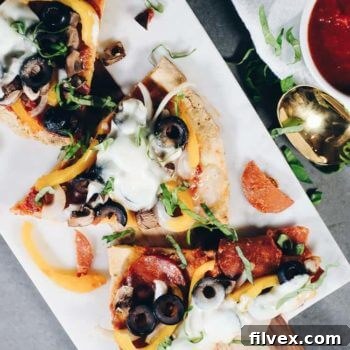
One of the most exciting aspects of this Paleo pizza recipe is the incredible freedom it offers for customization when it comes to toppings. While we provide our tried-and-true recommendations in the recipe card – usually our go-to favorites that are readily available – the beauty of this dish truly lies in your ability to make it your own. Think of our suggestions as a delicious starting point, a canvas for your culinary imagination. The possibilities are virtually limitless, allowing you to cater to your specific taste preferences, dietary needs, and whatever fresh ingredients you have on hand.
Consider a vibrant array of vegetables: thinly sliced bell peppers (red, yellow, or orange for a pop of color), earthy mushrooms, sweet onions, sun-dried tomatoes, or even a handful of fresh spinach or arugula added after baking for a fresh burst. For protein, think beyond traditional pepperoni; try grilled chicken, savory Italian sausage (check for sugar and grain-free options), crispy bacon, or even thinly sliced prosciutto. Don’t limit yourself to marinara sauce either! We often swap in a homemade lemon artichoke pesto for a brighter, herb-infused flavor. Other delicious alternatives include a simple olive oil and garlic base, a creamy cashew-based “white sauce,” or a spicy buffalo sauce for a kick.
And for those who prefer a dairy-free approach, feel free to skip the buffalo mozzarella entirely. The rich flavors of the crust and other toppings are more than enough to create a satisfying pizza. However, if dairy is an option for you, fresh buffalo mozzarella melts beautifully, offering a creamy, tangy complement. We’ve even experimented with adding runny eggs on top during the last few minutes of baking for a decadent breakfast or brunch pizza! Whether you’re craving a classic pepperoni, a veggie-loaded delight, or something entirely unique, this Paleo pizza provides the perfect foundation. Get creative, experiment with your favorite combinations, and truly make this recipe your own.
Completing Your Meal: Pairing Paleo Pizza with a Fresh Side Salad
While this Paleo pizza is hearty and satisfying on its own, pairing it with a fresh, crisp side salad elevates the meal, adding a refreshing contrast and a boost of nutrients. The beauty of a side salad is its simplicity and endless adaptability. It can be as straightforward as a bed of mixed greens lightly tossed with a high-quality extra virgin olive oil and a splash of balsamic vinegar, offering a clean, zesty palate cleanser.
For something a little more substantial, consider incorporating a variety of fresh vegetables like cucumber slices, cherry tomatoes, shredded carrots, or thinly sliced radishes. You could even get creative with your dressing choices! Why not try the vibrant, creamy Caesar dressing from our kale Caesar burger bowls? Its rich flavor would complement the pizza beautifully. Alternatively, a homemade lemon vinaigrette, a dairy-free ranch, or even a simple squeeze of fresh lemon juice with a sprinkle of herbs can enhance your salad. The goal is to add some fresh, crunchy elements that balance the richness of the pizza, creating a complete and well-rounded Paleo meal that feels both indulgent and incredibly healthy. Choose whatever sounds most appealing to you – add some greens, your favorite fresh veggies, and a delicious dressing, and you’ve got a perfect meal!
Why Embrace Paleo Pizza? The Health Benefits of a Grain-Free Indulgence
Choosing a Paleo pizza isn’t just about satisfying a craving; it’s about making a conscious choice for your health without sacrificing flavor. The Paleo diet, centered around whole, unprocessed foods that our ancestors likely consumed, naturally excludes grains, legumes, and dairy (though many incorporate grass-fed dairy as “dairy-optional,” as we do here). This approach can lead to numerous health benefits, and this pizza allows you to enjoy a beloved comfort food while adhering to these principles.
By opting for our grain-free crust made from almond and tapioca flours, you’re avoiding gluten, a common allergen and digestive irritant for many. This makes our Paleo pizza an excellent choice for individuals with gluten sensitivities, celiac disease, or those simply looking to reduce inflammation and improve gut health. Furthermore, almond flour is rich in healthy fats, protein, and fiber, contributing to satiety and stable blood sugar levels, unlike conventional pizza crusts made from refined grains that can cause energy crashes. The absence of processed ingredients and unhealthy oils, commonly found in commercial pizzas, means you’re fueling your body with nutrient-dense components. This homemade version gives you complete control over every ingredient, from the quality of the sauce to the freshness of your toppings, ensuring a truly clean and nourishing meal. It’s a testament that healthy eating doesn’t have to be restrictive or bland; it can be incredibly delicious, satisfying, and empowering.
Expert Tips for Paleo Pizza Perfection: Mastering Your Grain-Free Creation
Achieving Paleo pizza perfection is within your reach with a few helpful tips:
- Dough Consistency is Key: The dough should be thick and slightly sticky. If it’s too dry, add a tiny bit more water; if too wet, a sprinkle more tapioca flour can help. It’s not a traditional kneadable dough, so don’t expect that texture.
- Even Spreading: When spreading the dough on the parchment paper, ensure it’s evenly thick (around 3/8 inch). This promotes even baking and prevents soggy or overly crispy spots. Using a piece of parchment paper on top of the dough while pressing can prevent stickiness.
- Pre-baking the Crust: Don’t skip the initial pre-bake. This crucial step helps to dry out the crust, giving it that desired crispiness and sturdiness before the toppings add moisture. It also ensures the crust is cooked through by the time your toppings are perfectly melted.
- Don’t Overcrowd the Toppings: While it’s tempting to load up on all your favorite toppings, resist the urge to overcrowd the pizza. Too many toppings can weigh down the crust, making it difficult to cook evenly and potentially leading to a soggy middle. Less is often more for optimal flavor and texture.
- High Heat Finish: After adding toppings, increasing the oven temperature for the final bake helps crisp everything up and melt any cheese or dairy-free alternatives beautifully. Keep an eye on it to prevent burning.
- Fresh Herbs for Garnish: If using fresh basil or oregano, add them after the pizza comes out of the oven. The residual heat will slightly wilt them, releasing their aromatic oils without burning them.
- Storage and Reheating: Leftover Paleo pizza stores well in an airtight container in the fridge for 3-4 days. Reheat slices in a preheated oven (around 350°F or 175°C) or a toaster oven for a few minutes until warmed through and crispy again, avoiding the microwave for best texture.
By following these tips, you’ll be well on your way to consistently creating exceptional Paleo pizzas that rival their traditional counterparts.

Your Turn To Experience the Best Paleo Pizza Recipe
Have you been committed to a Paleo lifestyle for a while now, but still find yourself reminiscing about those classic pizza nights? The wait is over! It’s time to whip up this incredible Paleo pizza recipe and get your delicious fix. We are genuinely excited for you to try this recipe, knowing it will bring the joy of pizza back into your life, guilt-free. Don’t forget to get creative with your toppings – whether you stick to our favorites or invent entirely new combinations. We’d love to see your culinary masterpieces! Be sure to take some mouth-watering photos and share them with us on Instagram. Tag us @realsimplegood when you post your creations so we can see what amazing pizzas you come up with. We can’t wait to celebrate your delicious achievements!
LOVE THIS RECIPE? CLICK HERE TO PIN IT AND SAVE IT FOR LATER!
Paleo Pizza Recipe (Gluten-Free, Grain-Free + Dairy-Optional)
20 mins
35 mins
55 mins
4
Pin Recipe
Leave a Review
Ingredients
For the crust:
- 1.5 cups blanched almond flour
- 1 cup tapioca flour
- 1 tsp sea salt
- 1 tsp garlic powder
- 1 tsp basil
- 1/2 tsp ground pepper
- 2 eggs
- 2 tbsp grass-fed butter, ghee or coconut oil (melted and slightly cooled)
- 1/8 cup water
For the toppings (suggestions):
- 1/2 cup marinara sauce (sugar-free)
- 5 oz pepperoni, thinly sliced (check for Paleo compliance)
- 1/8 onion, thinly sliced
- 1/2 cup olives, thinly sliced
- 1/2 bell pepper, thinly sliced
- 1/2 cup mushrooms, thinly sliced
- 7 oz buffalo mozzarella, sliced into rounds (optional)
- Fresh basil (to garnish)
Instructions
-
Preheat oven to 350° Fahrenheit (175°C), and line a baking sheet with parchment paper. Lightly sprinkle a little tapioca flour onto the parchment and set aside.
-
In a large mixing bowl, combine all of the dry crust ingredients (almond flour, tapioca flour, sea salt, garlic powder, basil, ground pepper). Whisk until everything is evenly combined.
-
Create a small well or “moat” in the center of your dry flour mixture, preparing it for the wet ingredients.
-
Add the eggs into the well and gently whisk them with a fork. Then, add the melted butter, ghee, or coconut oil (ensure it has cooled slightly to avoid cooking the eggs prematurely). Begin incorporating the eggs and melted fat into the dry ingredients. Slowly add the water, adjusting the amount as needed, until all ingredients are thoroughly combined to form a thick, somewhat sticky dough.
-
Scoop the dough onto the prepared parchment-lined baking sheet. Sprinkle additional tapioca flour on top of the dough. Using your hands, evenly spread the dough into your desired circular pizza shape, aiming for a consistent thickness of approximately 3/8 inch.
-
Place the pizza crust in the preheated oven and bake for 20 minutes. This pre-baking step is crucial for achieving a firm and crispy crust.
-
While the crust is baking, prepare all your chosen toppings as noted in the ingredients list (slicing vegetables, preparing meats, etc.) and set them aside.
-
After the crust has baked for 20 minutes, carefully remove it from the oven. Increase the oven temperature to 400° Fahrenheit (200°C).
-
Arrange your toppings on the partially baked pizza crust, generally starting with the sauce, then meats, vegetables, and finally, any cheese or dairy-free alternative (like the optional buffalo mozzarella, placed in hearty rounds). Remember to save any fresh basil for garnishing after the pizza is fully cooked.
-
Return the topped pizza to the oven and cook for an additional 15 minutes, or until the crust is golden brown and the toppings are hot and bubbly. Once done, remove from the oven and carefully transfer it to a cutting board. Slice into 8 pieces and sprinkle with fresh basil. Serve immediately, perhaps with a refreshing side salad for a complete meal.
Last Step:
Please leave a star rating and comment to let us know how you liked this recipe! Your ratings and reviews help our business grow, thank you!
Main Course
Justin + Erica Winn
American, Italian
Did you make this recipe?
Tag @realsimplegood with hashtag #realsimplegood on Instagram. We love to see what you make!