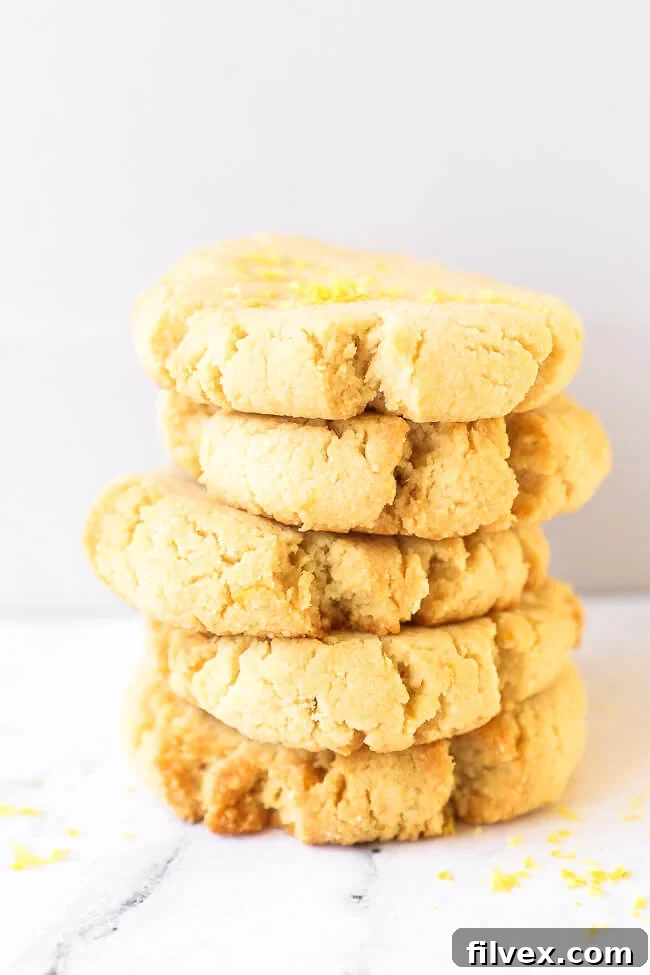
Discover the Delight of Easy Gluten-Free Lemon Shortbread Cookies
Shortbread cookies are renowned for their melt-in-your-mouth texture and buttery richness. Many might assume that achieving such perfection, especially with a gluten-free adaptation, is a complicated endeavor. However, we’re here to tell you that these incredibly delicious gluten-free lemon shortbread cookies are surprisingly simple to make, even for novice bakers!
This recipe transforms traditional shortbread into a delightful, celiac-friendly treat, bursting with the bright, zesty flavor of fresh lemon. Forget the complex steps and extensive ingredient lists; our method focuses on simplicity without compromising on taste or that signature crumbly texture. Whether you’re avoiding gluten for health reasons or simply looking for a new favorite cookie, these lemon shortbreads are guaranteed to impress.
In this comprehensive guide, we’ll walk you through every step, from selecting the finest gluten-free flours to the crucial cooling process that ensures perfect consistency. We’ll also delve into useful tips, potential ingredient variations, and troubleshooting advice to make your baking experience smooth and successful. Prepare to indulge in homemade cookies that are both effortlessly elegant and deeply satisfying.
Why Choose Gluten-Free Lemon Shortbread?
Opting for gluten-free shortbread isn’t just a dietary necessity for some; it’s a choice that offers a uniquely delicate texture. Traditional shortbread relies on wheat flour, but our recipe cleverly uses a blend of almond and coconut flours to achieve an equally tender, crumbly result that simply melts in your mouth. The almond flour provides a rich, nutty base and a fine crumb, while a touch of coconut flour adds a subtle sweetness and helps with binding, creating a perfectly balanced gluten-free dough.
The addition of lemon elevates these cookies from merely good to truly exceptional. Fresh lemon zest and juice infuse each bite with a vibrant, refreshing tang that beautifully cuts through the richness of the butter (or ghee/coconut oil). This bright citrus note makes these shortbreads particularly appealing, offering a delightful contrast to their sweet, buttery foundation. They are perfect for brightening any occasion, whether it’s a casual afternoon tea or a special holiday gathering.
Essential Ingredients for Perfect Gluten-Free Lemon Shortbread
The beauty of this recipe lies in its minimal and wholesome ingredient list. Each component plays a vital role in creating the ultimate gluten-free shortbread experience. Understanding these ingredients will not only help you bake better but also inspire confidence in making substitutions or variations.
- Almond Flour: This is the primary flour in our recipe, contributing to the tender texture and slightly nutty flavor. Ensure you’re using blanched, superfine almond flour for the best results, as coarser almond meal can yield a grainier cookie. Almond flour is naturally gluten-free and adds healthy fats and protein.
- Coconut Flour: A little goes a long way with coconut flour. It’s highly absorbent and helps bind the dough, preventing it from being too crumbly. It also lends a faint, pleasant coconut aroma and flavor, complementing the lemon beautifully. Do not substitute coconut flour 1:1 with other flours, as its absorbency is unique.
- Sea Salt: A pinch of sea salt is crucial for balancing the sweetness and enhancing all the other flavors. It highlights the lemon zest and deepens the buttery notes, creating a more complex taste profile.
- Lemon (Zest and Juice): The star of the show! Use fresh lemons for the most vibrant flavor. The zest contains essential oils that deliver intense citrus aroma, while the juice adds a tangy brightness. Aim for about 2 tablespoons of fresh lemon juice, ensuring not to add too much liquid which could alter the dough consistency.
- Maple Syrup: Our chosen natural sweetener, maple syrup, offers a warm, subtle sweetness that pairs wonderfully with lemon. It also contributes to the dough’s moisture and helps achieve a golden-brown edge during baking. You can substitute with other liquid sweeteners like honey or agave, though the flavor may vary slightly.
- Ghee (Melted): Ghee, or clarified butter, provides that classic rich, buttery shortbread flavor without the milk solids found in regular butter, making it suitable for dairy-sensitive diets. If ghee isn’t available or preferred, melted unsalted butter works perfectly, or for a fully vegan option, melted coconut oil can be used. Each fat will impart a slightly different nuance to the final cookie.
- Vanilla Extract: A touch of vanilla extract adds depth and warmth, rounding out the flavors and providing a comforting aroma.
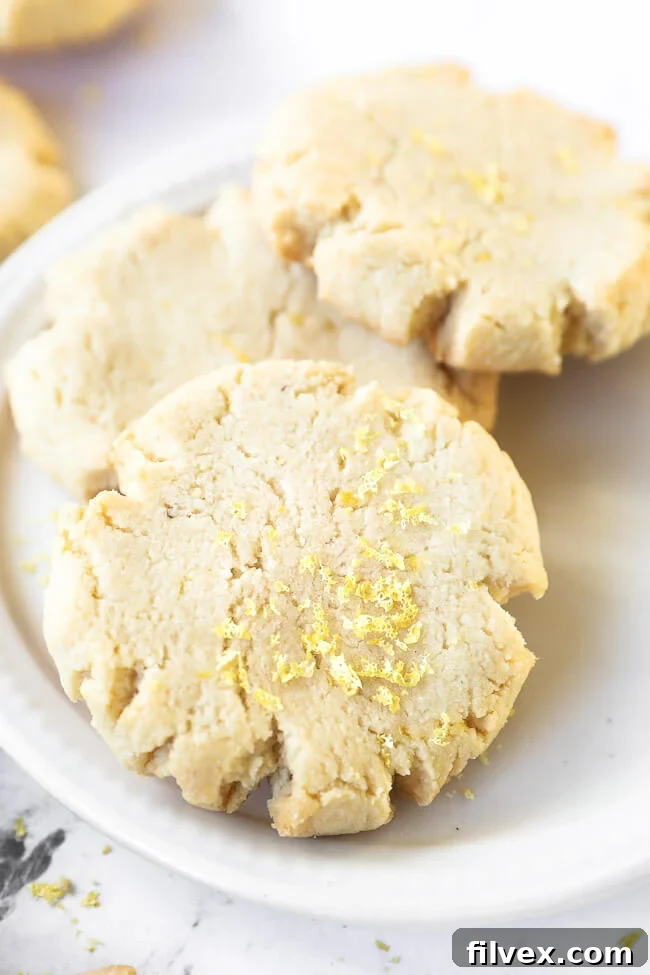
Crafting Your Perfect Gluten-Free Lemon Shortbread: Step-by-Step Guide
Making these shortbread cookies is an incredibly rewarding experience, and the process is far simpler than you might imagine. Follow these detailed steps to achieve perfectly crisp, tender, and zesty gluten-free lemon shortbread every time.
- Prepare Your Baking Environment: Begin by preheating your oven to 300°F (150°C). This low and slow temperature is ideal for shortbread, allowing it to bake evenly and achieve its signature crisp yet tender texture without browning too quickly. While the oven preheats, line a standard baking sheet with parchment paper. Parchment paper prevents sticking and makes for easy cleanup, ensuring your delicate cookies can be removed without breakage.
- Combine Dry Ingredients: In a large mixing bowl, combine all the dry ingredients: the almond flour, coconut flour, sea salt, and fresh lemon zest. Whisk these together thoroughly to ensure all ingredients are evenly distributed. This step is important, as it prevents clumps and ensures that every cookie has a consistent flavor and texture, especially spreading the lemon zest’s aromatic oils throughout the flour mixture.
- Integrate Wet Ingredients: Next, add the remaining ingredients to the bowl with the dry mixture: the lemon juice, maple syrup, melted ghee (or butter/coconut oil), and vanilla extract. Using a spatula or wooden spoon, gently mix everything until just combined. The key here is to avoid overmixing. Overmixing can develop the starches in the flours, leading to a tougher cookie, even with gluten-free flours. Mix only until there are no visible dry spots and a cohesive dough forms. The dough should be soft but pliable.
- Shape the Cookies: Take small portions of the dough, about 1 tablespoon each, and roll them into uniform balls between your palms. Place these balls onto the parchment-lined baking sheet, leaving a small space between them. Unlike some cookies, shortbread does not spread much during baking, so they can be placed relatively close together. Once all the balls are on the sheet, use the palm of your hand or the bottom of a glass to gently flatten each ball into a disc, about 1/4 to 1/2 inch thick. You can also use a fork to create a decorative pattern on top, if desired, which also helps vent steam.
- Bake to Golden Perfection: Carefully transfer the baking sheet to your preheated oven. Bake for approximately 25 minutes. The baking time may vary slightly depending on your oven, so keep an eye on them. The cookies are done when their edges begin to turn a very light golden-brown. The centers may still appear soft, but they will firm up as they cool. Avoid over-baking, as this can result in a dry or overly crumbly texture.
- Cool Completely: This is a critical step for shortbread! Once baked, remove the cookies from the oven and leave them on the baking sheet to cool completely. Do not attempt to move them while they are warm, as they will be very delicate and prone to crumbling. As they cool, the cookies will harden and set, developing their characteristic crisp, firm shortbread texture. This process can take anywhere from 30 minutes to an hour. Patience is key here for the perfect bite!
Mastering Gluten-Free Shortbread: Expert Tips and Troubleshooting
Even with a simple recipe, baking can sometimes present unexpected challenges. Our extensive testing of this gluten-free shortbread recipe has yielded valuable insights to help you navigate any potential issues and ensure consistently perfect results. Here are some advanced tips and troubleshooting solutions:
- Addressing Overly Wet Dough: If, after mixing, your dough feels too sticky or wet to comfortably roll into balls, don’t panic. The absorbency of gluten-free flours, especially coconut flour, can vary slightly. To fix this, simply add an extra tablespoon of coconut flour to the mixture. Incorporate it gently and mix until the dough reaches a pliable consistency that is no longer excessively sticky. If it’s still too wet, you can add another half tablespoon. Sometimes, chilling the dough for 15-20 minutes in the refrigerator can also help firm it up, making it easier to handle.
- The Critical Role of Cooling: We cannot stress enough the importance of allowing your shortbread cookies to cool completely on the baking sheet. When they first come out of the oven, shortbreads are incredibly fragile and will fall apart if handled prematurely. As they cool, the fats solidify, and the structure of the cookie sets, transforming them from delicate discs into firm, crumbly shortbreads. Resist the urge to move them until they are entirely cool to the touch. This step is absolutely essential for achieving the correct shortbread texture and ensuring they hold their shape.
- Optimal Storage for Freshness: Shortbread cookies, especially gluten-free ones, can soften slightly over time due to moisture absorption from the air. If you plan to store them on the counter for a few days, always place them in an airtight container at room temperature. For extended freshness and to maintain their crispness, storing them in the refrigerator is an excellent option. Chilling them will help keep their texture firm and prevent them from softening. They can also be frozen for longer storage (up to 3 months) in an airtight freezer-safe container; simply thaw at room temperature before serving.
- Even Baking is Key: For uniform baking, ensure your oven temperature is accurate (an oven thermometer can be very helpful). Also, if your oven has hot spots, consider rotating the baking sheet halfway through the baking time to ensure all cookies bake evenly.
- Flavor Customization: While lemon is fantastic, feel free to experiment! You can swap lemon zest for orange or lime zest for different citrus notes. A pinch of ground ginger or cardamom can add a unique warmth. For a touch of decadence, a sprinkle of miniature chocolate chips or white chocolate chunks can be folded into the dough.
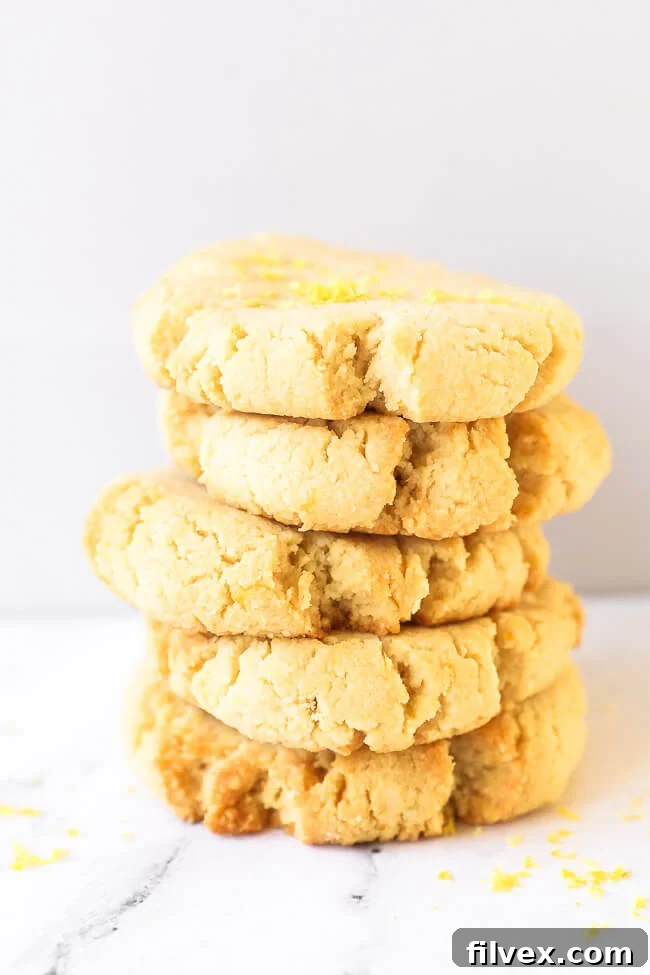
We hope you cherish this recipe as much as we do!
Your feedback is invaluable to us. After you’ve baked and savored these delicious shortbreads, please consider leaving a quick star rating and a review below. We meticulously read every comment and genuinely appreciate your thoughts and experiences. Furthermore, we invite you to explore the rest of our diverse collection of delicious desserts and treats to discover more recipes that are sure to become new family favorites!
Average Rating: 4.67 out of 5 stars based on 9 ratings
Easy Gluten Free Lemon Shortbread Cookies
Pin Recipe
Leave a Review
Ingredients
Adjust servings:
- 2 cups almond flour
- 1/2 tbsp coconut flour
- 1/4 tsp sea salt
- 1 lemon, zest and juice, (just 2 tbsp of the juice)
- 1/2 cup maple syrup
- 1/2 cup ghee, melted, (or butter or coconut oil)
- 1 tsp vanilla extract
Instructions
-
Preheat oven to 300° Fahrenheit and line a baking sheet with parchment paper.
-
Mix together almond flour, coconut flour, sea salt, and lemon zest in a large mixing bowl.
-
Add the rest of the ingredients (lemon juice, maple syrup, melted ghee, vanilla extract) and mix to combine. Just mix until there are no dry spots to avoid overmixing.
-
Roll into balls and place on the lined baking sheet. Use the palm of your hand to flatten balls. They can be close to one another on the baking sheet because they won’t expand significantly.
-
Transfer to oven and bake for about 25 minutes, until the edges begin to brown slightly.
-
Remove from oven and let cool completely on the baking sheet. The cookies will harden and set as they cool.
Final Step:
Please leave a star rating and comment to let us know how you liked this recipe! Your ratings and reviews are vital to our growth, thank you!
Chef’s Notes

Loved This Recipe?
SHARE IT NOW OR PIN IT FOR LATER TO SPREAD THE DELICIOUSNESS!