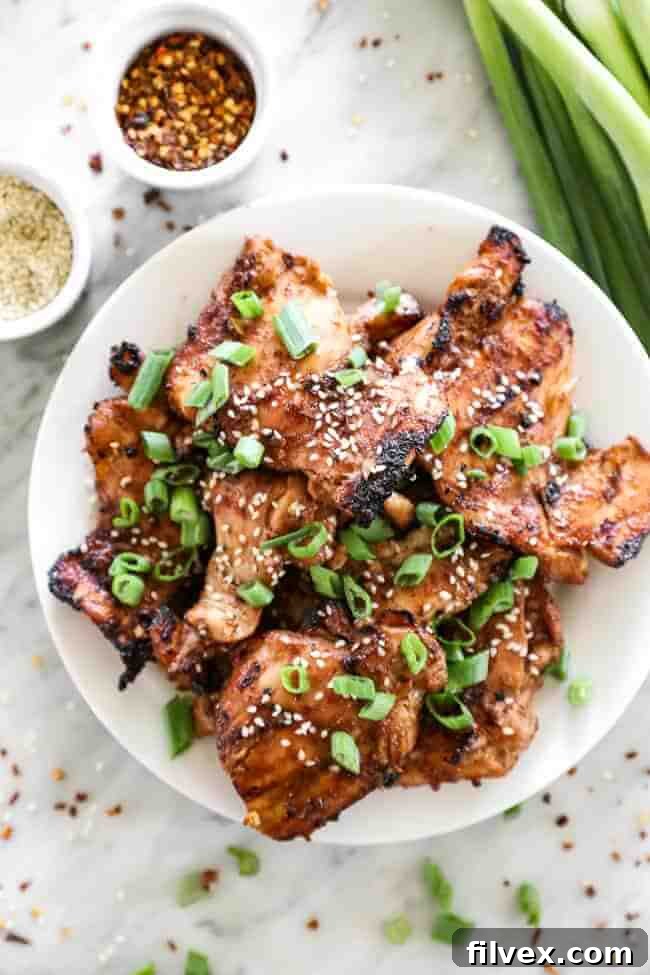
Welcome to your new favorite weeknight meal! This Korean BBQ chicken recipe isn’t just a dish; it’s an experience, bringing the vibrant, unforgettable flavors of classic Korean barbecue right to your kitchen. Designed for simplicity without sacrificing authenticity, it requires minimal prep work – just 5 minutes for the mouth-watering marinade – and cooks up quickly, making it the perfect Paleo-friendly grilled chicken for any busy schedule. Get ready to impress your taste buds and elevate your dinner game!
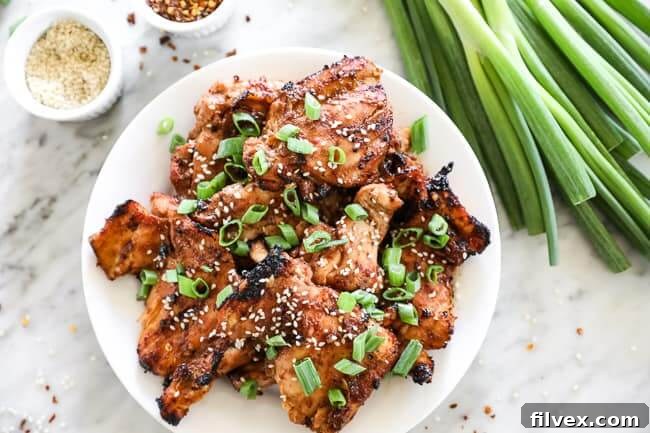
Crafting the Irresistible Sticky Glaze: The Heart of Korean BBQ Chicken
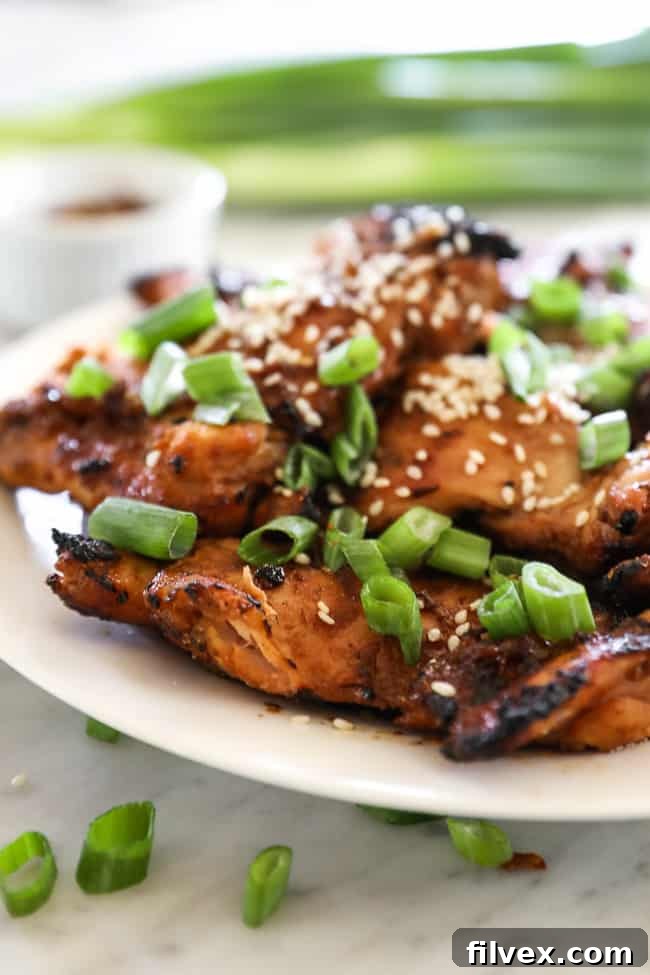
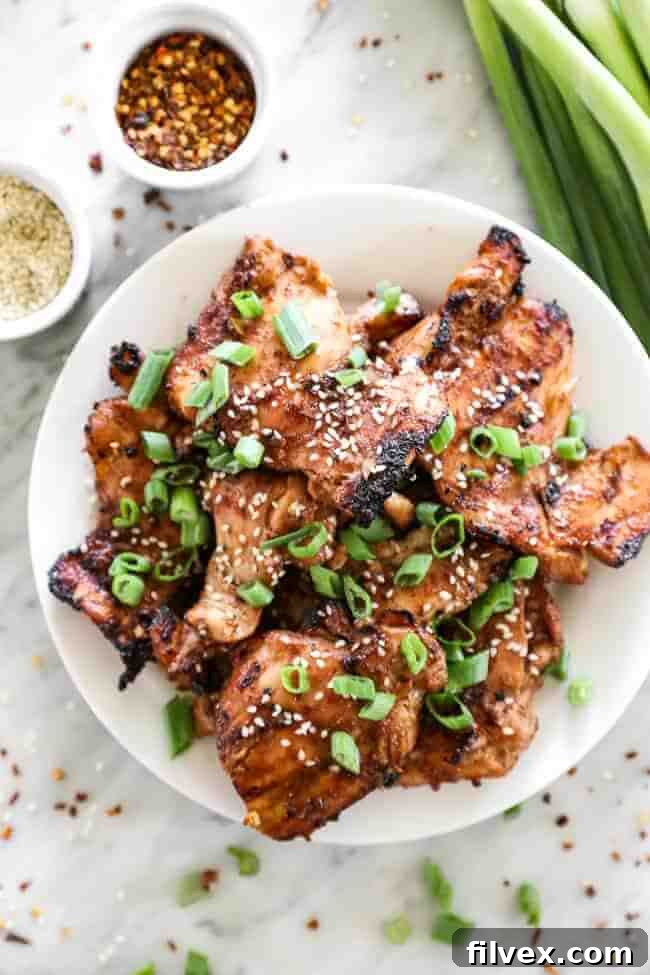
One glance at those perfectly grilled chicken thighs, glistening with that rich, sticky sauce, and you know you’re in for a treat. This isn’t just any sauce; it’s the heart and soul of our Korean BBQ chicken. While the ingredient list for our marinade might seem basic, the magic happens in how these simple components come together to create an explosion of flavor. Imagine a harmonious blend of savory, subtly sweet, tangy, and a hint of spice, all coated in a luxurious, caramelized glaze that clings to every morsel of chicken. Your taste buds are about to embark on an incredible journey, making you crave seconds, maybe even thirds – you’ve been delightfully warned!
The secret lies in the careful balance of ingredients, each playing a crucial role. Coconut aminos provide a delicate sweetness and umami depth, while fish sauce (which we’ll discuss in detail next) adds that inimitable savory complexity without any “fishy” taste. A touch of white vinegar brightens the profile, cutting through the richness, and tomato paste adds a subtle tang and helps achieve that beautiful deep color. Fresh ginger and garlic powder infuse the marinade with aromatic warmth, creating a foundational flavor that truly sings. When grilled, this marinade transforms into a sticky, caramelized glaze that locks in moisture and amplifies every bite, making it utterly irresistible. This isn’t just a marinade; it’s a flavor enhancer, a tenderizer, and the key to an authentic Korean BBQ experience at home.
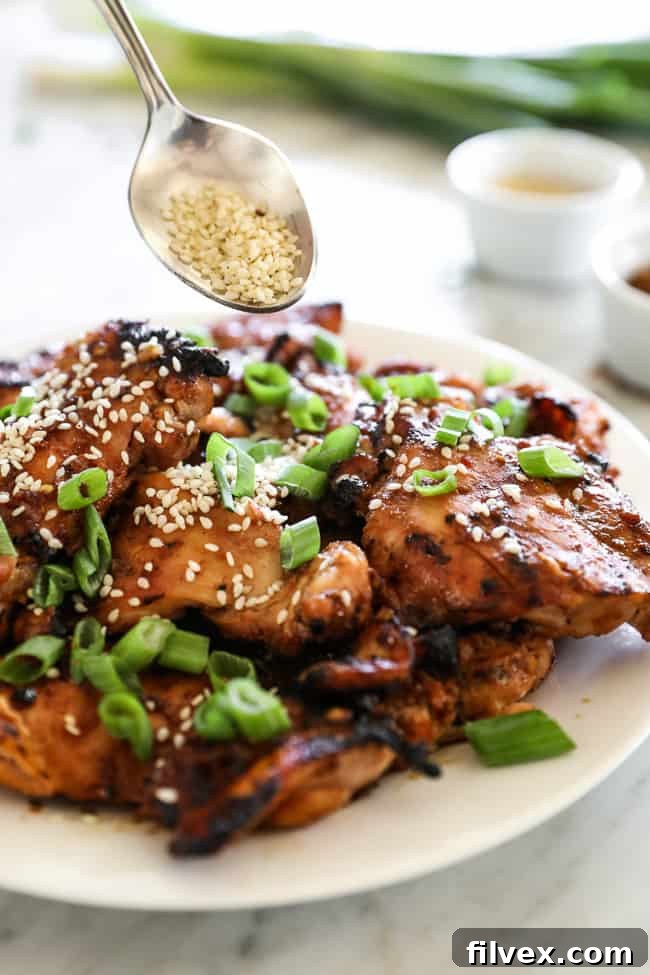
The Unsung Hero: A Deep Dive into Fish Sauce
Fish sauce often gets a bad rap, primarily due to its pungent aroma in the bottle. However, in the culinary world, particularly in Southeast Asian and Korean cuisines, it’s revered as a powerhouse ingredient capable of transforming a dish. It’s the ultimate umami booster, adding a profound depth of savory flavor that simply cannot be replicated by any other single ingredient. For those hesitant, rest assured: when cooked and combined with other strong flavors, the “fishy” notes dissipate entirely, leaving behind only a rich, complex savoriness that elevates the entire dish.
In this Korean BBQ Chicken recipe, fish sauce isn’t just an optional addition; it is truly a key ingredient. Its unique fermentation process yields glutamates that enhance and round out all the other flavors in the marinade, contributing to that authentic, crave-worthy taste. We strongly advise against omitting it or making substitutions if you want to achieve the true flavor profile of this recipe. The subtle funk it provides becomes a foundation upon which the other sweet, spicy, and tangy elements of the marinade can shine.
Choosing Your Fish Sauce Wisely
The quality of your fish sauce can significantly impact the final taste. Look for brands that prioritize purity and traditional fermentation methods. A good quality fish sauce typically has only two ingredients: anchovies and salt. We personally recommend Red Boat brand fish sauce, which we frequently purchase from Thrive Market. This brand is celebrated for its clean taste and, importantly for those following a Paleo diet, contains no added sugars or artificial ingredients. Many commercial fish sauces often include sugar, preservatives, or even artificial colorings, which can detract from the natural flavor and nutritional integrity. Always check the ingredient list to ensure you’re getting a pure product.
When Substitution is Absolutely Necessary
While we highly recommend using fish sauce for its irreplaceable depth, we understand that dietary restrictions or strong aversions may sometimes make it impossible. If you absolutely despise fish sauce or cannot consume it for any reason, the best alternative for this Paleo recipe would be to increase the amount of coconut aminos. Coconut aminos offer a savory, slightly sweet flavor profile that, while not identical, can somewhat mimic the umami contribution of fish sauce. However, be mindful that the overall depth and complexity of the dish will be slightly altered. For those who can tolerate soy, a high-quality, gluten-free tamari could also be an option, but for true Paleo, coconut aminos remain the preferred substitute.
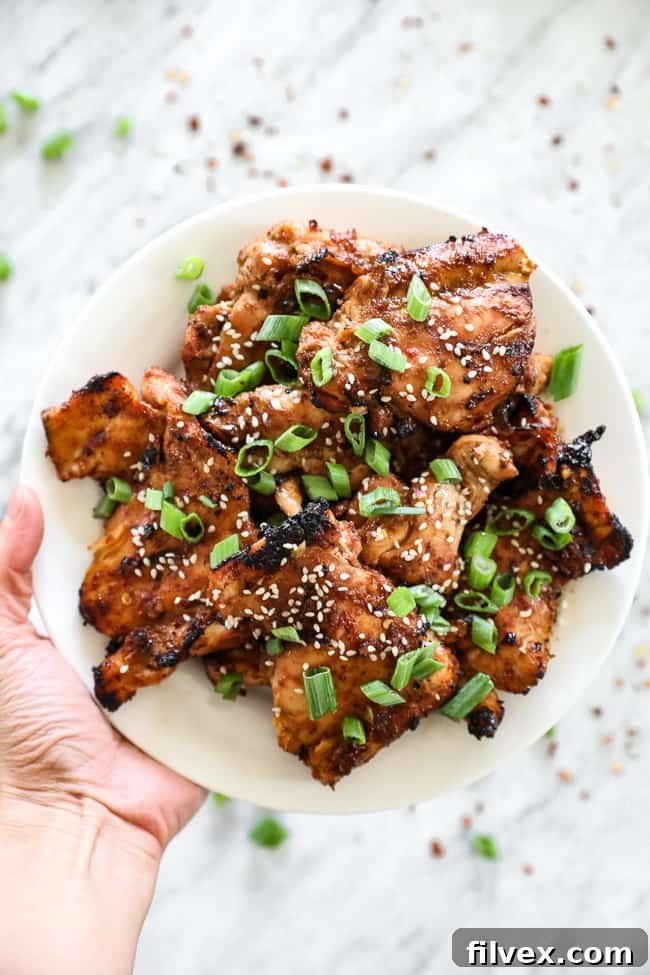
Choosing the Best Chicken for Your Korean BBQ Adventure
Our philosophy for recipes revolves around maximizing flavor while keeping things quick and easy. This is why boneless, skinless chicken thighs are our top recommendation for this Korean BBQ chicken recipe. Their inherent moisture content and slightly higher fat ratio make them incredibly forgiving on the grill, ensuring they stay juicy and tender even when cooked at high heat. They also have an exceptional ability to absorb flavors, soaking up every nuance of our rich marinade, leading to a deeply flavorful result that cooks quickly and evenly.
However, the beauty of this Korean BBQ marinade is its versatility. While thighs are our favorite, almost any cut of chicken will pair wonderfully with these bold flavors. Here are some alternatives and tips for cooking them to perfection:
- Chicken Breasts: If you prefer white meat, boneless, skinless chicken breasts are a lean choice. To prevent them from drying out, consider butterflying them or pounding them to an even thickness (about 1 inch) to ensure uniform cooking. Marinate them for at least 30 minutes, but no more than 2-4 hours, as the acids in the marinade can begin to break down the protein too much, leading to a mushy texture. Cook for less time than thighs, usually around 4-6 minutes per side, until an internal temperature of 165°F (74°C) is reached.
- Bone-in Thighs: For even more flavor and succulence, bone-in, skin-on chicken thighs are fantastic. The bone helps conduct heat slowly, ensuring tender meat, and the skin, when crisped on the grill, offers an incredible texture contrast. Just be aware that bone-in cuts will require a longer cooking time, typically 20-30 minutes, turning frequently, and should be cooked until the internal temperature reaches 175°F (80°C) for optimal texture.
- Drumsticks: These are a fun, kid-friendly option that also benefit from the bone-in advantage. They cook similarly to bone-in thighs but might be slightly quicker due to their smaller size. Grill over medium heat, turning often, for 15-25 minutes, or until the internal temperature is 175°F (80°C).
- Wings: Korean BBQ wings are an absolute crowd-pleaser! The marinade makes for incredibly flavorful wings. Cut whole wings into flats and drumettes for easier handling. Grill over medium-high heat for 15-20 minutes, turning regularly, until crispy and cooked through to 165°F (74°C).
No matter which cut you choose, ensure your chicken pieces are relatively uniform in size for even cooking. This Korean BBQ marinade is robust enough to flavor any chicken part, promising a delicious outcome every time!
Mastering the Cook: Exploring Alternative Cooking Methods
While grilling undeniably imparts that quintessential smoky flavor and beautiful char that truly elevates this Korean BBQ chicken, we understand that sometimes weather, equipment, or preference calls for alternative cooking methods. The good news is, this recipe is incredibly adaptable, delivering fantastic results whether you’re cooking indoors or out. The key across all methods is to achieve that delicious caramelization of the marinade and ensure the chicken is cooked through and juicy.
Indoor Grilling with a Cast Iron Grill Pan
- A cast iron grill pan is an excellent option for replicating grill marks and some of that smoky char indoors. Preheat your grill pan over medium-high heat for several minutes until it’s smoking slightly. A well-heated pan is crucial for searing and preventing sticking. Lightly oil the pan if desired, then place the marinated chicken in a single layer, ensuring not to overcrowd the pan. Cook for approximately 5-7 minutes per side for boneless chicken thighs, flipping once, until the chicken is cooked through and has beautiful grill marks. Remember to baste with any leftover marinade during the last few minutes of cooking to build up that sticky glaze.
Searing to Perfection in a Regular Cast Iron Pan
- A regular cast iron pan (or any heavy-bottomed skillet) also works wonderfully for pan-searing. This method will give you an amazing crispy, caramelized crust on the chicken. Heat your pan over medium-high heat with a tablespoon of high-smoke-point oil (like avocado or grapeseed oil). Once hot, add the chicken, making sure not to overcrowd the pan. Sear for 5-6 minutes per side for boneless thighs, allowing a deep golden-brown crust to form. Baste the chicken liberally with the reserved marinade as it cooks, allowing the sugars to caramelize into a rich glaze. If your chicken pieces are thicker, you might finish them in a preheated oven at 375°F (190°C) for a few extra minutes to ensure they cook through without burning the exterior.
Effortless Baking in the Oven
- Baking is a hands-off method that’s perfect for meal prepping or when you’re cooking for a crowd. Preheat your oven to 400°F (200°C). Arrange the marinated chicken in a single layer on a parchment-lined baking sheet or in a casserole dish. Bake for 25-35 minutes, depending on the thickness of your chicken. To achieve that desired sticky glaze and a touch of caramelization, make sure to baste the chicken with any remaining marinade halfway through the cooking time and again towards the end. For an even more intense char, you can place the chicken under the broiler for the last 2-3 minutes, watching it very carefully to prevent burning.
Regardless of your chosen method, the importance of basting cannot be overstated. The reserved marinade is packed with flavor, and brushing it onto the chicken as it cooks helps to build multiple layers of taste, keep the meat moist, and create that irresistible sticky, caramelized exterior that defines great Korean BBQ chicken. Always ensure that any marinade used for basting has been properly cooked on the chicken to avoid cross-contamination. With these versatile cooking options, you can enjoy delicious Korean BBQ chicken any day of the week, no matter your kitchen setup!
Perfect Pairings: Delicious Sides for Your Korean BBQ Chicken
No Korean BBQ feast is complete without an array of delectable side dishes to complement the star of the show. The rich, savory, and slightly sweet flavor profile of our Korean BBQ chicken pairs beautifully with a variety of lighter, fresher, or starchy sides that help balance the meal. Here are some fantastic options, including those featured in our gallery, to complete your dining experience:
- Crispy Roasted Cauliflower Rice: A fantastic Paleo and low-carb alternative to traditional rice. Its light texture and mild flavor absorb the chicken’s sauce beautifully, while roasting gives it a delightful crispness.
- Jicama Fries: For a refreshing, crunchy, and low-carb “fry” option, jicama fries are a revelation. Their slightly sweet and earthy flavor offers a wonderful contrast to the savory chicken, and their crisp texture is incredibly satisfying.
- No Mayo Coleslaw: A vibrant, tangy coleslaw without heavy mayonnaise is a perfect palate cleanser. The crisp cabbage and bright dressing cut through the richness of the BBQ chicken, adding a refreshing crunch.
- The Best Potato Salad: If you’re not strictly Paleo or Whole30, a classic potato salad offers a comforting, creamy counterpoint. The tender potatoes soak up extra sauce and add a satisfying heartiness to your meal.
- Grilled Marinated Vegetables: Grilling an assortment of vegetables alongside your chicken (like bell peppers, zucchini, onions, and mushrooms) enhances their natural sweetness and gives them a smoky char that pairs exquisitely with the Korean BBQ flavors.
- Grilled Cauliflower Steaks: Thick slices of cauliflower, grilled until tender-crisp, become a hearty and flavorful vegetarian side. They can be marinated simply or seasoned with complementary spices to absorb the delicious juices from the chicken.
Beyond these suggestions, don’t hesitate to incorporate other Korean staples like a simple bowl of steamed white rice (if not Paleo), a quick cucumber salad, or even a side of kimchi for an authentic spicy kick and probiotic boost. The goal is to create a balanced meal that offers a variety of textures and flavors, making each bite exciting and satisfying.
Your Turn to Savor This Irresistible Korean BBQ Chicken Recipe!
Now that you’re equipped with all the insights and inspiration, it’s time to bring these incredible Korean BBQ flavors to life in your own kitchen! Fire up your grill, oven, or skillet, and get ready to cook up a batch of this simple, incredibly flavorful, and fun Korean BBQ chicken. We are confident that this recipe will quickly become a cherished part of your meal rotation, delighting everyone at your table.
We absolutely love hearing from you and seeing your culinary creations! Once you’ve tried this recipe, please take a moment to leave a comment below and let us know how it turned out. Your feedback is invaluable to us and helps our community grow. Don’t forget to snap a pic of your masterpiece and share it on Instagram! Tag us @realsimplegood and use the hashtag #realsimplegood. If you haven’t already, be sure to give us a follow – we’d love to stay connected and share more delicious, wholesome recipes with you!

Korean BBQ Chicken (Paleo)
Pin Recipe
Leave a Review
Ingredients
- 2 lbs chicken thighs
For the Marinade:
- 1 shallot, diced
- 2 inches fresh ginger, peeled and grated on a microplane
- 1/2 cup coconut aminos
- 2 tbsp fish sauce
- 1 tbsp toasted sesame oil
- 1 tbsp white vinegar
- 1 tbsp tomato paste
- 1 tsp red pepper flakes, (optional, omit or reduce for less or no spice)
- 1 tsp garlic powder
Optional toppings:
- green onion, diced
- sesame seeds
Instructions
-
Make the marinade by combining all of the marinade ingredients in a bowl and mixing well.
-
Place chicken in a shallow dish or zip-top bag and cover with the marinade. Cover and refrigerate for at least 15 minutes or up to a couple of hours for deeper flavor.
-
Heat your grill to medium-high heat.
-
Add the chicken to the grill and cook, flipping once and basting chicken with any remaining marinade until cooked through, about 6-8 minutes on each side depending on the size of the chicken.
-
Remove from the grill, top with optional toppings if desired, and serve immediately.
Last Step:
Please leave a star rating and comment to let us know how you liked this recipe! Your ratings and reviews help our business grow, thank you!