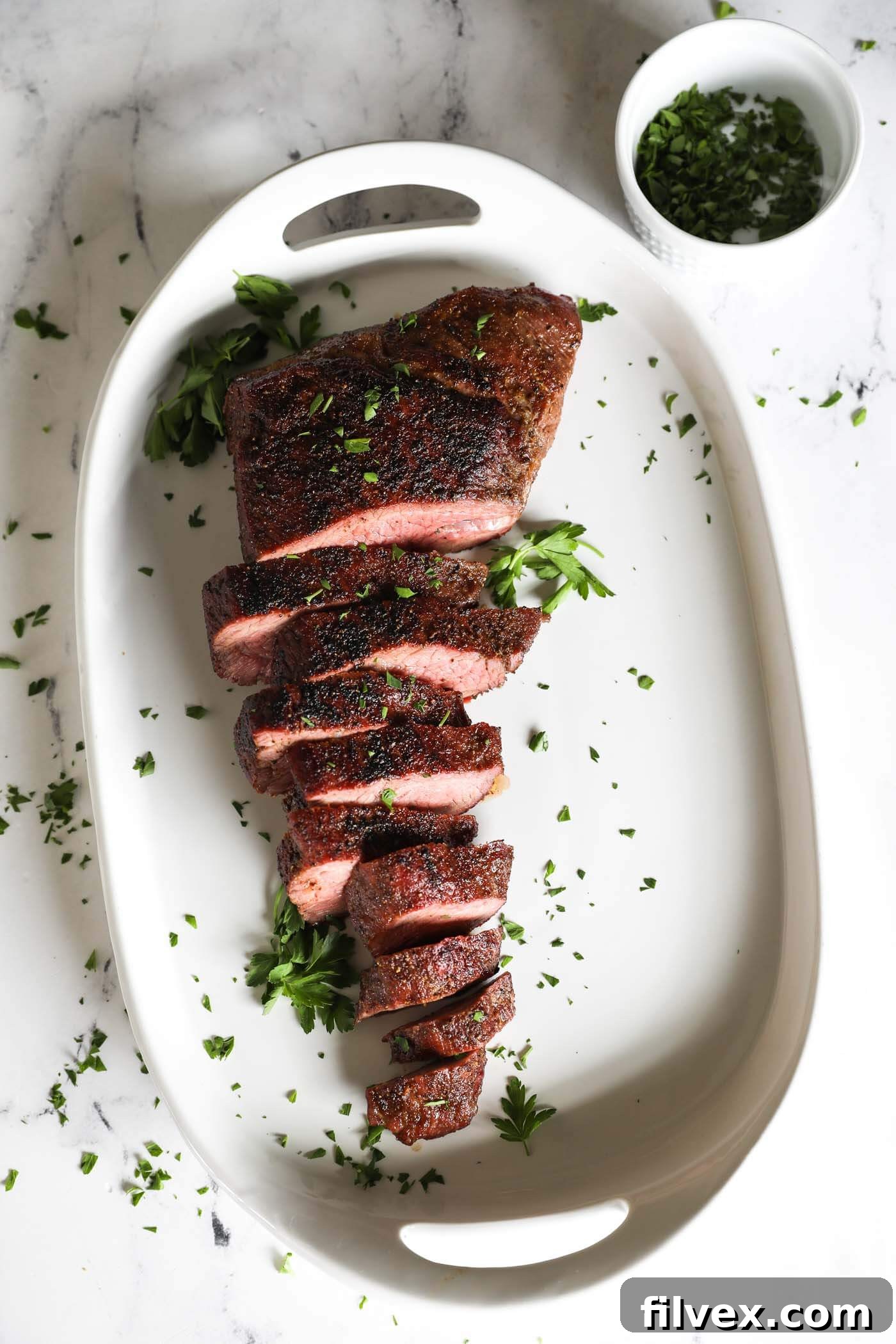
Mastering Smoked Tri-Tip: A Beginner’s Guide to Tender, Juicy Perfection
Welcome to the ultimate guide for smoking tri-tip, a delectable cut of beef that’s rapidly gaining popularity among BBQ enthusiasts. If you’ve been searching for a way to achieve that perfect balance of smoky flavor, incredible tenderness, and a crispy, seasoned crust, you’ve come to the right place. This comprehensive recipe and guide will walk you through every step, ensuring a successful and delicious outcome, even if you’re new to smoking.
Often referred to as the “poor man’s brisket” or a “Santa Maria steak,” tri-tip is a triangular cut from the bottom sirloin. It’s known for its rich beefy flavor and versatility, making it an excellent choice for smoking. When prepared correctly, it rivals some of the most premium cuts in terms of taste and texture. Our method combines the low-and-slow technique of smoking with a high-heat reverse sear, creating a steak that’s unbelievably juicy on the inside with an irresistible bark on the outside.
Related ->> Explore another fantastic smoked dish: Unbelievably Easy Smoked Meatloaf
Why You’ll Fall in Love with This Smoked Tri-Tip Recipe
- **Effortless Tenderness & Juiciness:** This method ensures your tri-tip comes out consistently tender and incredibly juicy, boasting a beautiful smoke ring and a perfectly seared exterior. It’s a game-changer for anyone looking to impress with their smoking skills.
- **Perfect for Beginners:** Don’t be intimidated by smoking! This recipe is designed with the novice in mind. With clear, step-by-step instructions and minimal essential tools, primarily an instant-read meat thermometer, you can achieve professional-level results on your first attempt.
- **Signature Homemade Rub:** Our specially crafted tri-tip rub uses common pantry staples to create a flavor profile that complements the smoky beef without overpowering it. It’s versatile enough to become your go-to seasoning for various smoked meats.
- **Ultimate Culinary Versatility:** Smoked to a flawless medium-rare, tri-tip offers a remarkably tender texture that pairs wonderfully with virtually any BBQ side dish you can imagine, from classic coleslaw to gourmet grilled vegetables.
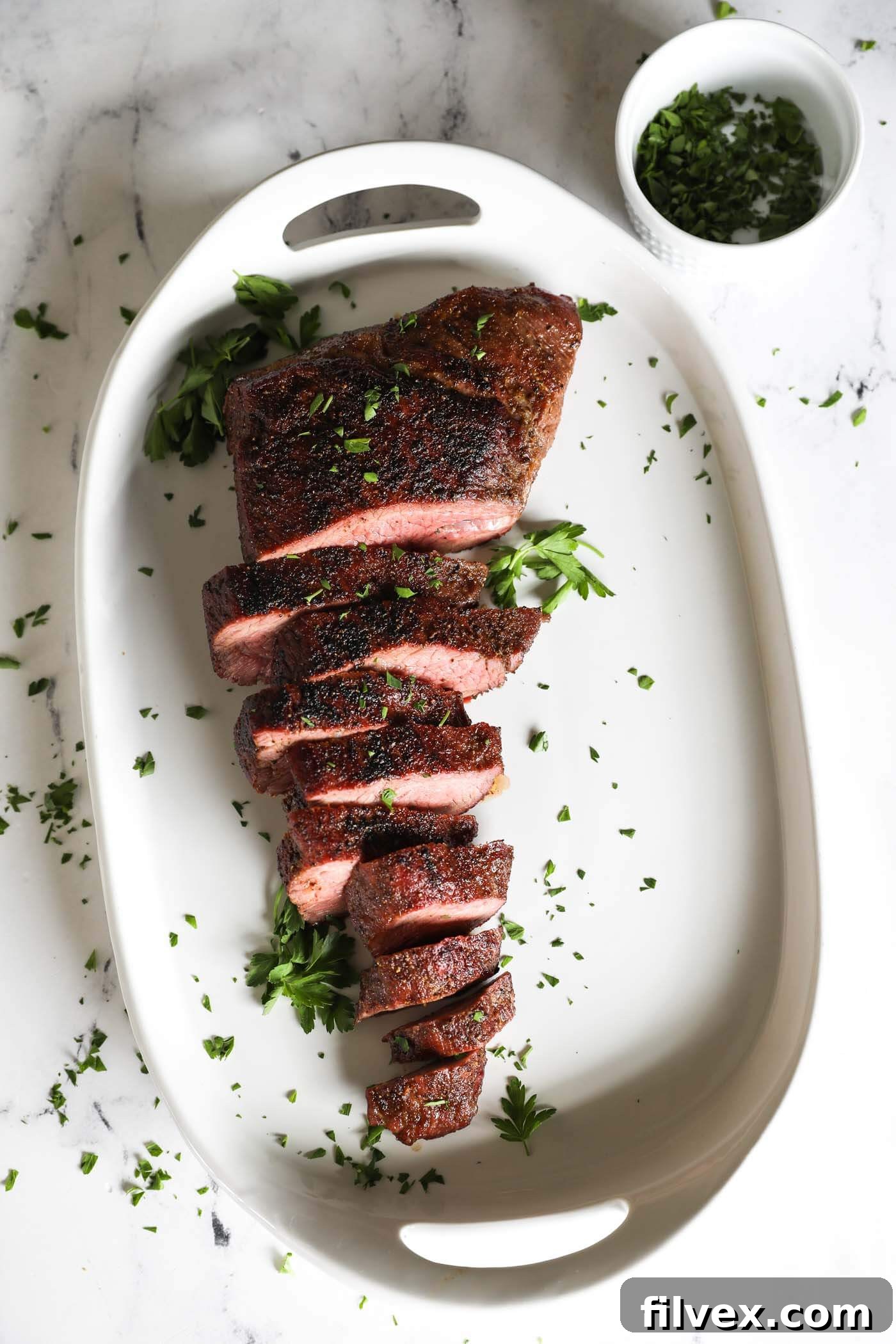
What Exactly is Tri-Tip and Why Smoke It?
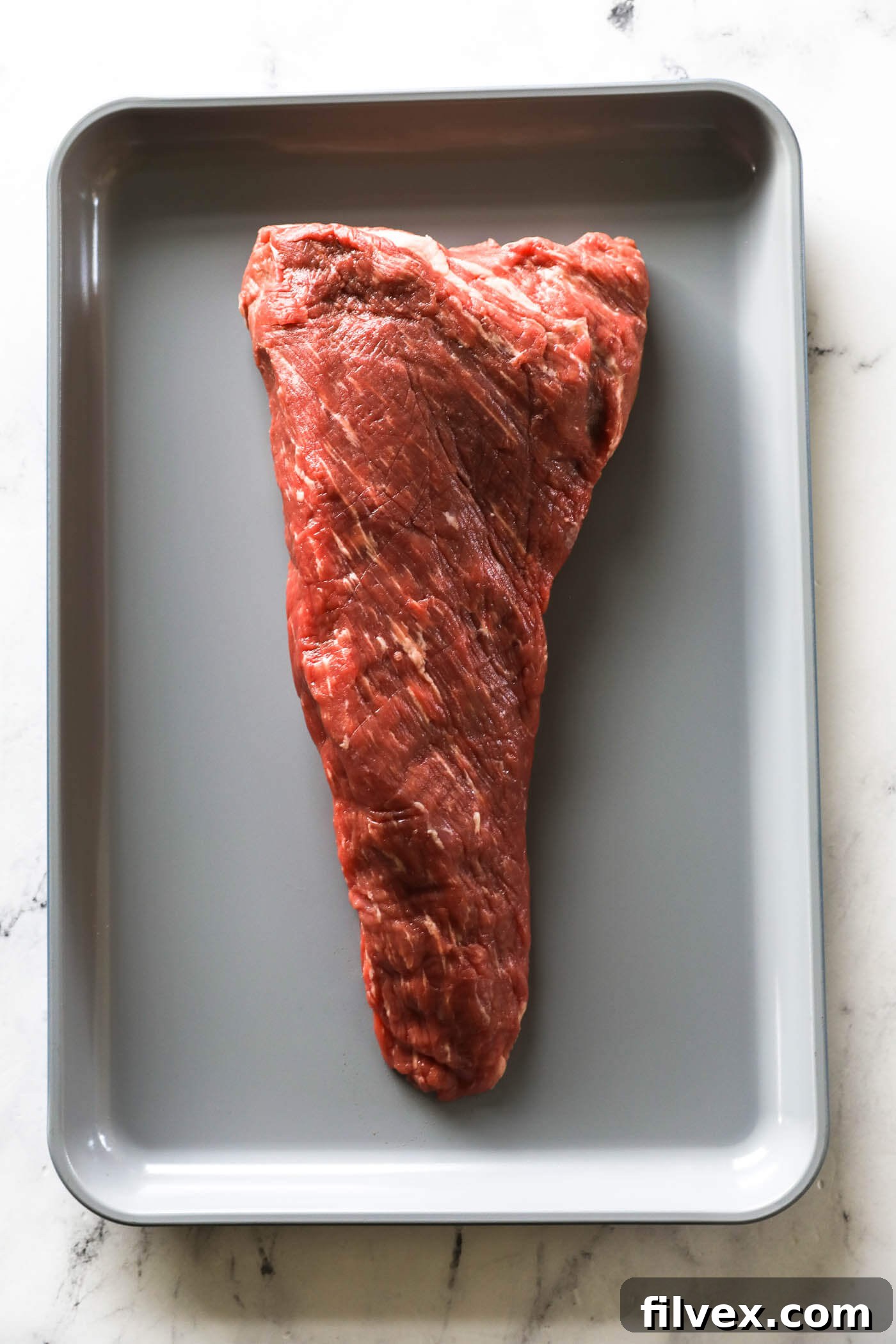
The tri-tip, also known as a triangle roast, bottom sirloin butt, or Santa Maria steak, is a small, lean cut of beef from the bottom sirloin primal cut. It gets its name from its distinctive triangular shape. Historically, it was often ground into hamburger meat or cut into steaks, but its unique marbling and rich flavor profile have made it a prized roast in recent years, especially on the West Coast.
Smoking tri-tip unlocks a whole new dimension of flavor and texture. The low, consistent heat of a smoker, infused with wood smoke, slowly tenderizes the meat while imparting a complex, aromatic essence that can’t be achieved through grilling or oven roasting alone. The reverse sear technique, which we’ll employ, ensures that while the interior remains incredibly moist and tender, the exterior develops a beautiful, flavorful crust, often referred to as “bark.” This combination creates a culinary experience that is both sophisticated and deeply satisfying.
Crafting Your Signature Tri-Tip Rub
A great rub is the foundation of any fantastic smoked meat. Our homemade tri-tip rub is designed to enhance the natural beefy flavor without overwhelming it, creating a perfect crust that holds up to the smoke and sear. Each ingredient plays a crucial role:
- **Sea Salt:** Essential for seasoning and drawing out moisture from the surface, which aids in bark formation. It also helps to tenderize the meat.
- **Coconut Sugar (or Brown Sugar):** Adds a touch of sweetness that balances the savory notes and promotes caramelization during the searing process, contributing to a darker, richer crust. For those on a Whole30 or low-carb diet, it can be easily omitted without compromising flavor significantly.
- **Ground Black Pepper:** Provides a subtle heat and pungent aroma that is classic for beef rubs. Freshly ground pepper offers the best flavor.
- **Garlic Powder & Onion Powder:** These aromatic powders infuse the meat with savory depth, building a robust flavor base that pairs wonderfully with smoky undertones.
- **Chili Powder:** Adds a mild, earthy warmth and a hint of complex spice, enhancing the overall profile.
- **Paprika:** Contributes a vibrant color to the rub and a mild, sweet, peppery flavor that rounds out the spice blend.
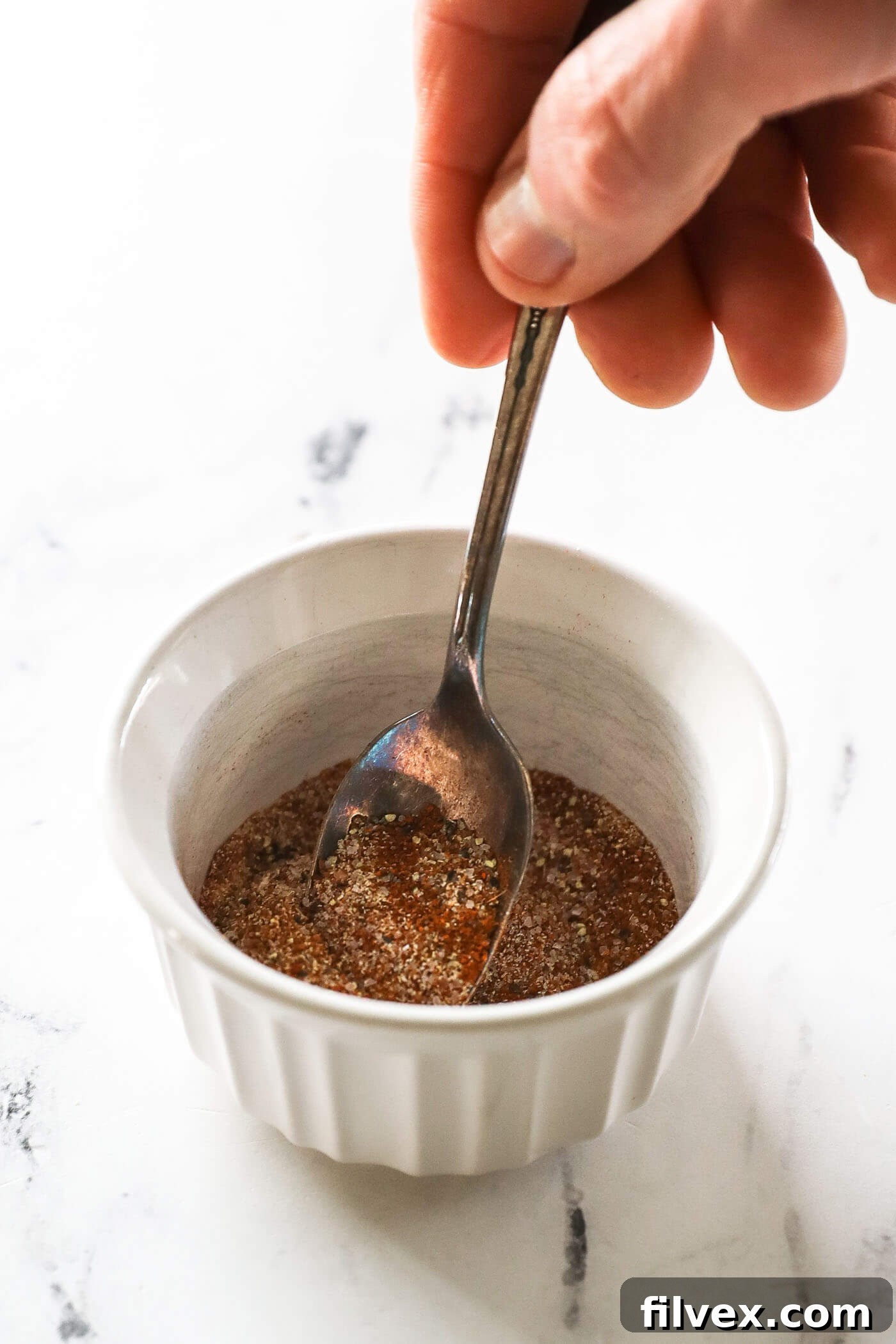
To prepare the rub, simply combine all the ingredients in a small bowl. Ensure they are thoroughly mixed to create a uniform blend. This rub can be made in advance and stored in an airtight container for future use on any of your favorite smoked meats.
Essential Equipment for Smoking Tri-Tip
While smoking may seem complex, the right tools simplify the process dramatically. For this recipe, you’ll need:
- Smoker: A pellet grill, such as a Traeger, is ideal for consistent temperature control and ease of use, making it perfect for beginners. Offset smokers or electric smokers can also be used, though they may require more active management of temperature and smoke.
- Instant-Read Meat Thermometer: This is your most critical tool. Accuracy is key to achieving your desired doneness without overcooking. A good thermometer will give you precise internal temperature readings in seconds.
- Cast Iron Skillet (Optional, but Recommended): For the reverse sear, a heavy cast iron skillet provides superior heat retention, resulting in an exceptional, even crust. Alternatively, you can crank up the heat on your pellet grill or use a regular grill grate for searing.
- Sharp Knife: Essential for trimming the tri-tip and, most importantly, for slicing against the grain after it has rested.
- Cutting Board & Sheet Pan: For preparation, resting, and carving.
- Olive Oil (or other cooking oil): Acts as a binder for the rub and aids in achieving a beautiful sear.
Step-by-Step Instructions for Smoked Tri-Tip on a Pellet Grill (or other smoker)
- **Preheat Your Smoker:** Begin by preheating your pellet grill or smoker to a consistent 225° Fahrenheit (107° Celsius). This low temperature is crucial for the “low and slow” smoking process that tenderizes the meat.
- **Prepare the Tri-Tip Rub:** In a small bowl or ramekin, combine all the ingredients for your homemade tri-tip rub. Mix them thoroughly until you have a uniform spice blend.
- **Trim the Tri-Tip:** Most tri-tips come pre-trimmed, but it’s always a good idea to inspect and refine. Using a small, sharp knife, carefully remove any large, excess fat pockets from the surface. More importantly, remove any silver skin—a thin, silvery membrane that won’t render down and can make the meat tough. Be meticulous but avoid cutting away too much of the precious meat.
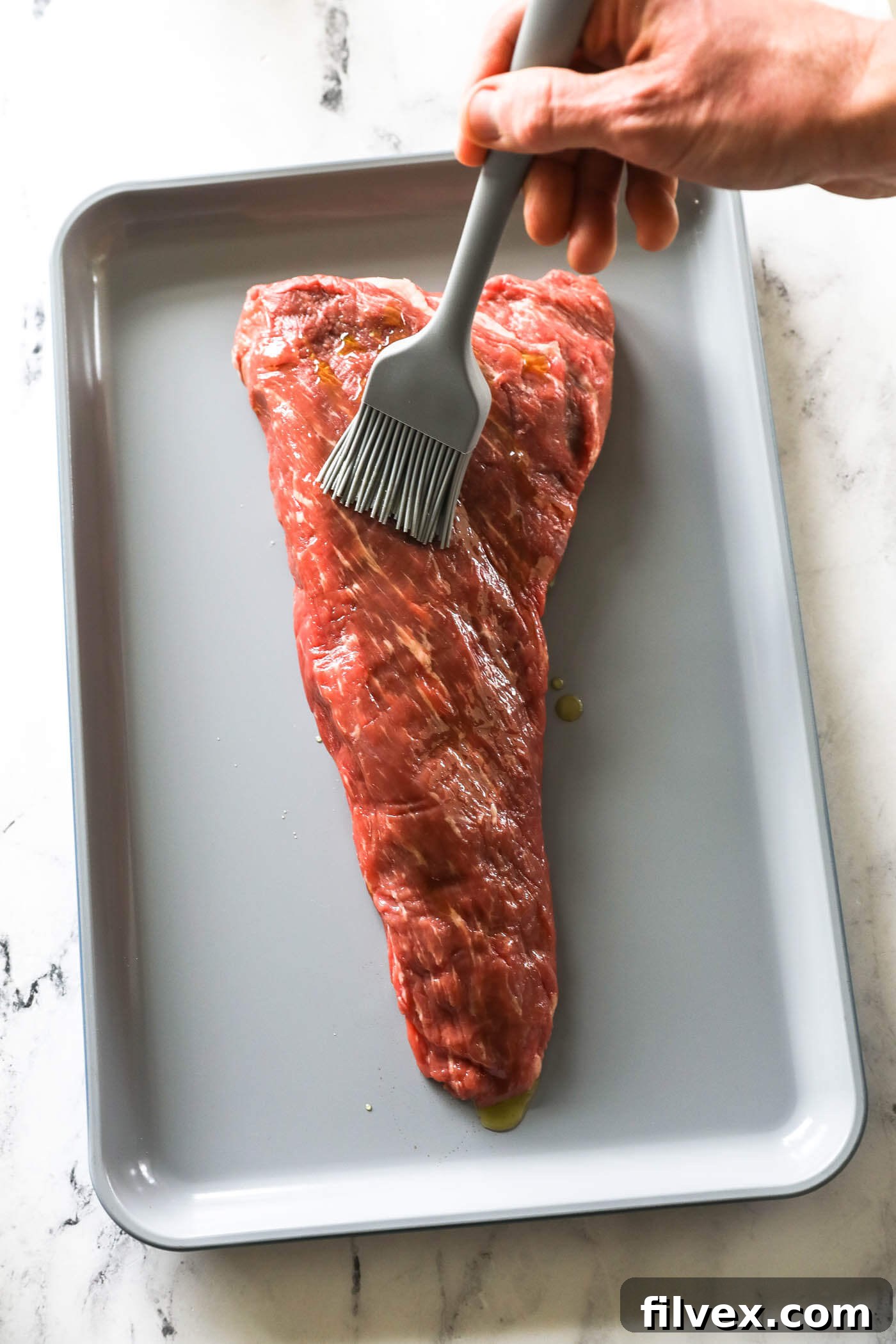
- **Apply the Binder:** Place the trimmed tri-tip on a clean sheet pan. Drizzle about 2 tablespoons of olive oil evenly over the entire roast. Use your hands or a brush to spread the oil, ensuring it completely coats both sides of the meat. This oil acts as a binder, helping the rub adhere better and promoting an even crust.
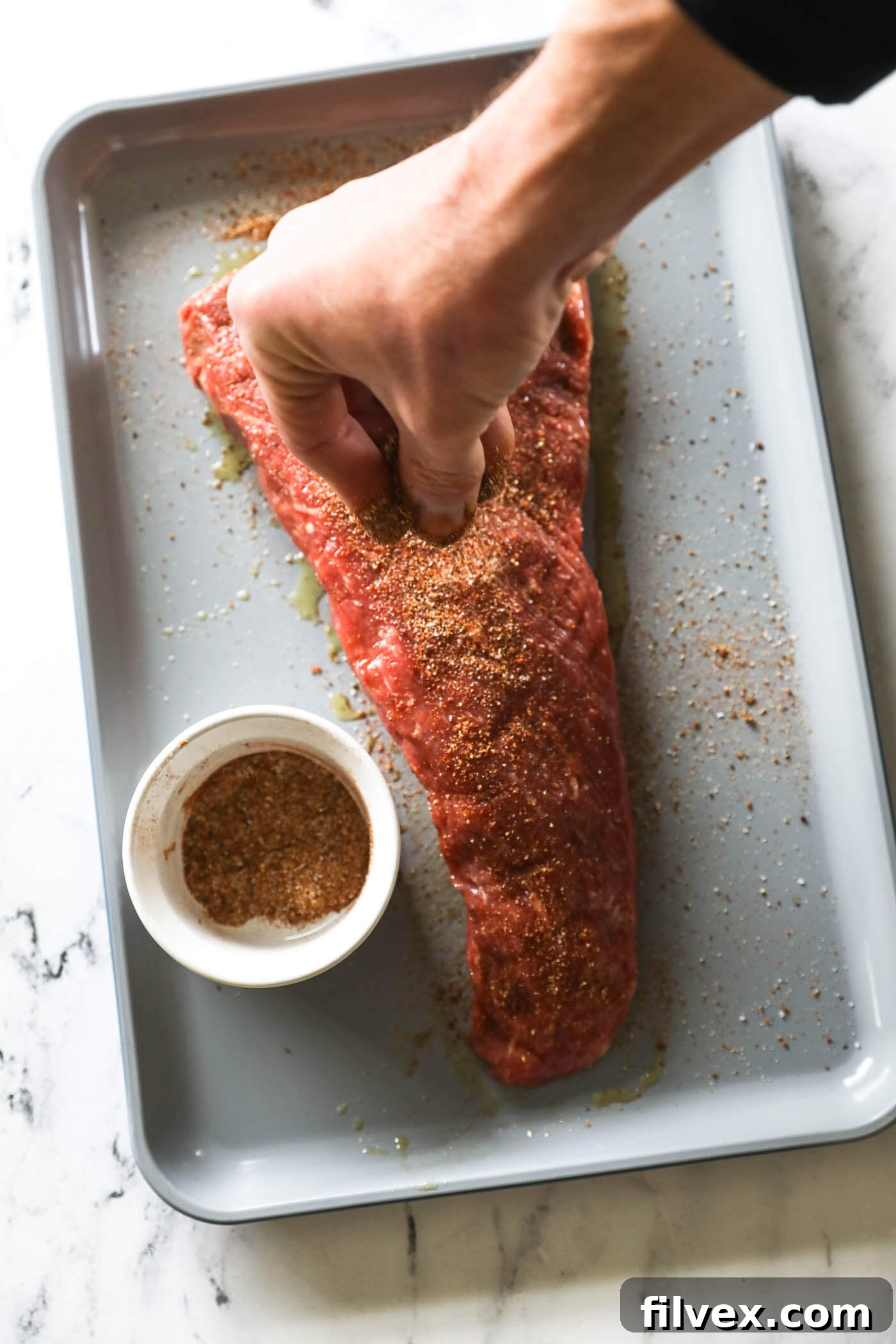
- **Season Generously:** Sprinkle the prepared seasoning rub generously over all sides of the tri-tip. Don’t be shy – a good coating is key to a flavorful bark. Press the rub into the meat gently with your hands to ensure it sticks.
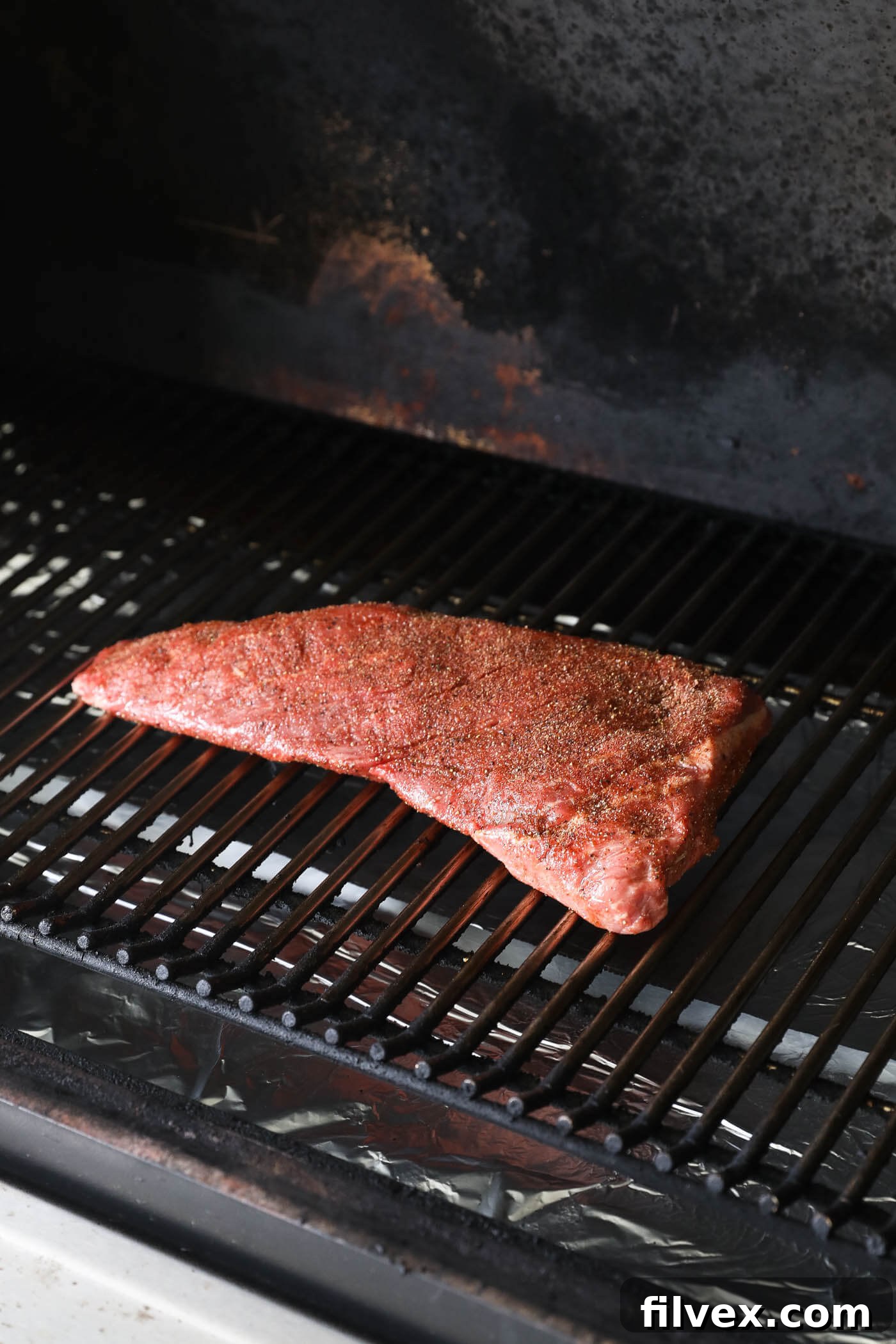
- **Smoke the Tri-Tip:** Carefully transfer the seasoned tri-tip directly onto the grates of your preheated smoker. Smoke at 225°F (107°C) until the internal temperature of the thickest part of the roast reaches 5 degrees below your desired final doneness. For medium-rare, this means pulling it off at 125°F (52°C). This initial smoking phase will typically take about 1.5 to 2 hours, but always cook to temperature, not time. Refer to the temperature chart below for various doneness levels.
Expert Tips from a Seasoned Pitmaster
Navigating the Tri-Tip’s Unique Shape
The tri-tip’s distinctive boomerang shape means it has varying thickness. One end will naturally be larger and thicker than the other. When taking internal temperature readings, always focus on the thickest part of the steak. This ensures the entire roast is cooked to your desired doneness without overcooking the thinner sections. It’s common for there to be slight variations in doneness across the roast due to its shape, but by targeting the thickest part, you’ll achieve optimal results overall.
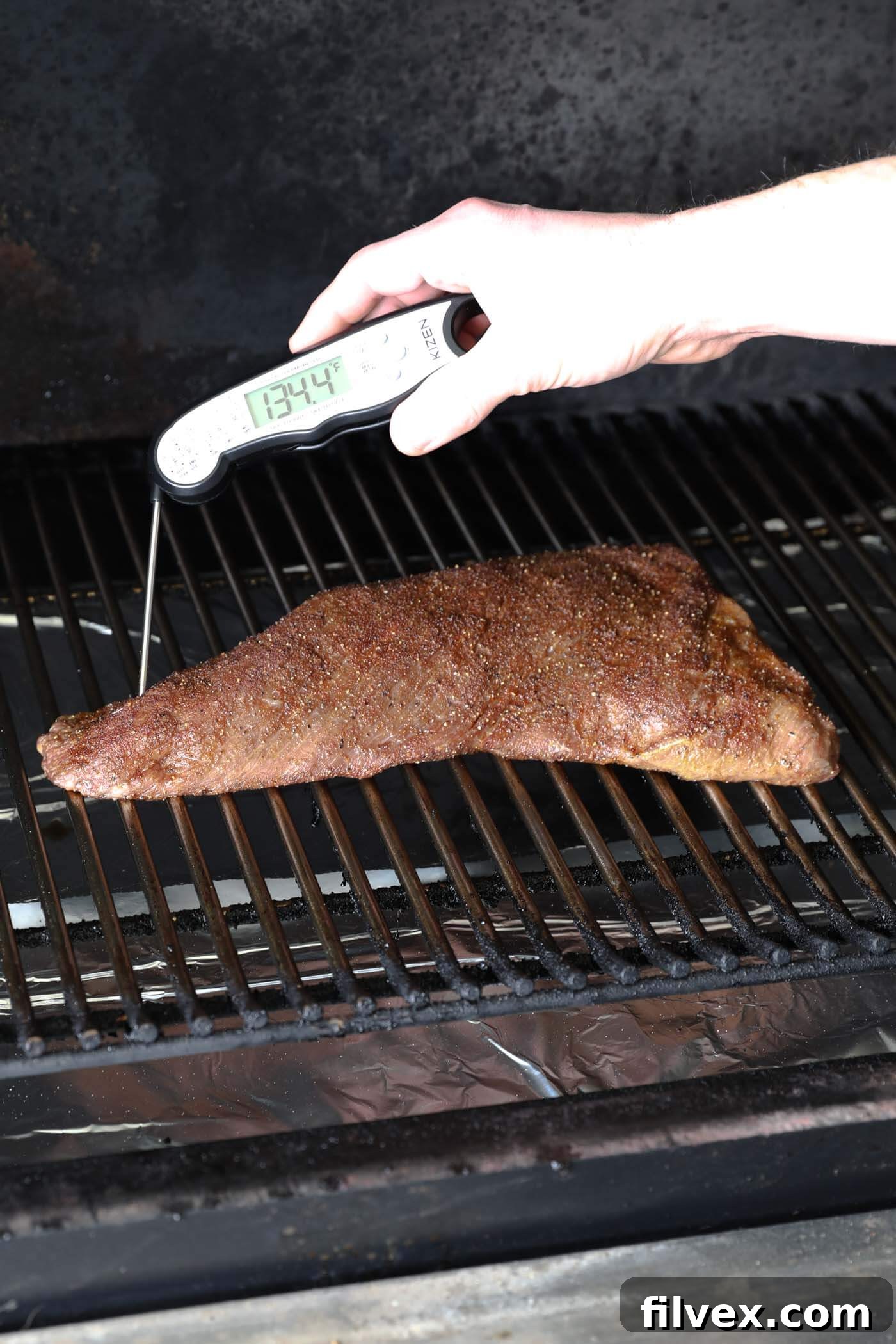
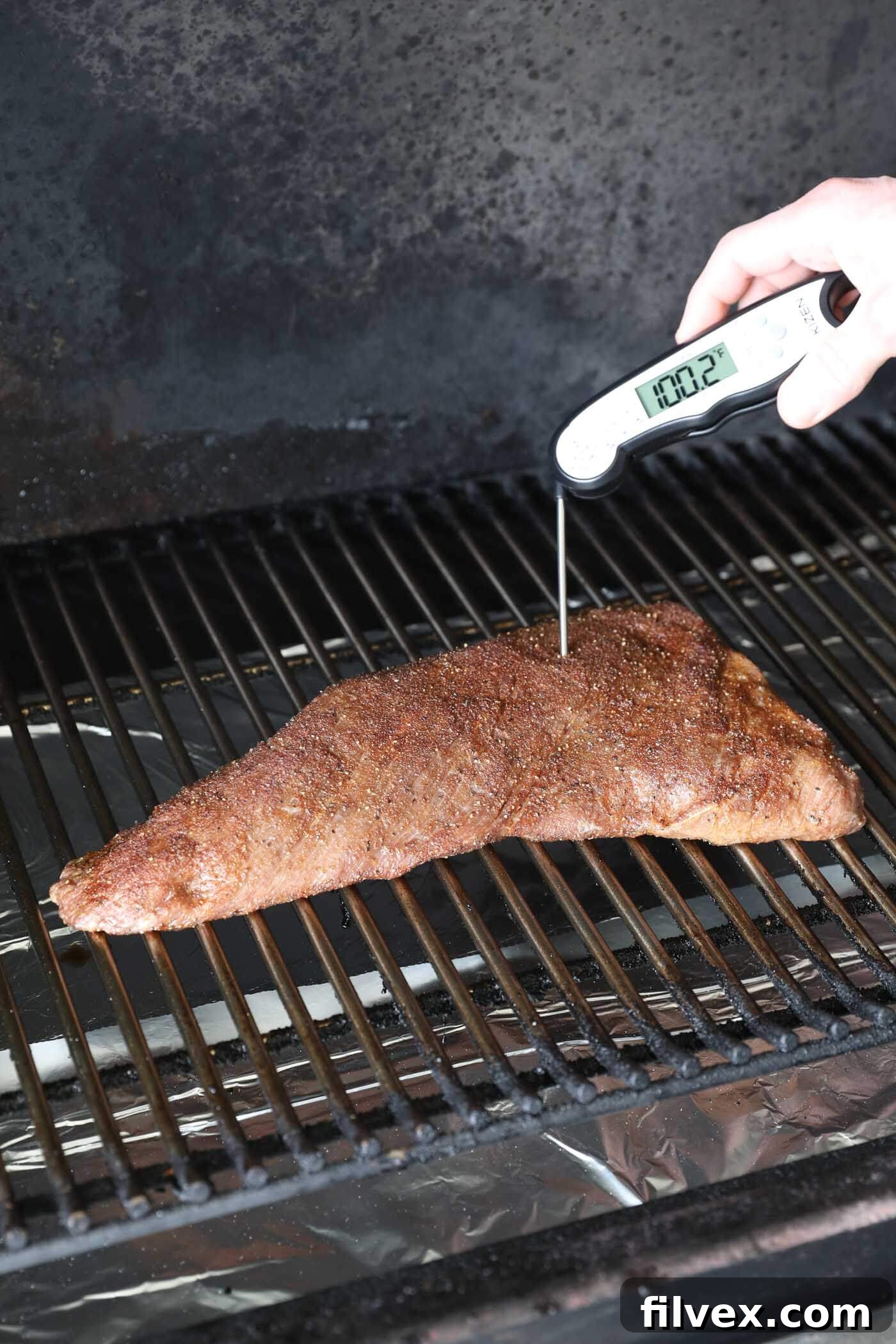
You will naturally get some variation in doneness with tri-tip due to the shape. Take measurements from multiple places if needed and make sure the thickest pieces are cooked to the temperature you want.
The Magic of the Reverse Sear
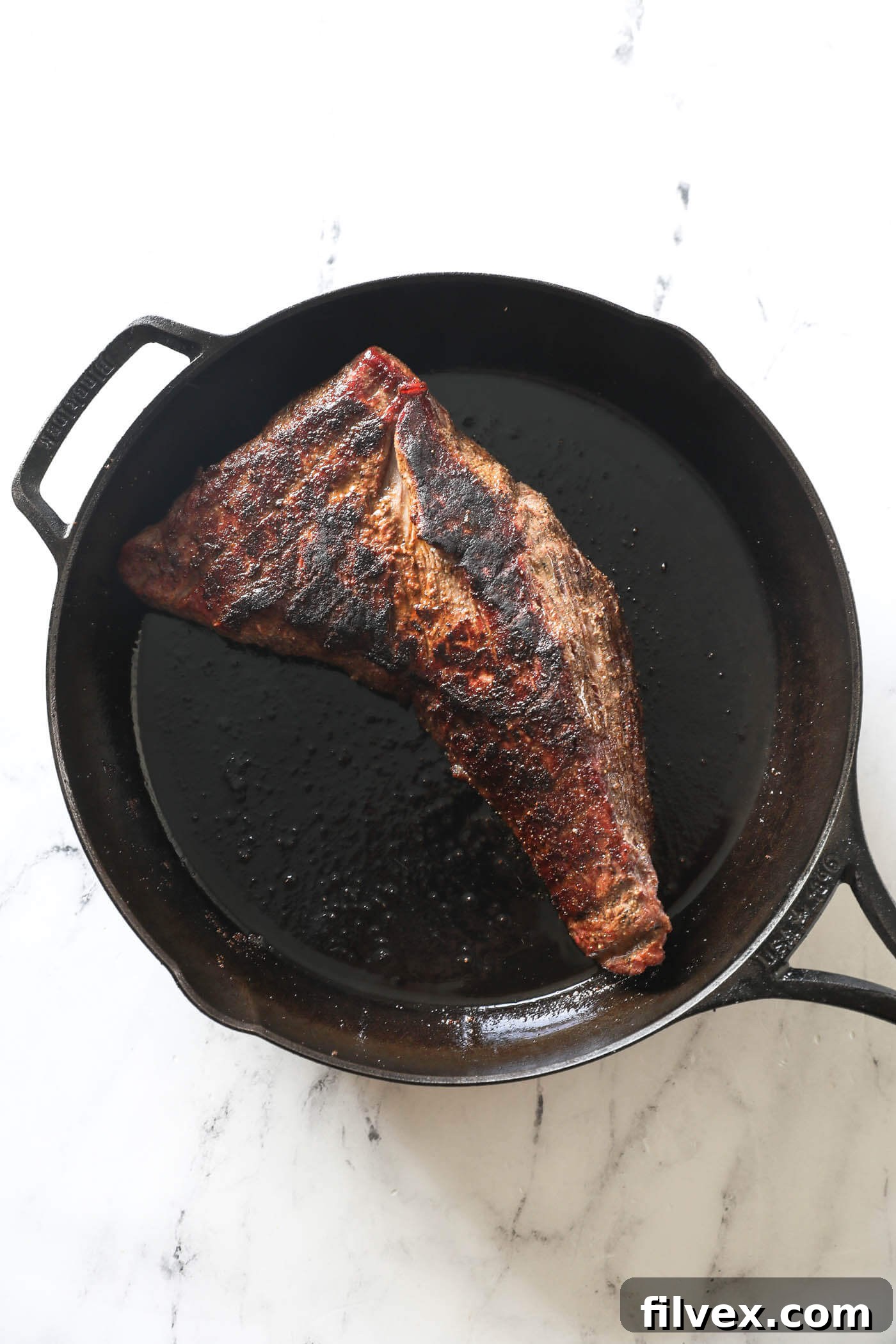
The reverse sear is the secret weapon for achieving that coveted “crispy” outer crust while maintaining a perfectly cooked interior. After the low-and-slow smoke, the meat is quickly seared at high heat. This can be done effectively in a searing-hot cast iron skillet on your stovetop or by increasing the temperature of your pellet grill to its highest setting (around 450-500°F or 232-260°C) for the final sear. The intense heat rapidly caramelizes the exterior, creating a rich, flavorful bark without cooking the inside much further.
Precision Temperature Management
Accuracy is paramount when it comes to temperature. You’ll begin the reverse sear when your tri-tip is approximately 5 degrees Fahrenheit (3 degrees Celsius) away from your desired final temperature. This buffer accounts for “carryover cooking,” where the internal temperature of the meat continues to rise slightly after it’s removed from the heat. This prevents overcooking during the searing step, ensuring your tri-tip reaches its ideal doneness.
Mastering the Art of Cutting Against the Grain
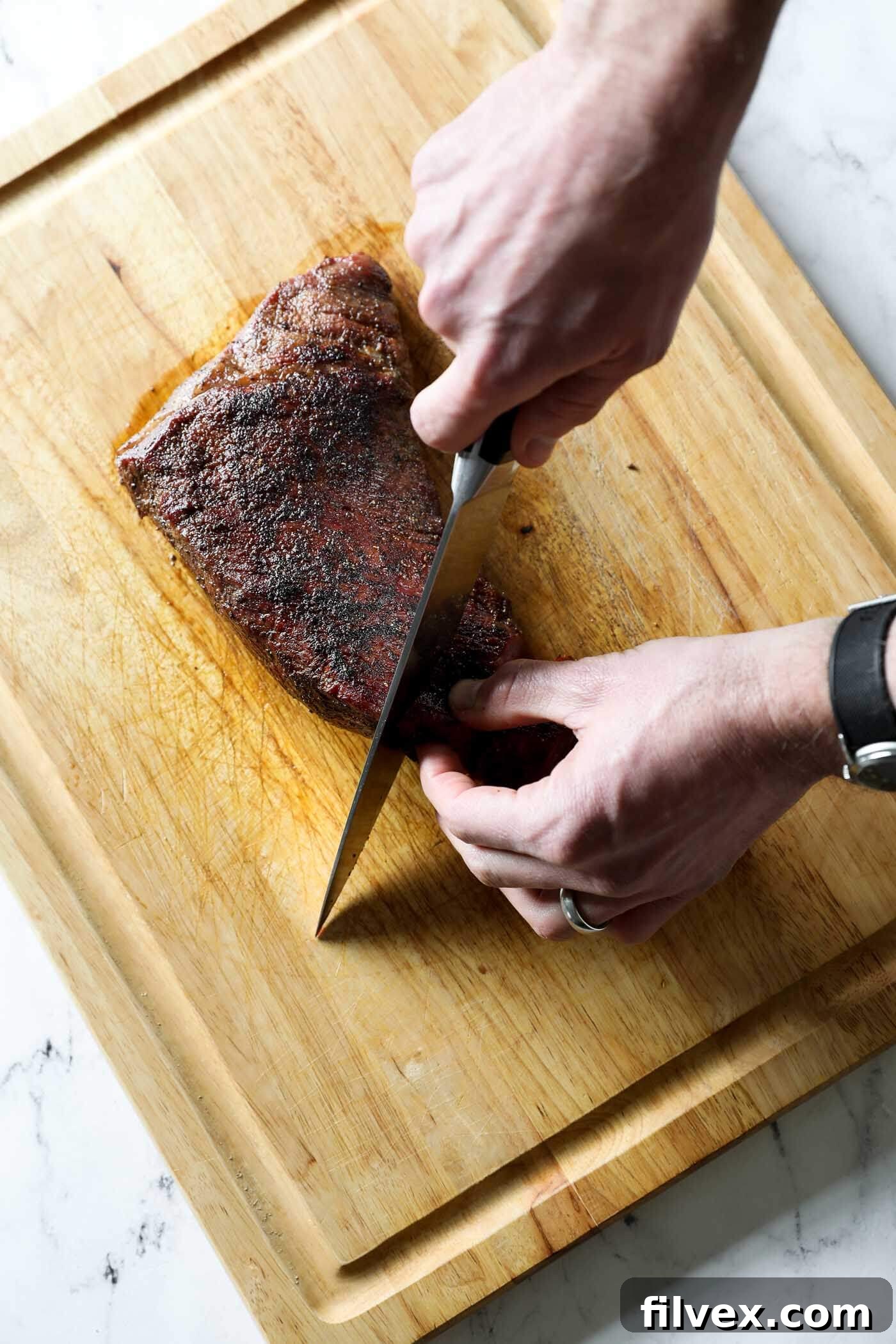
For the most tender and juicy slices of tri-tip, it is absolutely essential to cut the meat against the grain. This means cutting perpendicular to the muscle fibers. Tri-tip is unique because its grain changes direction, often having two distinct sections where the grain runs differently. Take note of the grain direction when the meat is raw; it will be easier to identify. If you cut with the grain, the slices will be tough and chewy, regardless of how perfectly you cooked it. Proper slicing maximizes tenderness and enhances the eating experience.
How Long to Smoke Tri-Tip: Timing and Temperatures
Smoking tri-tip at 225°F (107°C) typically takes **approximately 30 minutes per pound**. However, this is merely an estimate. Several factors can influence the total cooking time:
- **Meat Thickness:** A thicker roast will take longer than a thinner one, even if they weigh the same.
- **Smoker Consistency:** The accuracy and stability of your smoker’s temperature can affect cook time. Drafts, opening the lid too often, or inconsistent pellet/wood feed can cause fluctuations.
- **Wood/Pellet Type:** Different woods burn at varying rates and impart distinct flavors. While not directly affecting cook time, it’s a consideration for overall experience.
- **Desired Doneness:** Naturally, cooking to well-done will take longer than rare.
I highly recommend cooking tri-tip to a **medium-rare (125°-130°F or 52°-54°C)** internal temperature. At this stage, it’s incredibly tender, wonderfully juicy, and yields the best flavor when sliced correctly against the grain. Always rely on an instant-read meat thermometer, not a clock, to determine doneness.
Refer to the table below for common temperature ranges to achieve your preferred doneness:
| Doneness | Final Temperature |
|---|---|
| Rare | 120-125° Fahrenheit (49-52° Celsius) |
| Medium rare | 125-130° Fahrenheit (52-54° Celsius) |
| Medium | 130-140° Fahrenheit (54-60° Celsius) |
| Medium well | 145-150° Fahrenheit (63-66° Celsius) |
| Well done | 150°+ Fahrenheit (66°+ Celsius) |
Cutting Tips for Maximum Tenderness
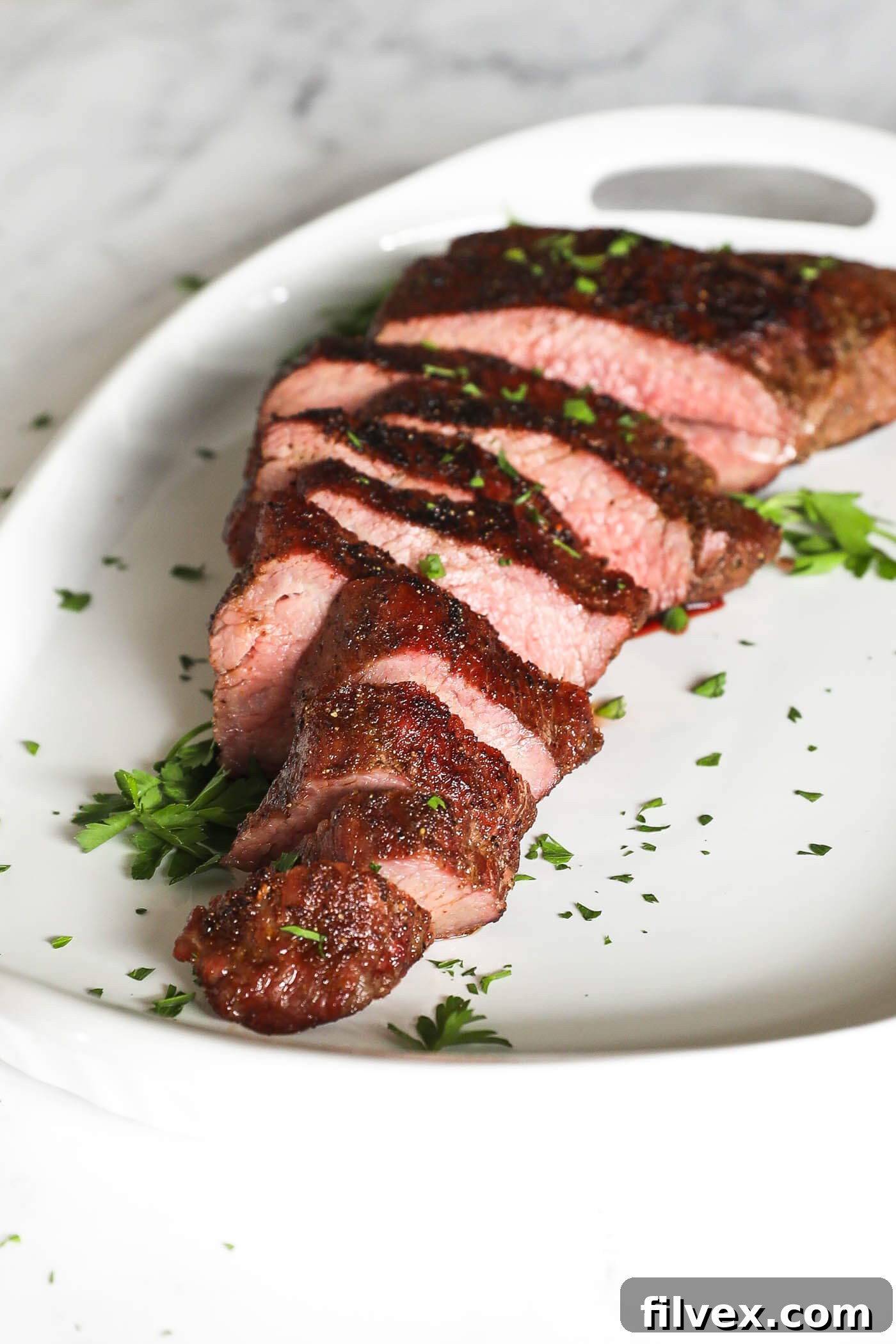
Achieving melt-in-your-mouth tenderness with tri-tip largely depends on how you slice it. The key is always to cut against the grain of the meat. This shortens the muscle fibers, making each bite significantly more tender and easier to chew.
Due to its distinctive boomerang shape, the tri-tip has muscle fibers that run in two different directions. It’s often easiest to identify these grain patterns when the meat is raw, so take a moment to observe before cooking. Once cooked and rested, the fibers might be harder to discern.
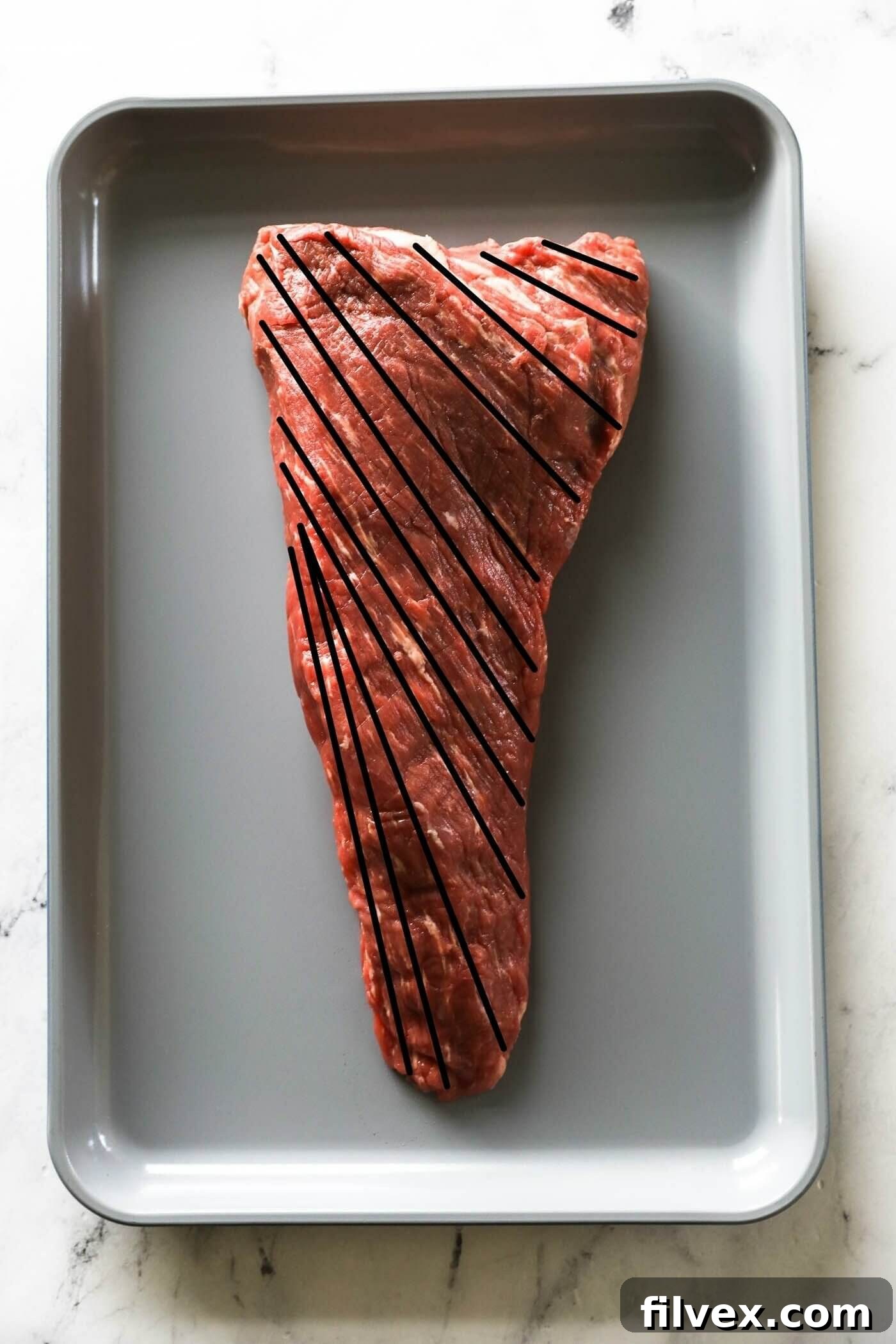
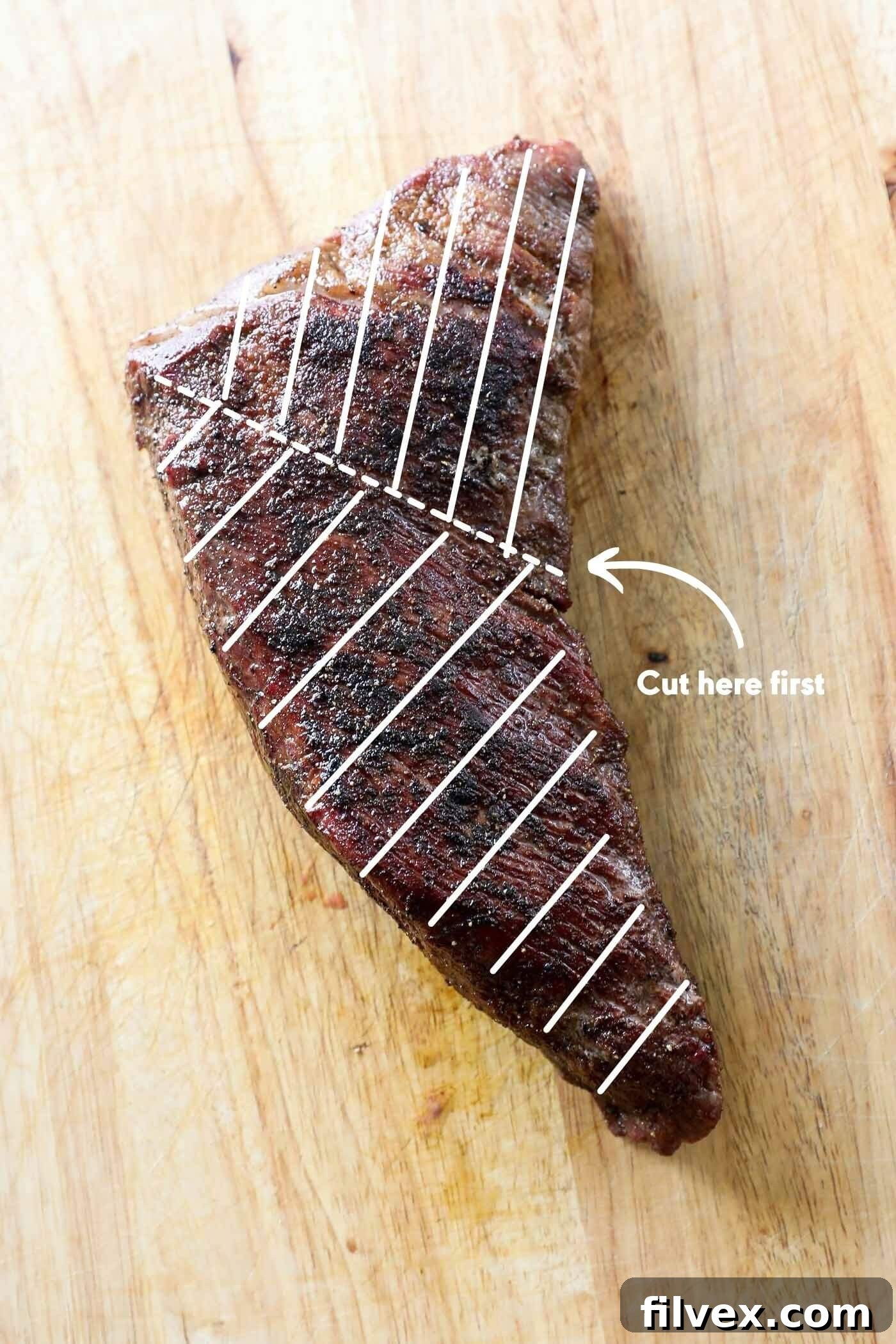
A common strategy is to first cut the tri-tip in half where the two main grain patterns meet. This initial cut often goes *with* the grain. Then, rotate each half and slice them individually against their respective grain. If you cut the meat with the grain, it will result in tough, stringy pieces. Always make sure your knife is sharp for clean, precise cuts.
Serving Suggestions for Smoked Tri-Tip
Smoked tri-tip is a star on its own, but it truly shines when paired with complementary sides. Here are some ideas to complete your meal:
- **Classic BBQ Sides:** Coleslaw, potato salad, baked beans, or cornbread are always excellent choices.
- **Roasted Vegetables:** Asparagus, broccoli, or Brussels sprouts roasted with a touch of garlic and olive oil make a healthy and delicious accompaniment.
- **Hearty Salads:** A simple green salad with a vinaigrette dressing, or a more substantial pasta salad, can cut through the richness of the beef.
- **Sauces:** While the tri-tip is flavorful on its own, you can offer a side of your favorite BBQ sauce, a chimichurri, or a horseradish cream for dipping.
Storing and Reheating Leftover Tri-Tip
If you’re lucky enough to have leftovers, store them properly to enjoy later:
- **Storage:** Allow any leftover tri-tip to cool completely, then slice it or keep it whole. Wrap it tightly in plastic wrap or aluminum foil, or place it in an airtight container. Refrigerate for up to 3-4 days.
- **Reheating:** To prevent drying out, reheat sliced tri-tip gently. Place slices in a baking dish with a splash of beef broth or water, cover tightly with foil, and warm in a preheated oven at 250°F (120°C) until just heated through. You can also quickly warm individual slices in a skillet over low heat. Avoid microwaving, as it can make the meat tough.
We sincerely hope you cherish this smoker recipe as much as we do!
Your feedback is incredibly valuable to us. Please take a moment to leave a quick star rating and review below; we read every comment and genuinely appreciate your thoughts. Additionally, don’t hesitate to browse the rest of our easy grilling recipes to discover more culinary favorites!
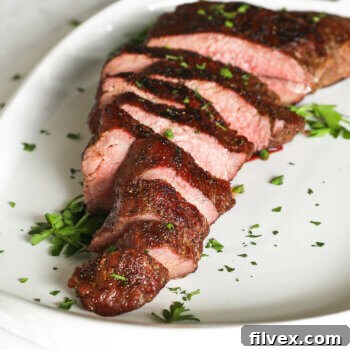
Beginner Smoked Tri-Tip (Reverse Sear, Perfect Crust)
Get that deliciously juicy, smoked tri-tip with a perfectly seasoned crust. A great beginner recipe for anyone new to cooking a tri-tip, just follow the detailed step-by-step instructions below.
Prep Time: 10 mins
Cook Time: 1 hr
Resting Time: 10 mins
Total Time: 1 hr 20 mins
Servings: 6
Pin Recipe
Leave a Review
Ingredients
- 2 lb tri-tip roast (see notes for approximate smoking time per pound)
- 2 tbsp olive oil (divided, can sub other cooking oil)
For the tri-tip rub:
- 1 tsp sea salt
- 1 tsp coconut sugar (can use brown sugar, can omit for Whole30 or lower carb)
- 1/2 tsp ground pepper
- 1/2 tsp garlic powder
- 1/2 tsp onion powder
- 1/2 tsp chili powder
- 1/2 tsp paprika
Equipment
- Smoker
- Instant-read meat thermometer (highly recommended)
- Cast iron skillet (for searing)
Instructions
- Preheat your smoker to 225° Fahrenheit (107°C).
- Prepare the tri-tip rub by adding all of the ingredients to a small bowl or ramekin and mixing well.
- Trim the tri-tip. Using a small and sharp knife, remove any fatty pieces and discard them. Also, trim off as much of the membrane and white silver skin as possible, being careful not to remove too much meat.
Note: Most tri-tip will be pre-trimmed, but taking a few minutes to trim off any remaining pieces is important and will result in a better final cut of meat.
- Place the trimmed tri-tip on a sheet pan. Drizzle about 2 tbsp of olive oil over the roast and brush or rub it all over.
- Sprinkle the seasoning rub all over both sides of the tri-tip. Use your hands if needed to rub the seasoning all over and completely coat the outside.
- Place the tri-tip directly in your smoker. Smoke at 225°F (107°C), until the internal temperature reaches 5 degrees from your desired end temperature (125°F / 52°C for medium rare, which is what I recommend for tri-tip).
Note: See the recipe notes below about finished temperatures for rare to medium-well for this step. Cooking time will vary, but plan on about 1.5 – 2 hours.
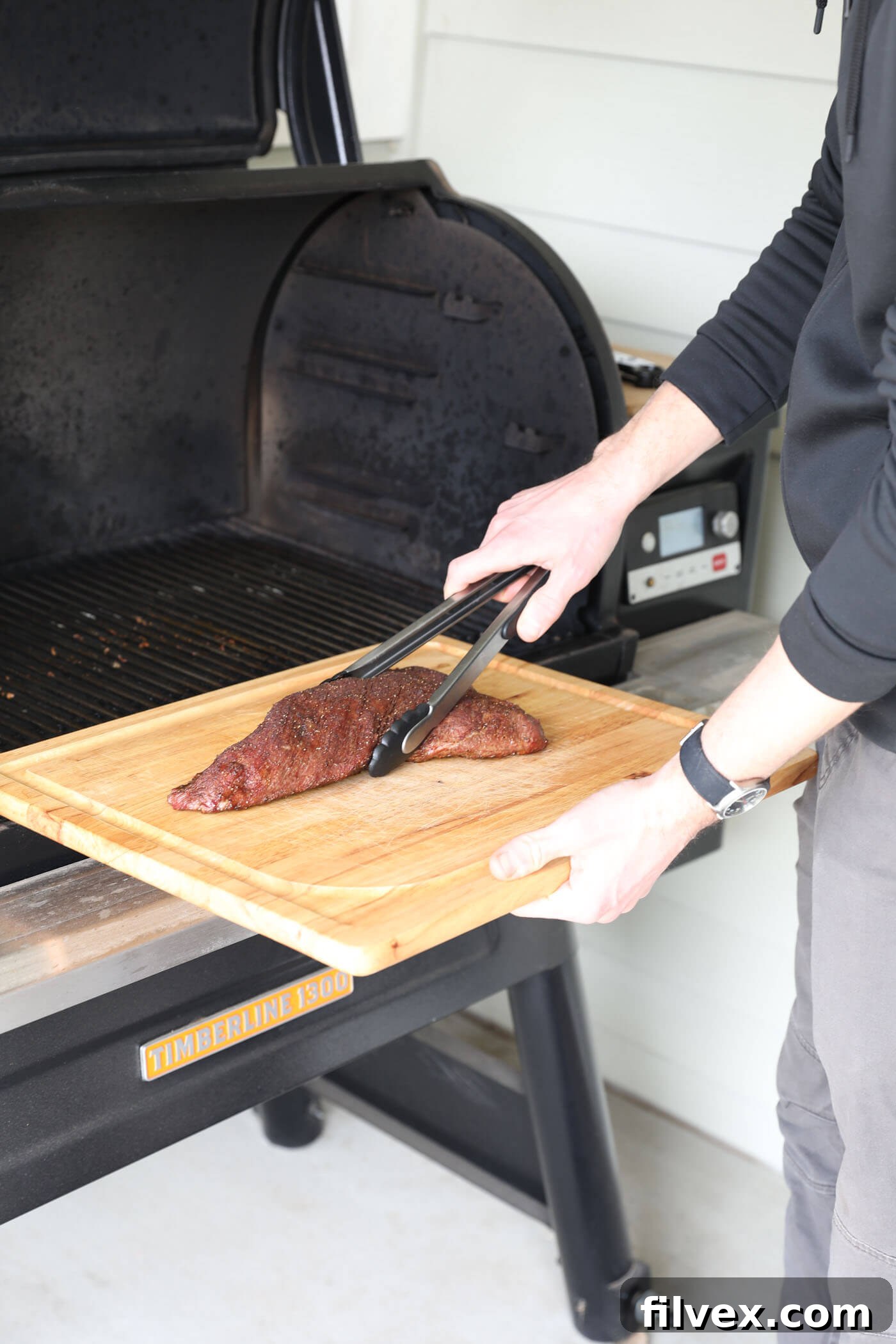
- Remove the tri-tip from the smoker and carefully set it on a cutting board. Heat a large cast iron skillet over medium-high heat and add about 2 tbsp of cooking oil.
- Once the pan is hot, place the tri-tip roast in the pan and sear it for 1-2 minutes per side to develop a seared, crispy crust on the outside.
Note: You can also simply sear the tri-tip on the grill or pellet grill. Just remove the tri-tip as noted above and crank the heat up to high-heat. Once the grill is hot, sear it quickly on all sides as noted above. See the recipe notes below about the final finished temperatures for rare to medium-well for this step.
- Remove the seared tri-tip and set it aside to rest for 10 minutes. Slice it against the grain for serving.
Last Step:
Please leave a star rating and comment to let us know how you liked this recipe! Your ratings and reviews help our business grow, thank you!
Notes
- When smoking tri-tip at 225°F (107°C), you can expect it to take approximately 30-minutes per pound to smoke. This is a rough estimate, and always check your meat with an instant-read thermometer and cook to temperature, not time.
- For step #6 (pre-sear pull temperature), aim for the following:
- Rare: 120° F (49°C)
- Medium Rare: 125° F (52°C)
- Medium: 130° F (54°C)
- Medium Well: 140° F (60°C)
- For step #8 (final temperature after searing and resting):
- Rare: 120-125° F (49-52°C)
- Medium Rare: 125-130° F (52-54°C)
- Medium: 130-140° F (54-60°C)
- Medium Well: 145-150° F (63-66°C)
- Nutrition amounts provided are per serving and an estimate provided for those following a Ketogenic or low-carb diet. See our full nutrition information disclosure here.
Nutrition Information (Estimated Per Serving)
Calories: 425 kcal, Carbohydrates: 2g, Protein: 47g, Fat: 25g
Course: Main Course
Author: Justin Winn
Cuisine: American
Did you make this recipe?Tag @realsimplegood with hashtag #realsimplegood on Instagram. We love to see what you make!