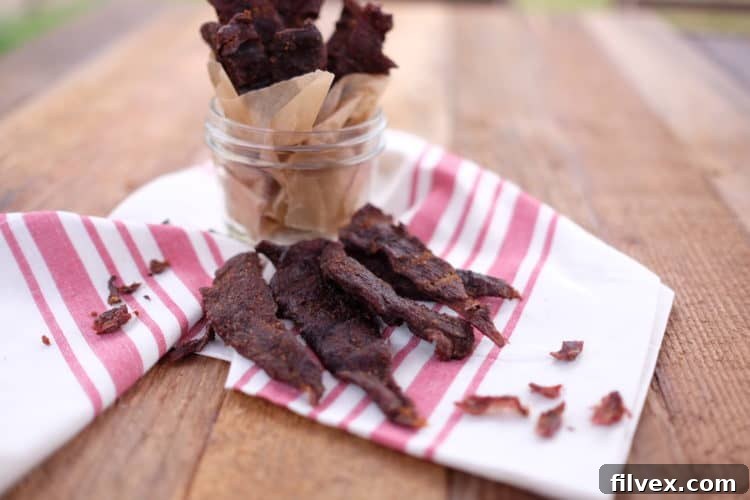
Master the Art of Homemade Paleo Beef Jerky: Your Ultimate Smoker & Oven Recipe Guide
There’s an undeniable satisfaction that comes with crafting your own beef jerky at home. Forget store-bought options loaded with questionable ingredients; homemade jerky offers unparalleled flavor, freshness, and the peace of mind of knowing exactly what goes into your snack. This comprehensive guide will walk you through creating delicious, smoky, and perfectly seasoned paleo beef jerky, suitable for both pellet grills (like a Traeger) and conventional ovens.
Homemade beef jerky isn’t just a snack; it’s a testament to culinary independence and a fantastic way to control your diet. Whether you’re a seasoned jerky maker or a curious beginner, this recipe simplifies the process, ensuring a mouth-watering result every time. Our recipe boasts a robust seasoning mix with a delightful hint of spice and a tangy finish, making it truly irresistible. Plus, the flexibility to choose between thin or thick cuts means you can customize the texture to your personal preference.
Why Homemade Beef Jerky is the Ultimate Snack
Beyond the simple joy of DIY, making your own beef jerky offers a multitude of benefits:
- Unmatched Freshness and Flavor: Store-bought jerky often sits on shelves for months. Yours will be fresh, tender, and bursting with flavor that can’t be replicated.
- Ingredient Control: You dictate what goes into your jerky, avoiding artificial preservatives, high-fructose corn syrup, and excessive sodium commonly found in commercial products. This recipe is specifically designed to be paleo-friendly, using natural sweeteners and soy-free alternatives.
- Cost-Effective: While the initial investment in good quality meat might seem high, the cost per pound of homemade jerky is significantly less than premium store-bought versions.
- Customizable to Your Liking: Love extra spice? Want a sweeter finish? Making it at home allows for endless experimentation with marinades and seasonings. You can make thin cut for a crispier bite or thick cut for a chewier experience.
- Perfect for Any Adventure: Jerky is an ideal snack for hiking, camping, road trips, or simply fueling your day at the office. It’s lightweight, shelf-stable, and packed with protein.
Essential Preparation: Choosing and Preparing Your Beef
The foundation of great beef jerky lies in the quality and preparation of the meat. Don’t underestimate these crucial first steps.
Selecting the Perfect Cut of Meat
For jerky, lean is key. Fat tends to go rancid quickly, drastically shortening your jerky’s shelf life and impacting its flavor. Opt for cuts with minimal marbling. Excellent choices include:
- Top Round: Also known as London Broil, this is a popular and economical choice for jerky due to its leanness and broad muscle fibers that slice well.
- Bottom Round: Similar to top round, it’s lean and provides good, consistent strips.
- Flank Steak: While slightly more expensive, flank steak offers excellent flavor and a distinct grain that’s easy to slice against.
- Eye of Round: This extremely lean cut is another solid option, though it can sometimes result in tougher jerky if not sliced correctly.
Regardless of the cut you choose, ensure you start with high-quality, grass-fed beef if possible. Grass-fed beef often has a better flavor profile and aligns well with a paleo diet.
Trimming and Chilling for Precision Slicing
Before you even think about slicing, a bit of prep goes a long way. This ensures uniform thickness and optimal drying.
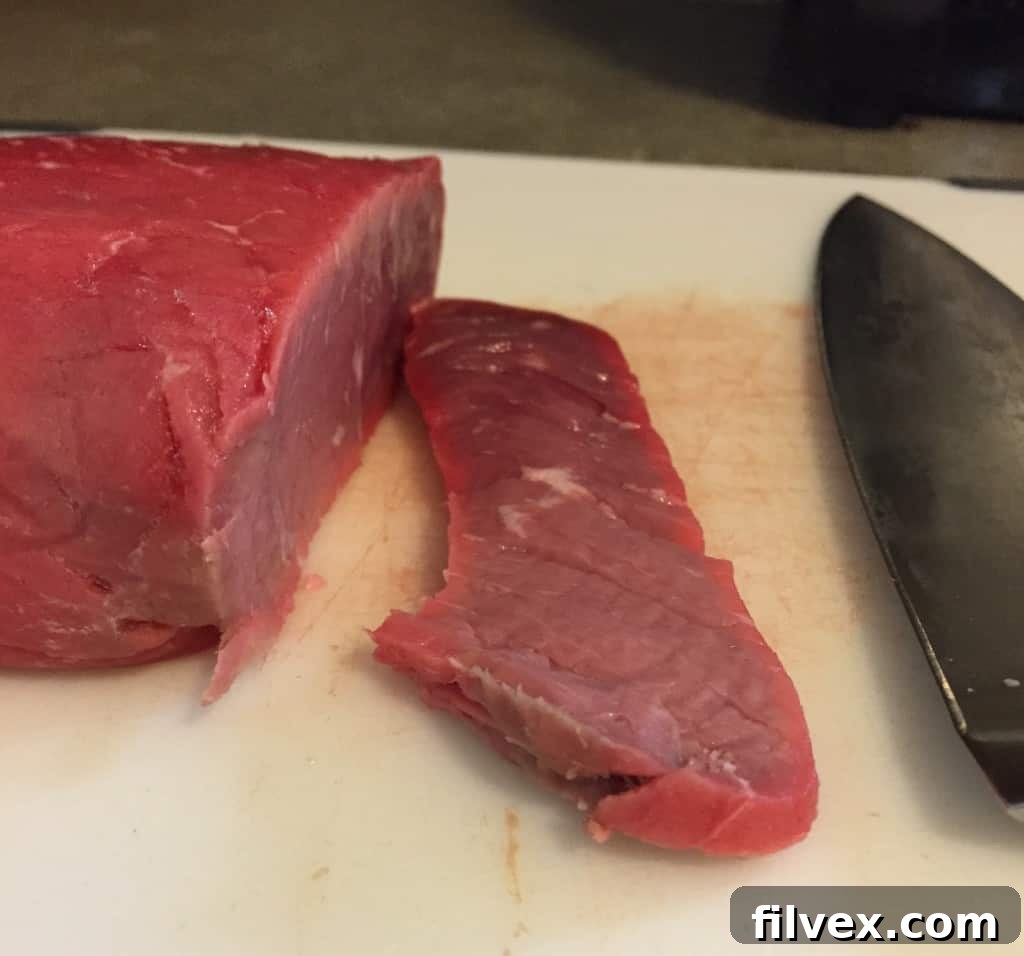
- Trim All Visible Fat and Silver Skin: This step is non-negotiable. Use a sharp knife to meticulously remove any white fat or silvery connective tissue. This not only prevents rancidity but also improves the texture of your jerky.
- The Freezer Trick for Easy Slicing: Here’s a pro tip: place your beef in the freezer for about 90 minutes before you slice it. This firms up the meat, making it much easier to handle and cut into consistent strips. This is highly recommended because consistent thickness is paramount for even drying. Unevenly sliced jerky will result in some pieces being perfectly done while others are still too moist or overly dry.
- Slicing Against the Grain: For more tender jerky, slice the meat against the grain. If you prefer a chewier texture, you can slice with the grain. Aim for strips that are approximately 1/4 inch thick. This thickness provides a good balance between drying time and a satisfying chew.
Crafting the Robust Paleo Marinade
Once your beef strips are perfectly prepared, it’s time for the magic of the marinade. This recipe features a savory, tangy, and subtly sweet marinade that perfectly complements the rich beef flavor while adhering to paleo principles.
The Power of Our Marinade Ingredients:
Each ingredient plays a vital role in tenderizing the meat, infusing it with flavor, and contributing to the jerky’s overall appeal:
- Apple Cider Vinegar: Adds a bright tang and helps to tenderize the meat fibers.
- Maple Syrup: Provides a natural, subtle sweetness that balances the savory and spicy notes, without relying on refined sugars.
- Coconut Aminos: A fantastic soy-free alternative to soy sauce, delivering essential umami and savory depth.
- Brown Mustard: Contributes a pungent kick and acts as an emulsifier, helping to bind the flavors of the marinade together.
- Fish Sauce: Don’t let the name deter you! A small amount of fish sauce adds an incredible layer of umami and complexity, enhancing the beef’s natural richness.
- Liquid Smoke: If you’re using an oven, liquid smoke is your secret weapon for imparting that characteristic smoky flavor without needing a smoker. If you’re using a pellet grill, you can adjust the amount or omit it, depending on your desired smokiness.
- Garlic Powder & Onion Powder: These provide a foundational aromatic base, crucial for any savory jerky.
- Black Pepper: Adds a classic, sharp spice note.
- Chili Powder: Delivers a gentle warmth and a hint of smoky spice that builds subtly with each bite.
- Salt: Essential for seasoning, enhancing all other flavors, and playing a role in the preservation process.
The Marination Process
Once you have your strips of meat ready to go, mix up your marinade in a large bowl. Ensure all ingredients are well combined. Add the beef strips to the marinade and toss everything together to coat well. Use your hands to really work the marinade into every piece of meat, ensuring maximum flavor penetration.
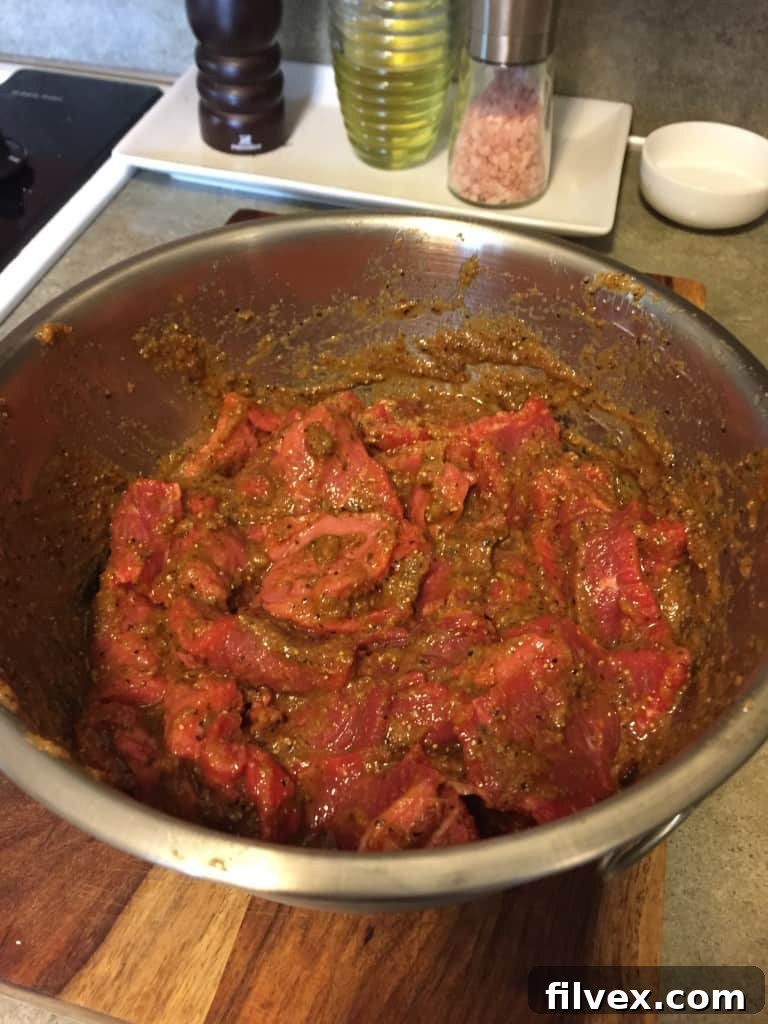
Cover the bowl and refrigerate for 12-24 hours. This extended marination time is crucial for developing deep flavors and allowing the tenderizing agents to work their magic. During this period, stir the meat a few times to make sure every little bit of the meat gets a good coating of marinade sitting on it. This ensures even flavor distribution throughout all the jerky strips.
The Drying Process: Smoker vs. Oven Techniques
The drying process is where the beef truly transforms into jerky. Whether you’re using a dedicated smoker or a conventional oven, patience and proper temperature control are key.
Smoking with a Pellet Grill (e.g., Traeger)
Using a pellet grill makes it super easy to smoke jerky perfectly, infusing it with an authentic, deep smoky flavor that’s hard to beat.
- Preheat Your Smoker: Set your smoker (like a Traeger) to a low temperature, ideally around 150°F (65°C). This low heat is perfect for slow drying without cooking the meat.
- Choose Your Wood Pellets: The type of wood pellets you use will impart different flavors. Hickory and mesquite offer strong, classic smoky notes, while cherry or apple provide a milder, slightly sweeter smoke. Experiment to find your favorite!
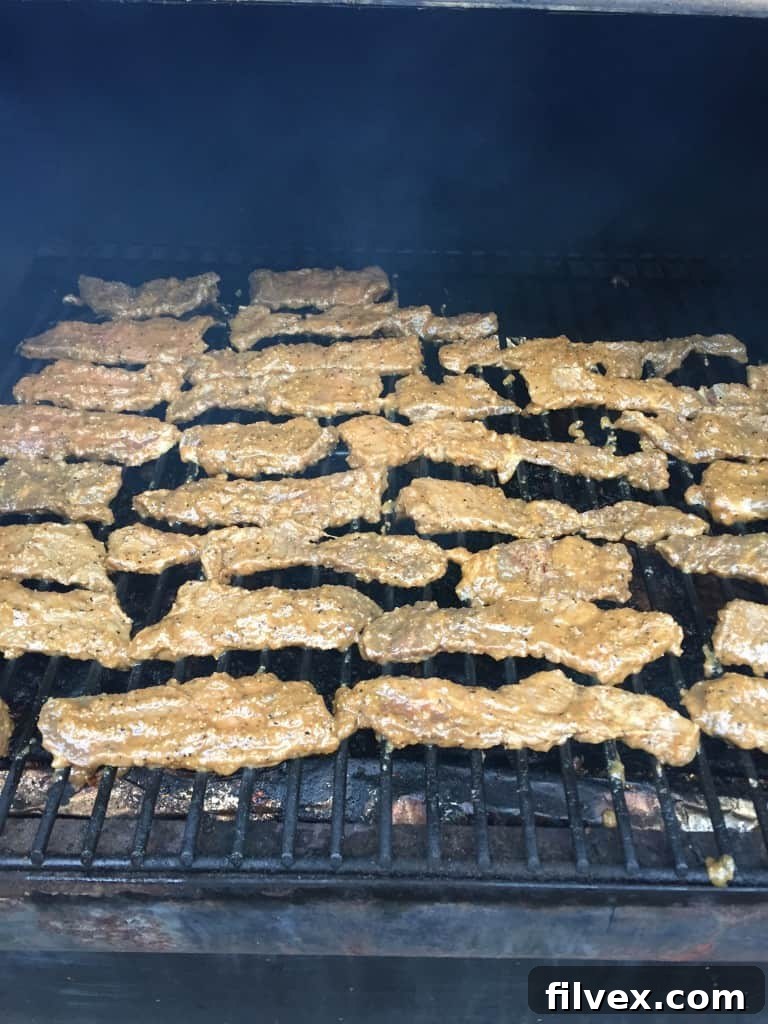
- Arrange the Jerky: Lay your beef strips down flat directly on the smoker grill racks. You want to spread the strips out evenly and flat, leaving a little space between each piece. This ensures good airflow and even drying.
- Smoking Time: At 1/4 inch thickness and around 150°F, it will typically take 6-8 hours to dry out your jerky. The total cooking time depends a lot on the size and thickness of your strips, as well as the humidity in your environment.
Drying in a Conventional Oven
If you don’t have a smoker, a conventional oven works wonderfully for making delicious jerky. You’ll achieve a similar texture, and with liquid smoke in the marinade, you can still get a smoky essence.
- Prepare Your Oven: Preheat your oven to its lowest setting, usually around 150°F (65°C) to 170°F (77°C). If your oven runs hot, you might need to prop the door open slightly to maintain a lower temperature and allow moisture to escape.
- Line the Bottom: Line the bottom of your oven with aluminum foil to catch any drips, making cleanup much easier.
- Arrange the Jerky: Lay your beef strips down flat directly on the oven racks. Similar to smoking, ensure they are spread out evenly and flat, with space for air circulation.
- Prop the Door Open: If your oven doesn’t go low enough or to ensure good air circulation, use a wooden spoon or a heat-safe device to prop the oven door open slightly (about 1-2 inches) while cooking. This allows moisture to escape, crucial for drying the jerky rather than cooking it.
- Oven Drying Time: For 1/4 inch thick strips at 150°F, expect 7-8 hours. Start checking around 4-5 hours.
Knowing When Your Jerky is Done
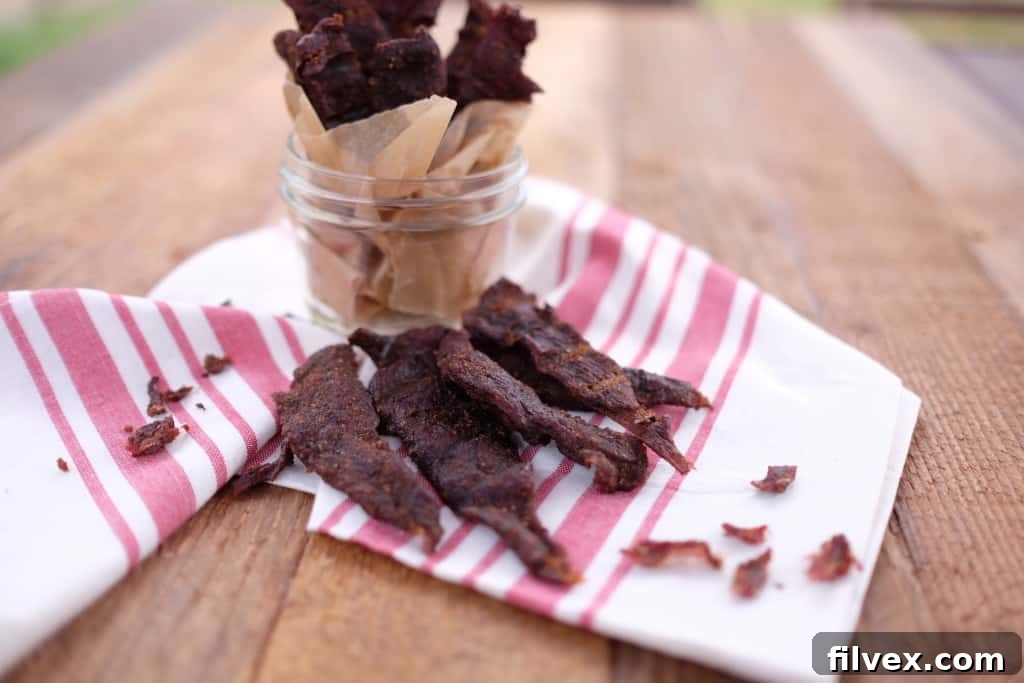
The key to perfect jerky is identifying the right texture. It should be dry enough that you can rip off a piece easily, but not so dry that it snaps when you bend it. It should be firm but still pliable. Periodically check your jerky during the drying process. As mentioned, cooking time depends heavily on thickness, humidity, and your appliance’s actual temperature.
Once you believe your jerky is done, remove a piece, let it cool completely, and then perform the bend test. If it passes, your jerky is ready!
Storing Your Homemade Jerky for Lasting Freshness
After all your hard work, proper storage is essential to maintain the quality and extend the shelf life of your delicious homemade beef jerky.
- Cool Completely: Before storing, ensure the jerky has cooled down to room temperature. Storing warm jerky can create condensation and lead to mold.
- Airtight Containers: The best way to store jerky is in airtight containers or vacuum-sealed bags. This prevents exposure to air and moisture, which can cause spoilage.
- Room Temperature: Properly dried and stored jerky can last for 1-2 weeks at room temperature in a cool, dark place.
- Refrigeration: For extended freshness, store your jerky in the refrigerator, where it can last for 1-2 months.
- Freezing: For even longer storage, jerky freezes beautifully. Wrap it tightly or vacuum seal it and freeze for up to 6 months. Thaw in the refrigerator before enjoying.
Enjoy your smoky, beefy snack!
PALEO BEEF JERKY
Pin Recipe
Leave a Review
Ingredients
- 2-3 lbs grass-fed top round
- 1/4 cup apple cider vinegar
- 1/4 cup maple syrup
- 1/4 cup coconut aminos
- 1/4 cup brown mustard
- 2 Tbsp fish sauce
- 1 Tbsp liquid smoke (optional if using a smoker)
- 2 Tbsp garlic powder
- 2 Tbsp onion powder
- 1 Tbsp black pepper
- 1 Tbsp chili powder
- 1 Tbsp salt
Equipment
-
Smoker or Oven
Instructions
-
Place your beef in the freezer for about 90 minutes. This will firm it up, making it easier to slice. Then, cut it into 1/4 inch strips, slicing against the grain for tenderness.
-
In a large bowl, mix all of the remaining ingredients (apple cider vinegar through salt) to create the marinade. Add the prepared beef strips to the bowl and mix thoroughly, ensuring every piece of meat is completely coated with the marinade. Cover the bowl and place it in the refrigerator for 12-24 hours, stirring a few times during this period to ensure even flavor absorption.
-
Preheat your oven or smoker to 150 degrees F (65 degrees C). If using an oven, line the bottom with aluminum foil to catch any drips and prop the door open slightly with a wooden spoon or similar heat-safe device for air circulation. Lay your beef strips down flat directly on the oven racks or smoker grill. Ensure the strips are spread out evenly with space between them so they dry out uniformly.
-
At 1/4 inch thickness, it will typically take 7-8 hours total to dry out your jerky at around 150 degrees F. The total cooking time can vary significantly based on the size and thickness of your strips, as well as the specific appliance and ambient humidity. Begin checking your jerky after about 4 hours. Your jerky is done when it is dry enough that you can easily rip off a piece, but not so dry that it snaps crisply when you bend it. It should be pliable but firm. Adjust cooking time as needed until the desired texture is achieved.
Last Step:
Please leave a star rating and comment to let us know how you liked this recipe! Your ratings and reviews help our business grow, thank you!